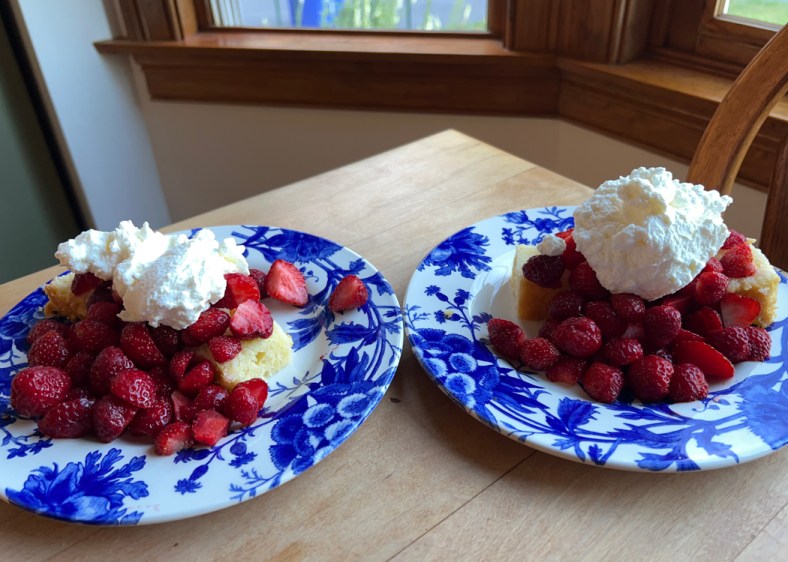
June 29th is the official Strawberry Moon for 2026, which is not named for any reddish hue to the full moon, but to the abundance of strawberries this month. And what a harvest it’s been! The plants I bought a few years back have multiplied and spread so much that I’ve been consumed by and consuming the bright red berries for weeks. I’ve picked quarts and quarts of them.
As delicious as they are, it turns out they are a lot of work. Since they’re so low to the ground, they tax your back as you search below the broad leaves for hints of red. They also allow weeds to grow among them, and weeding is laborious because you don’t want to uproot the shallow rooted strawberries and their many runners which provide the babies for future.
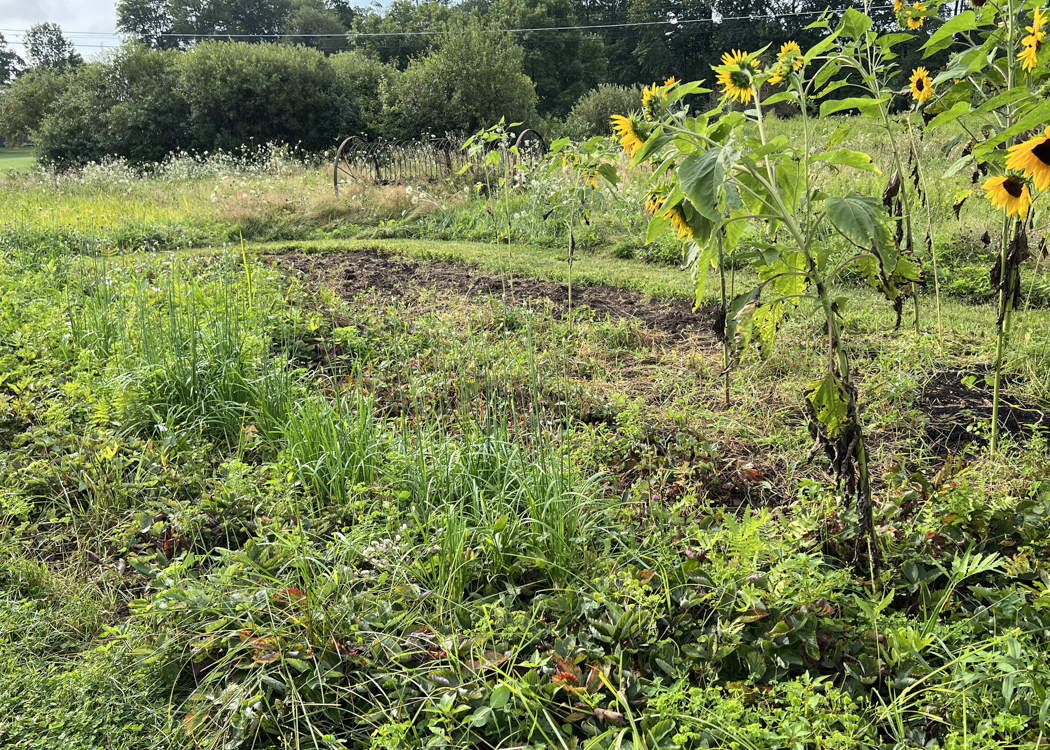
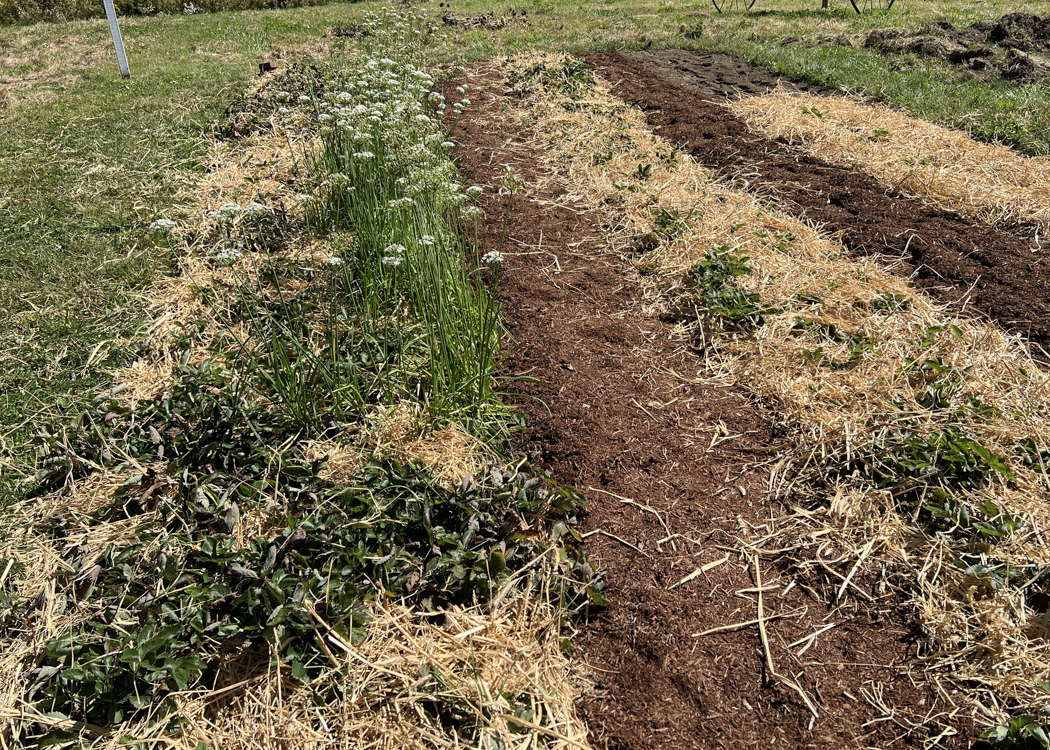
August 2025 full of weeds (with garlic chives intentionally planted along edge)
vs September 2025 after much weeding
Last year I made the mistake of not weeding or trimming my strawberry beds after they were done bearing as I was busy in other parts of the garden. BIG mistake! Move the sliders to see photos of before and after care late 2025 (above), and then this spring after a surprise attack of hairy bittercress in the spring (below). Hairy bittercress is in the mustard family and each plant spews zillions of seeds if you don’t weed it out before the seeds have a chance to mature. As you might suspect, I prioritized weeding them out ASAP!


Hairy bittercress invaded my strawberry patch in April, after more intensive weeding they are flowering in late May 2026
But is it worth it? You bet!!! Locally grown strawberries are so much tastier than supermarket varieties because they can be ripened on the plant and eaten within days. Strawberries are high in Vitamin C, manganese, Folate, potassium and other nutrients. They also have very high concentrations of multiple anti-oxidants, including the anthocyanins that give them their bright red color. They’re low in sugar and high in fiber too.

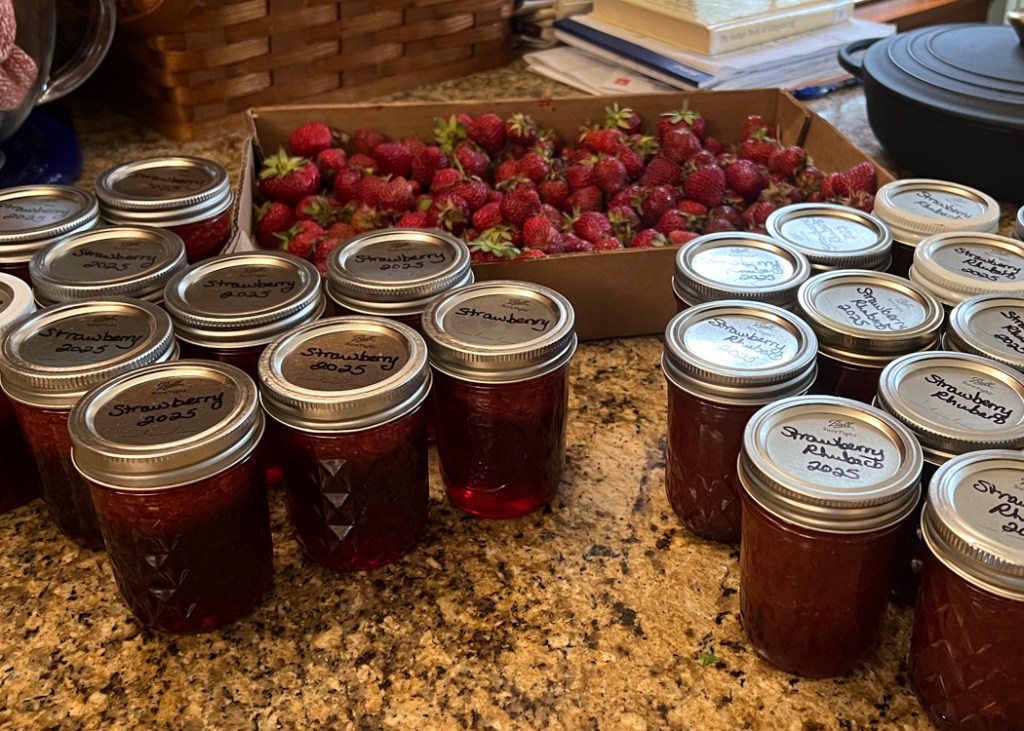
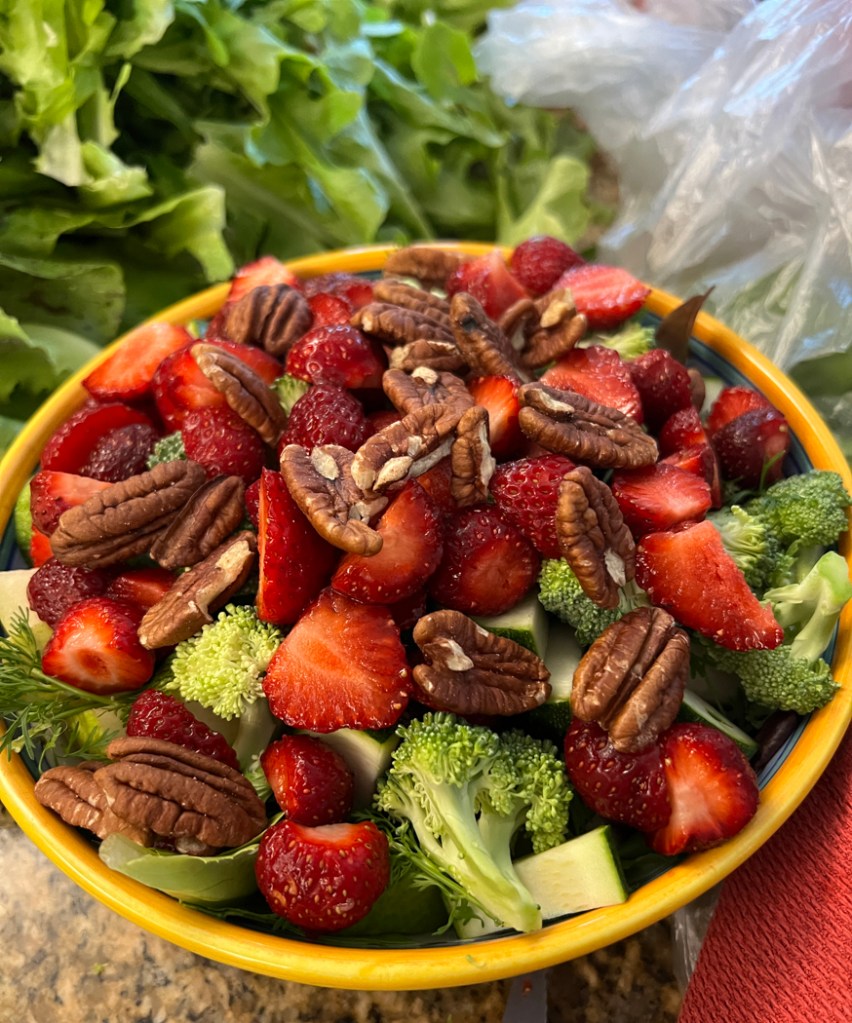
So, what would you do with so many strawberries? I can tell you after all that work, I gorged on them! Strawberries on cereal or oatmeal in the morning. Strawberries in a salad for lunch. Strawberry shortcake or strawberries in yogurt for dessert after dinner. Or just a handful to eat and relish all on their own. Lots were given away and others preserved in jam and frozen for smoothies in winter.
Different varieties of wild strawberries are found all over the world, including fragaria virginiana (Virginia strawberry) from North America, an important food source for Native Americans. Their fruits are tasty, but small and in the 1600s the English and French began cultivating them. Another wild variety, fragaria chiloensis (beach strawberry), collected from the coastal regions of Chile by a French spy, was also brought to France in the early 1700s. The beach strawberry has larger, firmer fruits, but is unable to grow well in northern temperate climates. Somehow cross-pollination happened and the modern strawberry, fragaria ananassa, was begun. Extensive further crosses, combined the superior taste and hardiness of f. virginiana with the size and firmness of f. chiloensis. By the 1750s, the new variety spread into market gardens all over Europe. Interestingly, fragaria ananassa is octoploid, meaning it has eight sets of chromosomes instead of the more common two sets, as in humans.
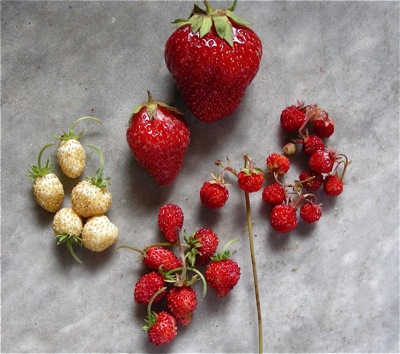
Thanks to Leslie Land for this great photo comparing the sizes of cultivated strawberries above (including a white “pineapple” variety) with wild strawberries below.
Strawberries are now inextricably intertwined in my mind with time I’ve spent revising Imprint and Inheritance. A professional editor made some suggestions that help focus the story and especially jazz up the starting chapters. (Thank you Tiffany Yates Martin for your profound insight and great writing books). Like gardening, writing is a never-ending process of learning and improving and I keep plugging away to make this the best story it can be. Keep wishing me luck!
It’s been a month of pure strawberry pleasure, but to tell you the truth, I’m starting to get tired of them. The harvest has moved to a trickle and the blueberries are just beginning. It’s a relief. You can bet I’ll be diligent this year and keep the strawberry beds weeded and do a proper renovation so they don’t run wild again.


thank you for including us in your delicious strawberry share. They were outrageous. I’m so glad your work with the editor was valuable.
LikeLiked by 1 person
It’s fun to share strawberries since almost everyone will really enjoy them, unlike other produce like zucchini with a more select audience!
LikeLike
yummy
LikeLike
Donna, an abundant harvest!
Iris
LikeLike