Hidden Aches

And Thank You For Asking- It’s a Long Game

I just finished my second novel, Imprint and Inheritance. It’s hard to say “finished” when I’ve been intensely writing and editing it for about four years, and at some point in the future it will surely be edited again before any of you see it. But it’s finished to my satisfaction. For now. I’ve shared it with four beta readers and a sensitivity reader, edited it again, and now sent a query package to the first round of eight agents. I’ll keep sending it out until I find an agent, and then they will do a similar thing until they sell it to a traditional publishing house . . .  at least that is the dream.

An agent’s job isn’t easy. They spend most of their time promoting the clients they have, then on their “free time”, they go through the queries they get from new authors. Also included in their free time is reading requested manuscripts, and reading in general, which is the pleasure that usually gets them into the business. Agents typically get 100 queries per week. They’ll request to see a full manuscript 1% of the time, often less. An established agent will sign on, maybe, one new client per year. That’s why we writers have to spend so much time querying. There are a lot of stories out there with an author’s heart attached to it. Hoping.  

Sounds daunting, doesn’t it? I’ve been seriously writing fiction for ten years now. It’s been fun, tedious, energizing, enervating, and something to occupy my mind as I’ve continued to learn the craft of writing. I don’t regret all those hours. I’ve created a beautiful piece of work and have already started thinking about the next.

Which brings me to the second part of the title of this article. Thank you for asking. I have many friends who periodically ask how things are going with the book. I often don’t have much to update, these big milestones are few and far between. Sometimes it gets embarrassing, as if nothing is happening, but really, I’ve made steady progress and continued to work right along on it.

This summer, someone I barely knew asked me what the book was about. They were a neatly-dressed and composed person with a family and job and a house. I think you’ll know who you are, because that person signed up for my email newsletter right away. It happened to be at a time when I was starting to wonder if anyone would even want to read my book. It’s about a family with mental illness and alcoholism and how the trauma of growing up with all that passes through several generations. It’s about the interplay of genetics and environment and how they can create susceptibility to mental health problems, substance use disorders, and poor lifetime health. It’s how children who grow up with those things still carry a slight ache inside. Hidden. Not a light and happy topic, even though it’s also about resilience.

As I described the book, the person I spoke with just about jumped out of their chair. It was almost as if I had written the book just for them and they wanted to read it as soon as they could. You see, that person had those problems while growing up as well. I think they felt seen and understood and the pain they’d secretly lived with didn’t have to be so secret all the time.

In 2023, one in four children in the United States had a parent struggling with substance use disorder, including alcoholism. Another survey estimates that about 4% of parents had a serious mental health event in the past year. Often there are overlaps. One in five high school students surveyed experienced at least four adverse childhood events. The original ACE study in 1998 had ten categories, but I’ve just read a more recent study that looked at 55 categories of adverse events.

The higher the ACE score, the higher the risk of mental and physical disorders later in life, as you can see within the generations in Imprint and Inheritance. Those are risk factors, NOT templates for a future, and more recent studies are working on identifying and encouraging PCEs, protective childhood events, in those who need them.

Resilience is strong within the human family, but these numbers show how many seemingly ordinary adults carry little nuggets of pain from childhood. Perhaps reading Imprint and Inheritance will help them gain some perspective, including that they’re not alone in their experiences.

That conversation this summer buoyed me on. Thank you for asking.

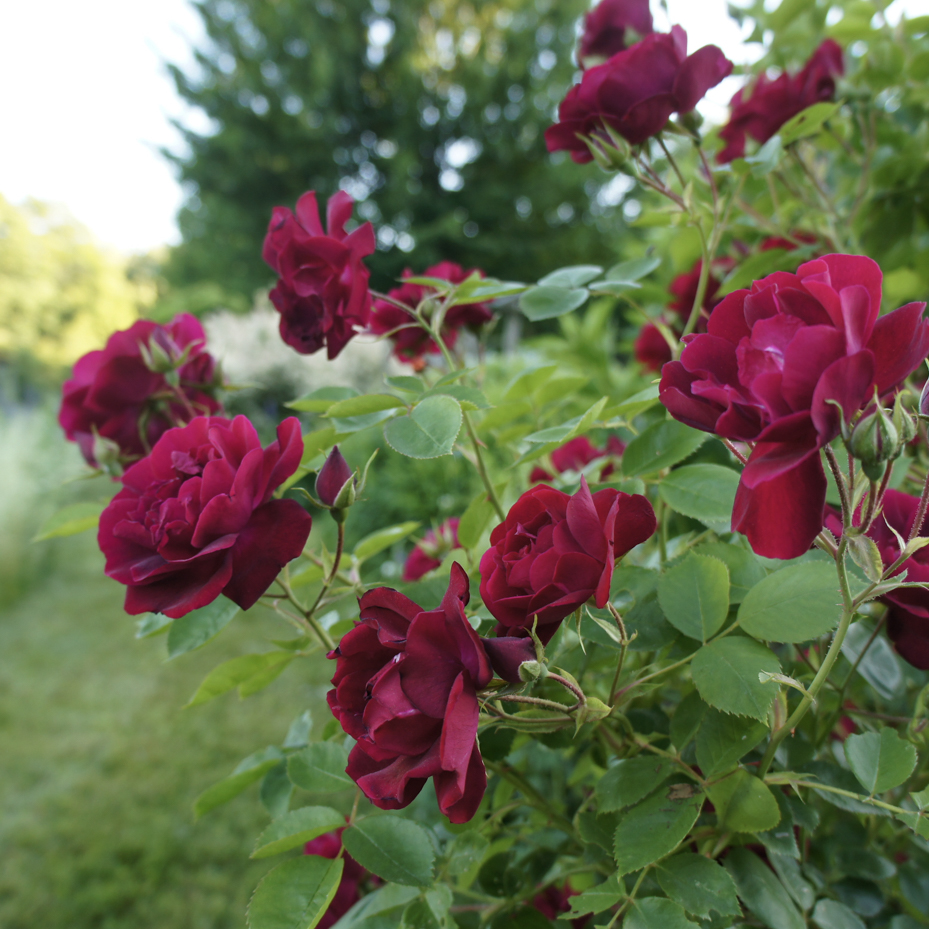
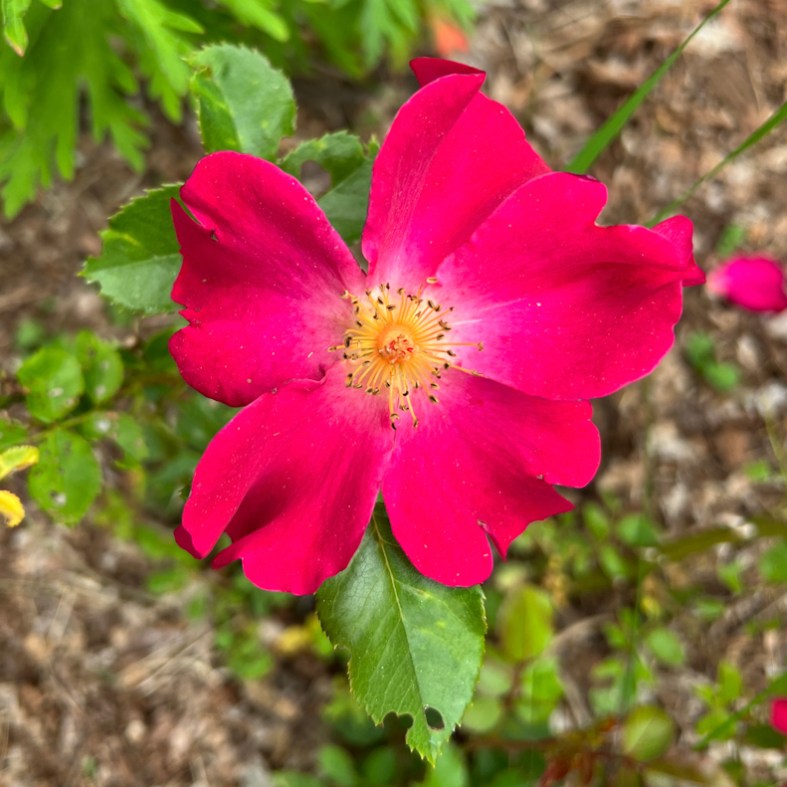
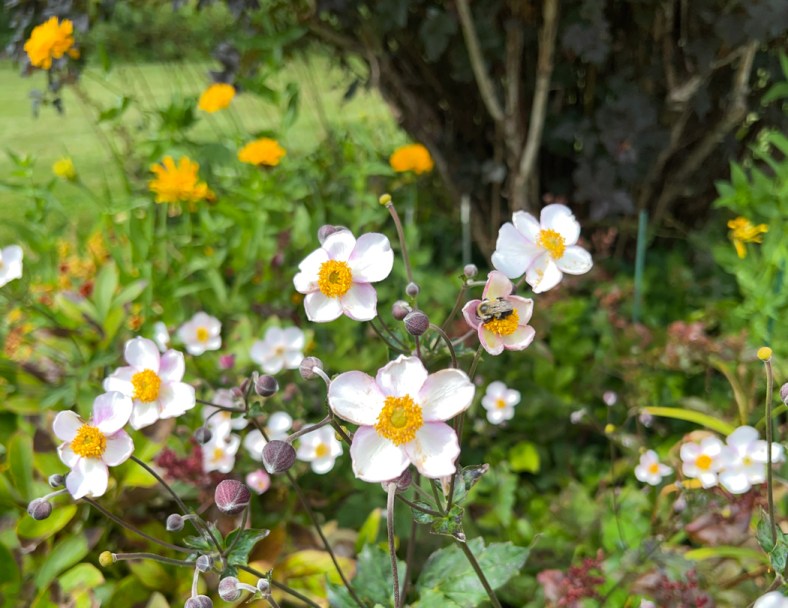
As you can see above—it’s a long game. Growing a novel is like starting perennial flowers from seed. You must be patient. There will be no blooms the first year. You tend them and hope the plants survive the winter. Sometimes they don’t. Sometimes they need multiple years to have a display of blooms that create the vision you hoped for. This year my anenome saponica flowers begun in 2023 were finally as gorgeous as the ones I admired in Scotland and had wished for my own garden.

Wish me luck with Imprint and Inheritance; I’ve already gotten my first rejection. I hope this novel can get to the people for whom it will more than resonate. Once I find an agent (which can take a year…!), it will take at least a year, usually more, before it’s published. So, hang in there. It’s a long game and thank you for asking. Thank you for caring.

Being a Scientist and a Novelist … Isn’t That an Oxymoron?

Cultural Division of the Sciences and Humanities

We live in a culture where facility with science, facts and numbers are considered left brain activities and creative endeavors like fiction, painting and music are considered right brain activities. Individuals are supposedly trapped into primarily using one half their brain or the other.   Further emphasizing this division, college tracks are separated into the humanities or science & technology, with only a smattering of courses allowed on the other side of the aisle.  In 1959, C.P Snow—a chemist and novelist—called on the British to stop separating the two cultures and to allow greater crossover.  He called the humanists in his country “pessimistic Luddites” and saw the bright future of prosperity and cold war superiority in science—but a humanized science.  His short book on the topic became hot in the US as we ramped up our own science and technology for the space age.  1

Left Brain- Right Brain Theories and Handedness 

In the 1980s, left brain- right brain theory was popularized and remains so to this day.  You can take quizzes online to find out your brain dominance and personality.  These theories started with the over-interpretation of a case study involving an epilepsy patient whose corpus callosum was surgically severed to control his seizures.  The corpus callosum, Latin for tough body, is a fiber network joining the right and left hemispheres.  This surgery helped the patient’s seizures, but messed up his ability to process information and move in a side-specific manner. 2

This myth of right- and left brained people is perpetuated by many factors, including our observations of right- and left-handed people.  Lefties comprise only ~10% of the population (and have been since prehistoric days) and are expected to be more creative.  Based on that, you would guess that a room full of scientists would all be right-handed and if they were all sitting at tables taking notes, no one would have to worry about bumping elbows.  It was after an elbow bump during a meeting tightly packed around a table that I first realized at least half my molecular biology, pharmacology and chemistry colleagues were left-handed.  I felt a little left out as a rightie, as if maybe I had a creativity disadvantage.  But scientific study does not support this common stereotype 3, and instead some hypothesize left-handedness remains in the gene pool due to an association with competitiveness. 4

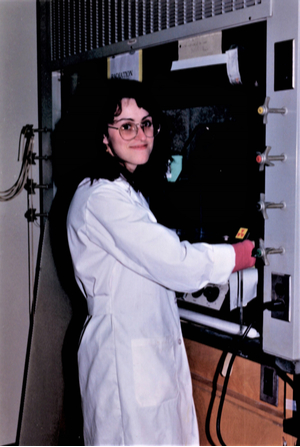
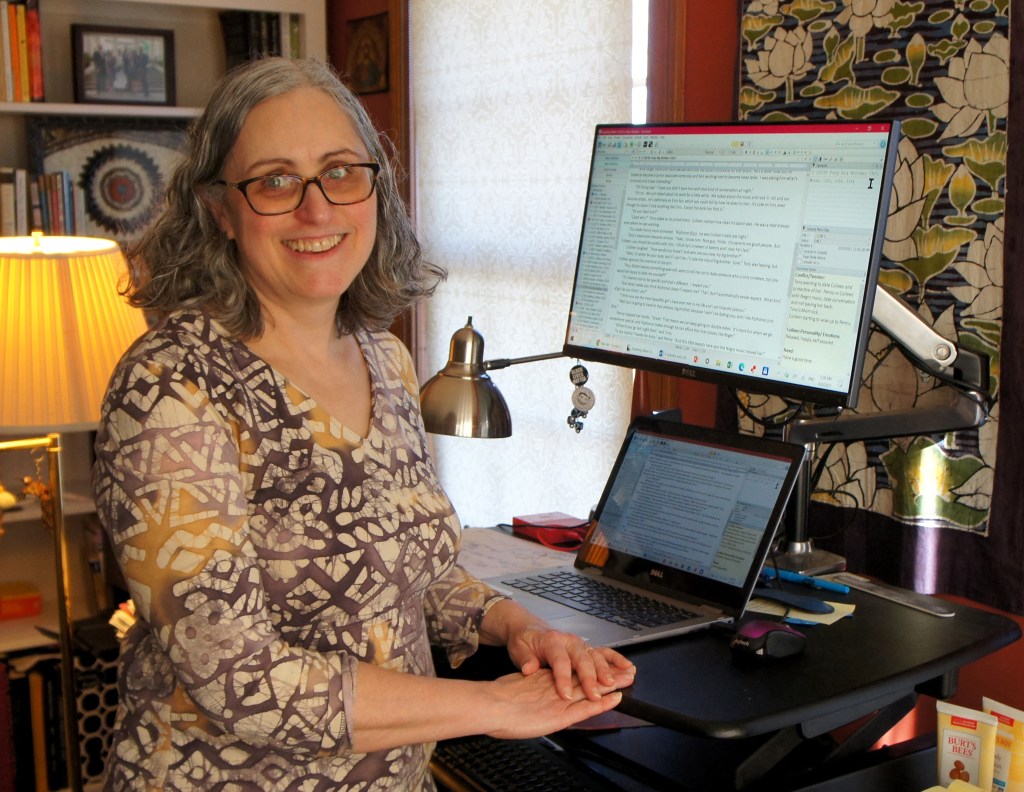
The author as a Post-Doctoral Fellow at Yale University (left) and more recently at her writing desk (below)

Myths and Truths on Left-Right Brain Use

Scientific inquiry over the last 20 years has enabled us to measure the size and activity of different brain regions in living humans and even dogs.  Imaging can be done in people who are doing nothing in particular (the default brain network) and while they are engaged in specific tasks.  These types of studies have verified that righties have most of their motor functions controlled by the left motor cortex, while lefties have more controlled by the right motor cortex, but with not as much of a preference as righties.  That makes it easier for lefties to become ambidextrous and cope with a broken left arm. 5

There are many functions that tend to be more predominant on one side of the brain verses the other (lateralization) and it’s an expanding area of research.   More of the functions associated with language are found on the left, while attention and non-verbal communication is more focused in the right brain.  But imaging has allowed us to see that for individuals, we are not predominantly using only one side of our brains verses the other outside of our motor functions. 6

The Gorgeous Corpus Callosum

I want to put in a plug here for the beautiful brain and the amazing corpus callosum.  It is the largest white matter tract in the brain and allows for exquisite coordination of left and right hemispheres.  It’s only found in placental mammals and the complex lateralization and interplay between hemispheres in humans is not found in mouse brains, the species I most studied.  The corpus callosum and its complexity are part of what makes us human.


Corpus Callosum in Red
Images are generated by Life Science Databases(LSDB)., CC BY-SA 2.1 JP

Science-Trained Authors

So now that we’ve got the handedness and left-right brain story a little bit explained, what about a scientist becoming a successful novelist?  Most people would think the link with science fiction was pretty reasonable.  Andy Weir, author of The Martian, is a computer programmer who we can put into the analytical scientist bucket. But many would be surprised at the inclusion of Vladimir Nabokov and Lewis Carroll on the list.  Contemporary biologist/authors of other types of fiction include: 

  • Diana Gabaldon- the Outlander series
  • Barbara Kingsolver- The Poisonwood Bible, The Bean Trees, The Lacuna
  • Delia Owens- Where the Crawdads Sing
  • Lisa Genova- Still Alice, Inside the O’Briens, Love Anthony 
  • Brandon Taylor- Real Life

Many physicians and psychologists are also successful authors and there’s even a website at NYU that helps you find not only medically oriented authors but also good literature including science. https://medhum.med.nyu.edu/  Think about Anton Checkov, William Carlos Williams, W. Somerset Maugham, Abe Kobo and Percy Walker in an earlier era.  More modern physician/authors include:

  • Kaled Hosseini- The Kite Runner, A Thousand Splendid Suns
  • Abraham Verghese- Cutting for Stone
  • Chris Cleve– Little Bee, Everyone Brave is Forgiven, Incendiary
  • Irvin Yalom- Lying on the Couch, When Nietzsche Wept, The Spinoza Problem
  • Carol Cassella- Oxygen, Healer, Gemini
  • Perri Klass- The Mercy Rule, The Mystery of Breathing
  • Melissa Yuan-Innes/ Melissa Yi- Code Blues, Life Support, Terminally Ill
  • Tess Gerritsen- Girl Missing, The Apprentice, The Bone Garden

The works of these authors span genres and although many include significant components of their scientific/medical expertise, many do not.  You’ll find little bits in my novels, and I hope to join the ranks of these distinguished published authors soon.