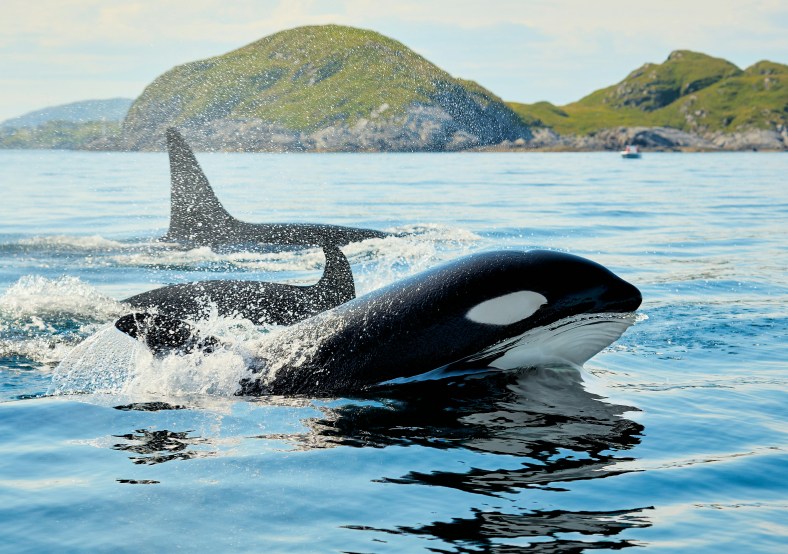
Photo credit Vidar Nordli-Mathisen
As any woman in her late forties to early fifties begins to learn, menopause is the dumps! You revisit the worst parts of being a teenager, with emotions running sky high and grave low. You get zits again, and while periods slowly disappear, they can rage unexpectedly when you’re far from a change of clothes. You can’t sleep and your mind goes into brain fog. Multi-tasking falters—the mechanism that allowed you to navigate life with kids, job, husband, home, aging parents, and the rest of life. You’re not at your best and you know it. Menopause sucks.
But I never thought about the evolutionary purpose of menopause before, even though I’ve spent lots of time thinking and writing about multiple generations of women. Menopause plays a role in my novel, Imprint and Inheritance (now in revision), where Julia’s perimenopause makes her interactions with her dying mother even more difficult.
But menopause good?
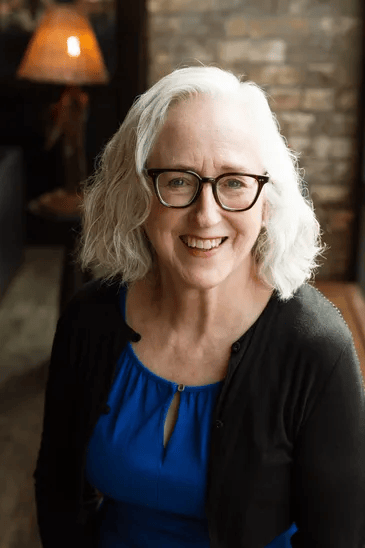
Below is an article written by my good friend Judy M. Taylor that made me rethink why humans have menopause. Judy is the author of In The Company of Whales: a novel. Here she is:
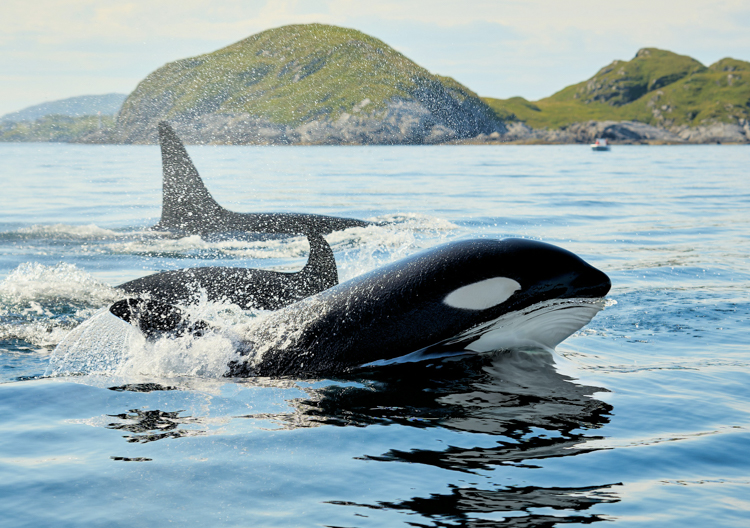
Did you know that orcas experience menopause?
It’s true! Scientists recently discovered that orcas share this trait with humans. Four other species of whales do too: short-finned pilot whales, narwhals, beluga whales, and false killer whales. But humans and chimpanzees are the only terrestrial species that can live decades after their child-bearing years are over.
Because orcas live longer than whale species that reproduce all their lives, orcas have more time with their offspring and grand-offspring. During these extra years, older females serve an important role in the survival of their families. They have been known to lead their pods to forage for salmon when supplies are low because they can remember where and when food was found in the past.
These mighty matriarchs also act as the playground supervisors and hall monitors of the ocean. Like a stern teacher circulating calmly through a group of rowdy students, just their presence in the pod is enough to discourage bullies. Scientists looked at rake marks left by the teeth of aggressive whales, what they call “socially inflicted injuries” (ouch!) and found a lower incidence of injury to the sons of these older females.
According to Dr. Darren Croft, executive director of the Center for Whale Research, “In a killer whale family, an adult son who loses his post-reproductive mother experiences a 13-fold increase in mortality risk. We find similar patterns for daughters and grand-offspring, but the effects are less pronounced.”
Throughout history and across cultures, women—older women especially—have played an important role in conflict management within their families and communities, often taking the lead when it comes to conflict resolution.
A pod of orcas is a family, and we all know that families are complicated. Who better to keep the peace than oldest and wisest females among them? One particular orca matriarch named Ankh comes to mind. She was a member of the L pod, a subgroup of southern resident orcas often seen in Puget Sound. She lived to be 70 years old, and since most orcas go through menopause around the age of 40, she spent nearly half her life as a protective guide for the others in the pod.
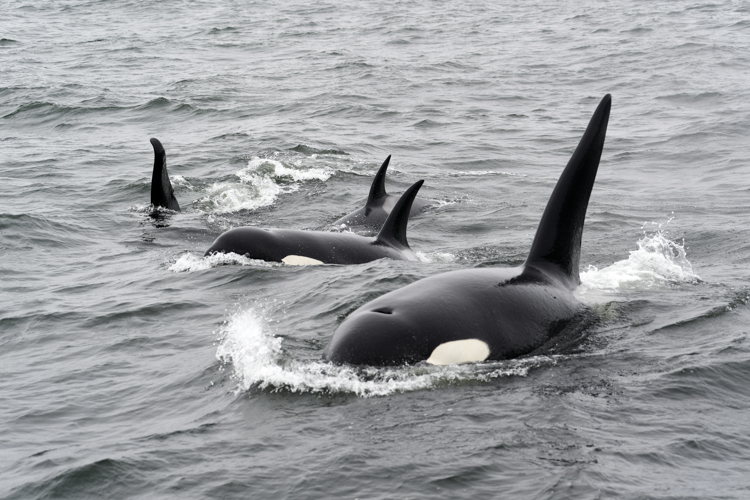
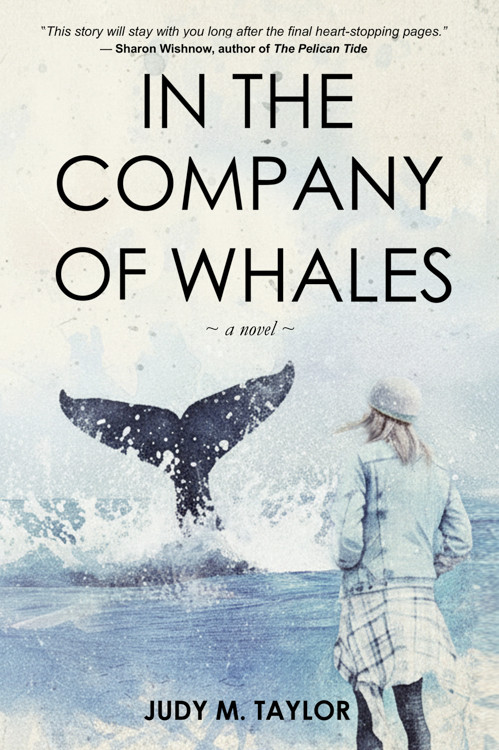
I feel a special kinship with Ankh. She was one of the 19 orcas who have top billing in my novel, In the Company of Whales. The story is based on a true event that happened in 1997 when a pod of migrating whales went off course and ended up stuck in an inlet with a dwindling food supply. My fictional telling features Carla, a washed-up punk rocker living paycheck to paycheck in a small Pacific Northwest town, who risks her job—and her life—to protect them.
With the orcas running out of time, Carla must fight the local authorities and win them over with her daring plan before it’s too late. She’s used to going it alone, but with the support of her community she finds a strength she didn’t know she had.
In the Company of Whales is about the power of friendship, finding your purpose, and making your own second chances.
Donna again:
I can personally recommend In the Company of Whales. It’s an engaging novel with a complex heroine and not only whales, but a loveable runaway dog. I’ve seen it grow from early days to publication ready and I’m excited to see it in print. It’s available in paperback and ebook from many vendors. One of my friends read it in one day… or really into the night… because she couldn’t put it down. Check it out here.
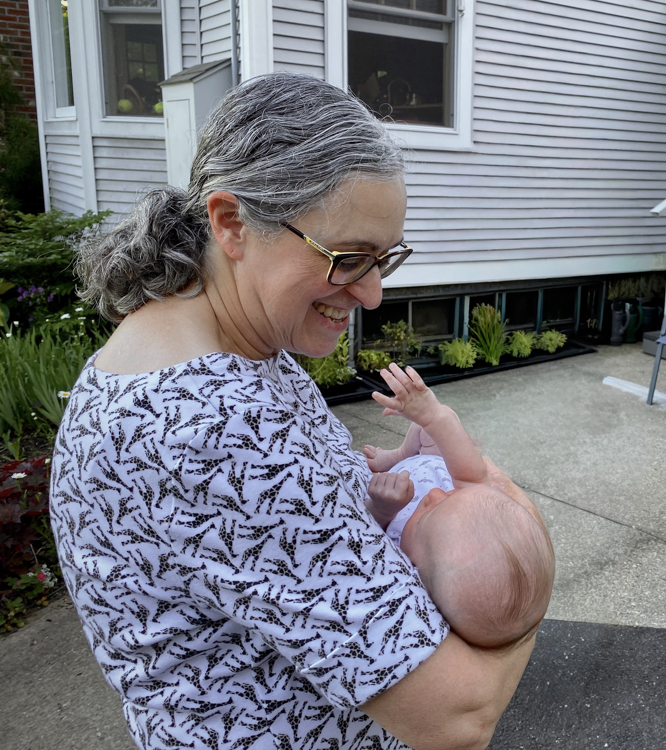
So thinking about it, menopause is really about females having living long enough to influence future generations without having to rear more children. Menopause makes grandmothers. Who can complain about that!

