Naming Names

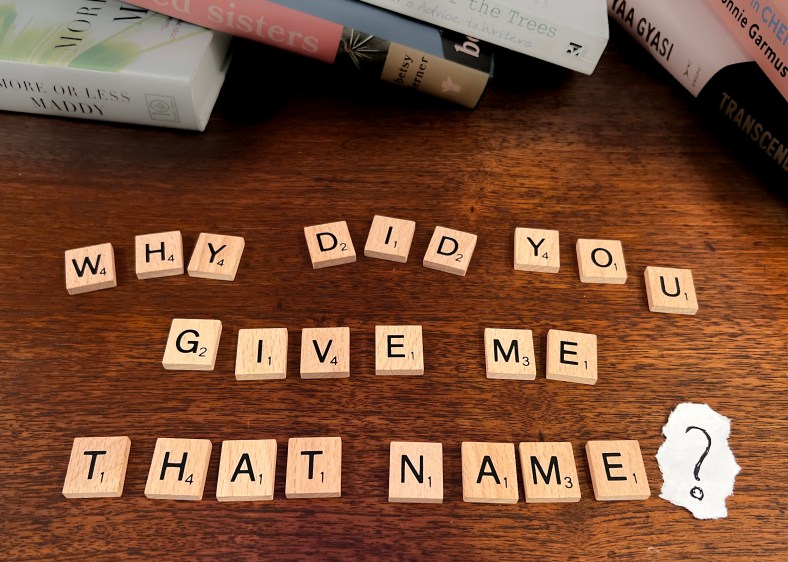
One of the fun parts of writing and making up lives is that you get to name everyone.

So how do we authors think up names? There’s the old tip to walk around cemeteries and get inspired by the names of persons long gone, but I’ve never done that. Sometimes it comes to you in a flash and you know THAT is the right name. Other times you will meet someone and their name will suddenly seem right for your next character. That happened to me when I was getting a colonoscopy! One of the nurses was very friendly and I liked her name. As I woke from the anesthesia, I knew her name was perfect for the protagonist in my next novel. Thank you Hilary.

I’ll tell you a secret. I get many of the names I need from social security! Nope, I’m not stealing anyone’s identity, but it’s a great way to see the most common names from a particular decade when people were born, 200 male and 200 female. Here’s the link if you want to check out your own decade, or if you’ve got a baby on the way and like vintage names.  It’s fun to see how much influence pop culture and famous people have on new parents.  I find this site much more helpful than baby naming sites and there are no flashing ads.

Sometimes a name comes to me as I’m mulling it over for a few days. That happened with Julia, one of the main characters from Imprint and Inheritance. I actually had a different name, but it didn’t seem right. During a walk with my trusty dog in the woods, Julia popped into my mind. I remember right where I was when that happened, next to the stream just after crossing a wetland swelling with skunk cabbage and then a little plank footbridge. Julia was born.

In the novel, I needed Julia’s mother to explain to her why she picked that name and have this choice be a sign of love for her.  I’d become very attached to the name Julia, but I was stuck on that essential plot point. I thought I might have to change the name again (thank goodness for the “replace” command), but it made me quite sad. My character felt like “Julia.”

I was coming up blank with searches on famous people named Julia, famous characters named Julia, famous historical figures named Julia. The name derives as a feminine form of Julian, which is derived from the supreme god Jupiter in Roman mythology. It didn’t fit my needs at all. 
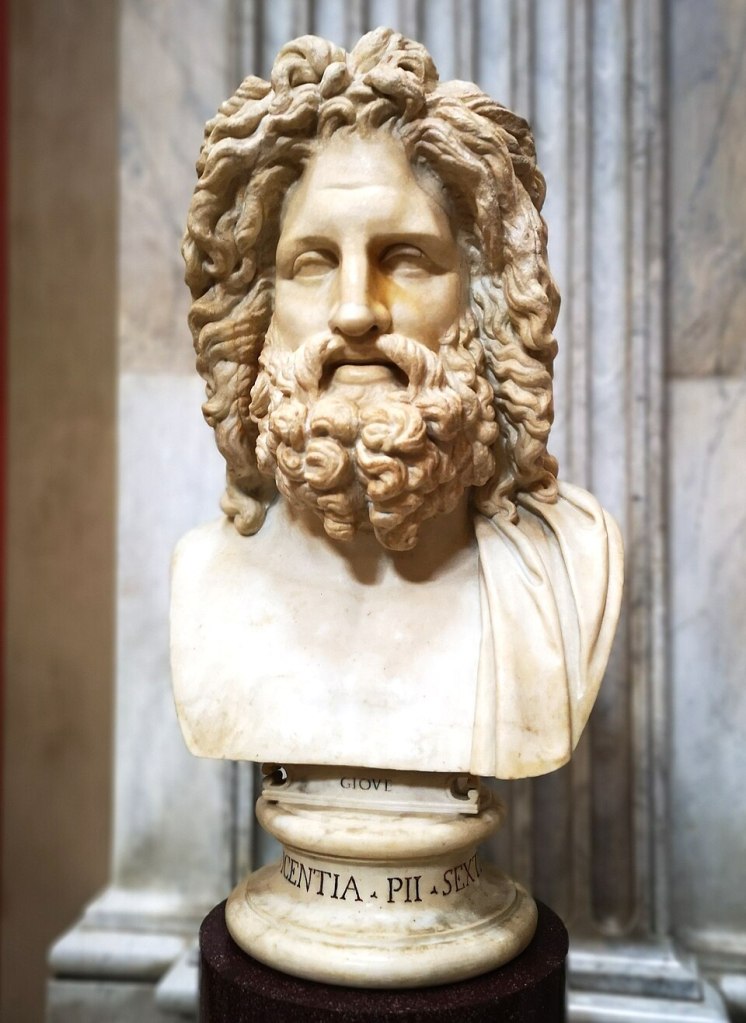
Jupiter in the Vatican

photographed by Biser Todorov, CC BY 4.0

Then I stumbled upon a secondary character named Julia in a classic book pretty much everyone has read. The Julia in George Orwell’s 1984 fit my purposes perfectly, and the Julia in Imprint and Inheritance was thrilled with why her mother chose that name.

Check out this article by Bookriot that shows lots of 1984 covers over the years. It’s fun to see which you recognize and which you prefer.

Julia is number 118 in popularity on the social security register for the 1960s, her birth decade, so it was accidentally a good choice there as well. Julia got to stay Julia for all the right reasons.

In case you’re wondering about my dog’s name, another fun activity, it’s Jocco. That also came to me in the woods, actually pretty close to the place I came up with Julia. I’ll have to remember that if I’m stuck on a name in the future!

I just finished reading Liane Moriarty’s The Apple Doesn’t Fall (Yes, I can recommend it… what a good study of marriage and sibling rivalry in such an engaging story). As I skimmed the acknowledgements, she described naming one of her characters. Simon Barrington is a real person who won a fundraising contest where the winner would have a character named after them in Liane’s next book. I wondered if the character’s appearance and characteristics were based at all on reality, but was never able to find anything about the real Simon, just the actor who played him on the video adaptation. If you know Simon, let me know!

Do you have any fun tips for finding names for babies or characters?
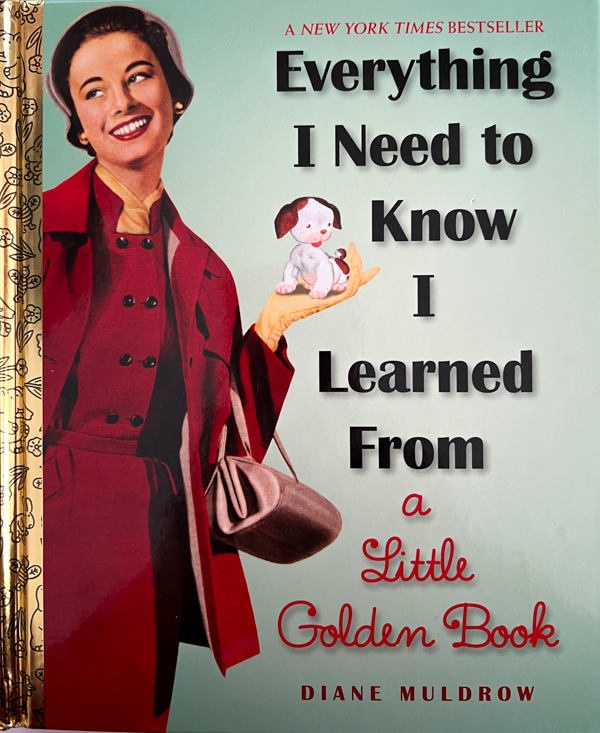
The Enduring Magic of Little Golden Books

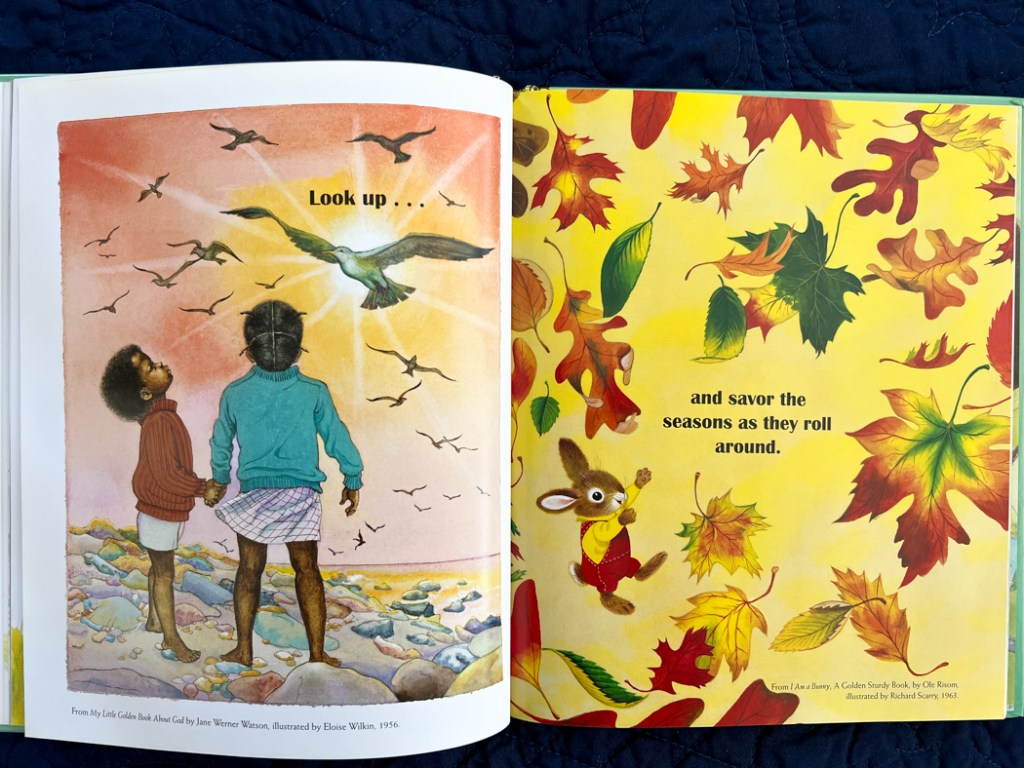
Do you remember reading Little Golden Books when you were a child, or reading them to children and even grandchildren? This institution of American children’s books began in 1942 during World War II and, after 82 years, it’s been read by generations of children.  In 2013, the Smithsonian even put together a special exhibit about Golden Books.

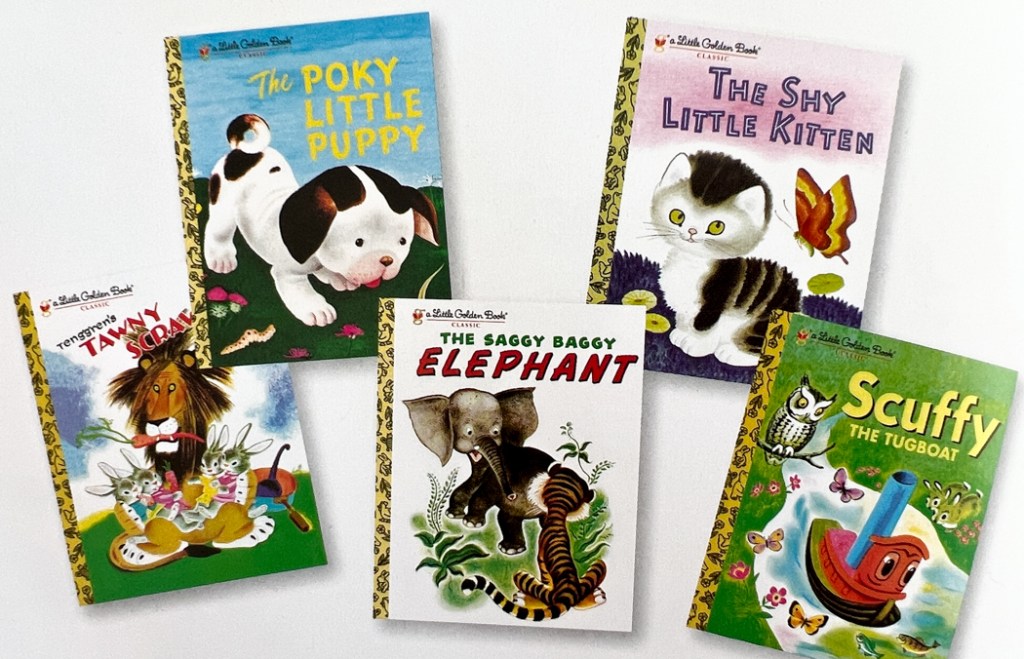
In 1942, most children’s books were $2 – 3, out of the price range of the average family when food price inflation was rampant due to the start of hostilities. In 1942, a pound of coffee cost 28 cents and a pound of ground beef was 30 cents. First published in a collaboration of Simon and Schuster with Western Publishing, Golden Books were priced at 25 cents each, sold in places where children would be with their mothers, such as supermarkets and drugstores.  With inflation, that would be $4.73 now, which is pretty close to the current selling price of $4.99.  The publishers felt they could make enough money at the 25 cent price point if they sold 50,000 copies.  They started with 12 titles released together. All had 42 pages with 28 in 2 color and 14 in three color.  They tapped into an unrecognized demand, because in the first 5 months they sold 1.5 million books! Among the first 12 books were The Pokey Little Puppy, The Little Red Hen and The Three Little Kittens.  See the rest of the list here

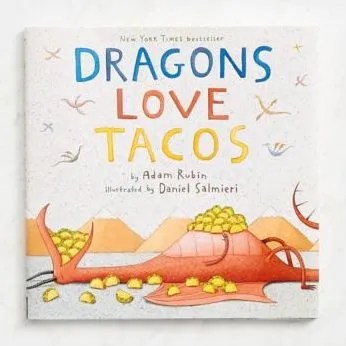
The Pokey Little Puppy, still in print, was so popular that it was the highest selling children’s book of the 20th century, with almost 15 million copies sold.  By the way, did you know there is a NY Times Best Seller List for Children’s picture books?  Check it out here. The current best seller is Dragons Love Tacos.

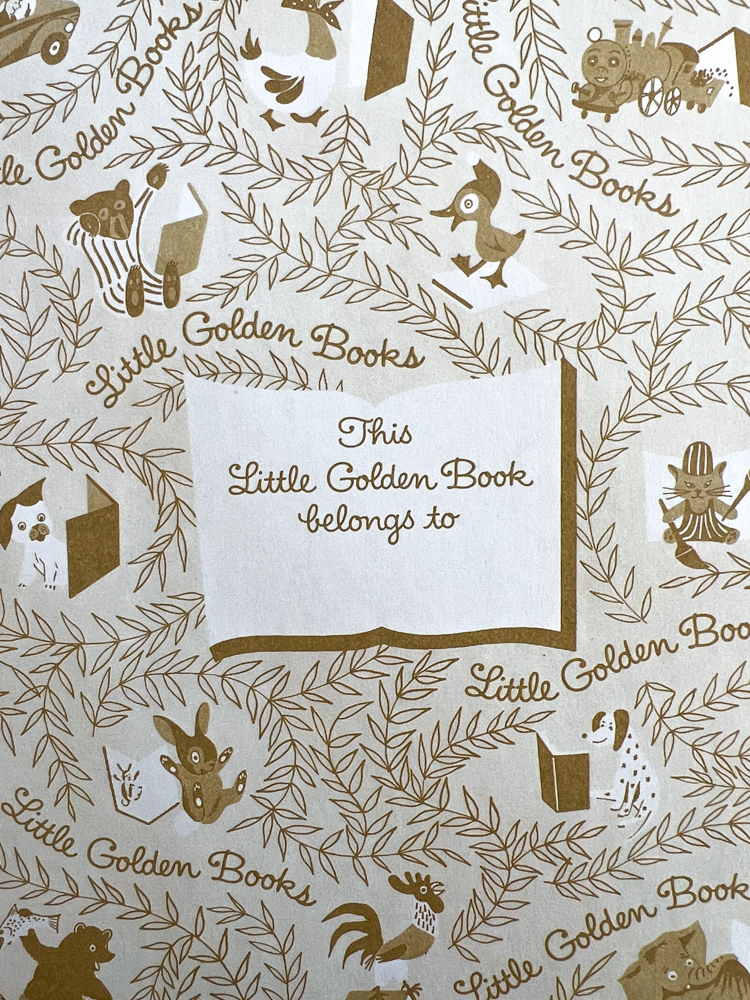
The first books were small in size and intended to be a child’s possession.  Later editions included a variety of sizes.  Inside the front cover of every book was an invitation to mark it as each child’s own.

And of course, there is the distinctive gold or silver foil binding with line drawings on it.  I still remember being fascinated with how fancy that was as a child.  Famous children’s book authors and illustrators who contributed to Golden Books were: Richard Scarry, Margaret Wise Brown, and Garth Williams (illustrated Charlotte’s Web and the Little House Series).

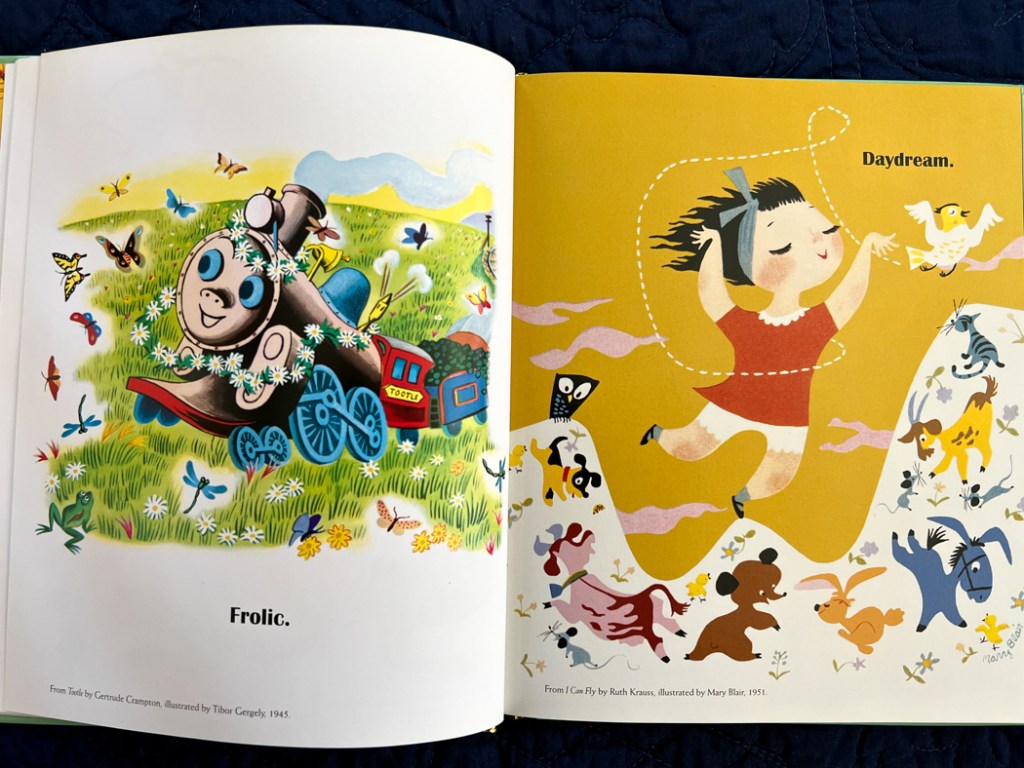
There are collectors catalogues of Golden Books, and a copy of the first print run of 50,000 will now cost you $50 – 200. In 2013, Everything I Need to Know I Learned From A Little Golden Book for adults was issued and became a NY Times Best Seller. It’s a feel good book with little quips for living a good life, illustrated from different Golden Book classics.  

Golden Books quickly incorporated cartoon characters, Sesame Street, Marvel comic heroes and Disney characters in their line up, as well as animal and vehicle characters—whatever was popular with kids at the time in their daily lives, reading, TV and movie exposure. In 2001, the Golden Book franchise was sold to Random House and they continue to find new avenues to reach children.  The current most popular series are the biographies, with Taylor Swift’s biography of 2023 the fastest growing Golden Book ever—selling 1 million copies in 7 months!

In my novel Imprint and Inheritance, Fiana focuses extra attention on early education for her girls after nearly completing a teaching certificate. Even though Fiana struggled with schizophrenia, she tried hard to be a good mother to her children. Golden Books in Fiana’s home were a natural for current readers to relate to and I enjoyed learning more about them as research for the book.  Hope you enjoyed learning more about them too!

Peyton Place and the Sexual Education of America

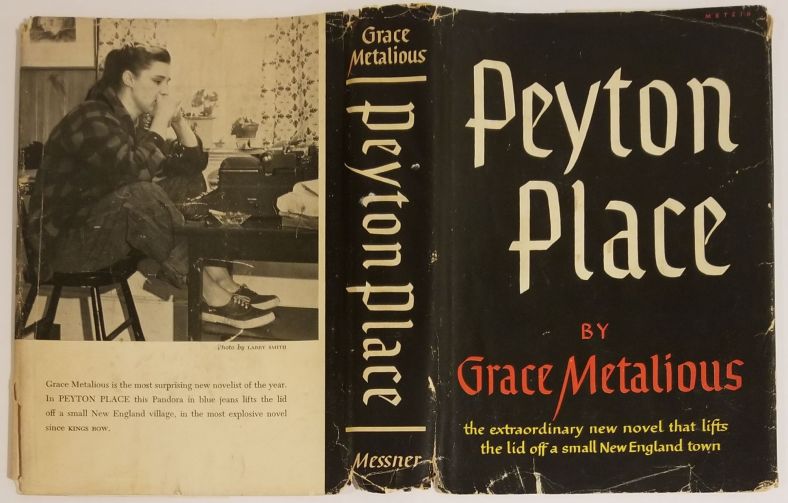
Most people have heard of the phrase “Peyton Place” and associate it with titillating scandal and soap opera.  But Peyton Place began as a novel, released in 1956 by a rebellious mother and housewife who wanted to expose the hypocrisies of her hometown and her times.  Sex and questioning authority in many forms shows up in her 372 page book.  Unexpectedly, including to the author Grace Metalious, the characters and storyline hit a nerve in America and it was on the best-seller list for 59 weeks. At the same time a series of books put out under the Betty Crocker franchise were in the top non-fiction lists.  1 in 29 Americans bought Peyton Place.  This was the Eisenhower Era when America was in the midst of its post-war economic boom and the middle class was growing and thriving.  Female roles were well proscribed and Grace never fit into any of it… other than the desire to move out of the poverty she grew up in.

Controversy and Sales

If you ask people who were coming of age during that generation about Peyton Place, you will usually see a wry and somewhat pleased smile, reflecting the youthful rebellion of reading this forbidden book long ago.  Colleen O’Byrne in my novel, Breathing Water, was one such person affected by the novel. Although Peyton Place was banned in many libraries, schools, and bookstores, and was illegal to ship through the mail to several countries, it sold over 12 million copies.  It even outsold other popular books of its time, like Gone With The Wind. But its readership was much greater as copies were shared between school friends and mothers’ copies were ferreted out from hiding places by their youngsters.  One woman I know speaks of reading it in a high school class while hiding it behind a textbook (this woman did succeed in life and became a beloved teacher, so it didn’t ruin her!).

What made this book so popular?  At the time, the publisher realized its potential and decided to give it more publicity than most debut novels.  Controversy sells, so they hyped up a comment by Grace Metalious that her husband, a school principal in the small town of Gilmanton, New Hampshire, would probably lose his job when it was published.  Of course everyone wanted to see what was so juicy that it would cause him to be fired, and the school board helped publicity when they decided not to renew his contract shortly afterward.  Word of mouth and so many organizations banning it propelled book sales followed by the involvement of the film industry.  In watered down form, a movie was released in 1957 and a soap opera series from 1964 – 1969.  That’s what most from the next generation vaguely recall about “Peyton Place.”

What’s so Controversial in Peyton Place?

When I read the book to see if it would be suitable for use in Breathing Water, I was surprised at how little actual sex was in the book.  Sex was definitely a part of the character’s lives, as it is for most people, but there was not a lot of explicit description and the content is mild by today’s standards.  Yet there were things about sex that not only caused Grace Metalious to become a millionaire, but to have a great impact on America’s sexual awareness.   

Most shocking about the book was the idea of women having satisfying sexual lives.  That was for loose women and whores, and yet here were nice girls not only having sex but enjoying it.  Masturbation, abortion, douches not working for birth control, “safes” (condoms) that should work, and oral sex were all mentioned.  One of the major characters was repeatedly raped by her step-father, showing that not all people in small town America were nice.  The original story had Selina’s father raping her, but the editors thought that incest would be a bit too much for tender American eyes.  In the story, Selina eventually fought back and murdered her step-father, inciting a lot of discussion about whether her act was justified.

Authors often draw from real life and this part of the book was partially based on the true story about 10 years earlier of Barbara Roberts from Grace’s town of Gilmanton, NH.  She was the victim of domestic violence and incest before she killed her father and buried him under a sheep pen.  Residents of the town were not pleased with Peyton Place or the Metalious family partly from a desire to protect Barbara and her family from further unwanted publicity, but also for and what it inferred about them.  The book did bring the topic of incest to America’s consciousness for a short time.  Sadly, more attention is needed because some statistics suggest that 1 in 3-4 girls and 1 in 5-7 boys are sexually abused before they turn 18, much of which happens from fathers or fatherly figures.  Children are easily manipulated into not reporting such abuses. 

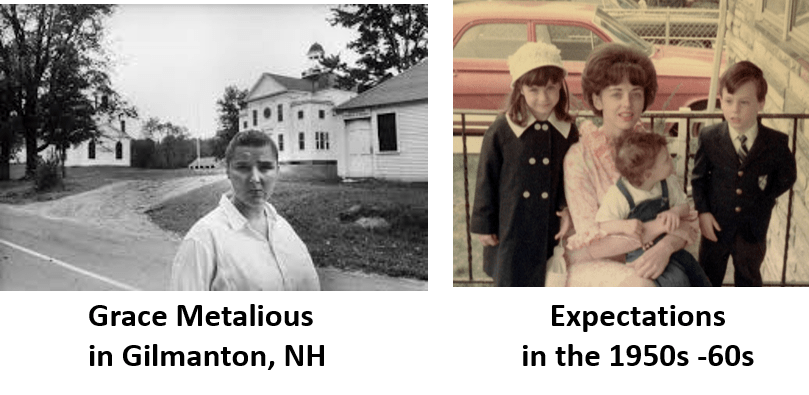
Grace Metalious also included class disparities, racism, differences between Catholics and Protestants and questioning the Christian faith.  There was a lot you could get upset about if you wanted to defend the status quo.  All of it reflected real life—the parts no one would talk about.  Grace utterly rejected the expected female behaviors of the 1950s:  her home was filthy, meals were haphazard, and she was a careless mother.  When she wanted to write, she kicked her three kids out of the house and told them to fend for themselves until she was done.  She wore pants and flannel shirts, with her hair in a simple ponytail, instead of the bouffant hairstyles that were popular then. 

A Sad Ending and Lasting Impact

After becoming a millionaire, Grace began to party hard. She spent every cent she made and then some in luxuries and heavy drinking.  Interestingly, alcoholics figure large in Peyton Place and there are accurate descriptions of delirium tremens in one scene.  She divorced and new friends showed up to help her spend her money.  After dreaming of riches since she was a girl, Grace didn’t know how to handle it and, sadly, died at age 39 from cirrhosis of the liver.  Grace Metalious was ahead of her times and helped loosen up the American psyche for others to follow.  A few years later, the infamous Lolita, about a pedophile, and Lady Chatterley’s Lover, about an extramarital affair, became best sellers in the US. For many, Peyton Place was all the sex education they would get.  Genuine sex education was taught in some schools in the 60s and 70s, but it wasn’t until the 1990s, during the AIDS epidemic, that it became universal.  Peyton Place is actually a fast-paced and fairly well written novel (even by the standards of the literary world) and it’s still in print.

Key references and further reading:

The Peyton Place Murder- The True Crime Story Behind The Novel That Shocked The Nation by Renee Mallett (2021)

Peyton Place’s True Victim– Vanity Fair

Open Secrets: Rereading Peyton Place by Ardis Cameron, introduction to 1999 version of Peyton Place

Donna Barten is a novelist and scientist working on her second book Imprint and Inheritance.