Hidden Aches

And Thank You For Asking- It’s a Long Game

I just finished my second novel, Imprint and Inheritance. It’s hard to say “finished” when I’ve been intensely writing and editing it for about four years, and at some point in the future it will surely be edited again before any of you see it. But it’s finished to my satisfaction. For now. I’ve shared it with four beta readers and a sensitivity reader, edited it again, and now sent a query package to the first round of eight agents. I’ll keep sending it out until I find an agent, and then they will do a similar thing until they sell it to a traditional publishing house . . .  at least that is the dream.

An agent’s job isn’t easy. They spend most of their time promoting the clients they have, then on their “free time”, they go through the queries they get from new authors. Also included in their free time is reading requested manuscripts, and reading in general, which is the pleasure that usually gets them into the business. Agents typically get 100 queries per week. They’ll request to see a full manuscript 1% of the time, often less. An established agent will sign on, maybe, one new client per year. That’s why we writers have to spend so much time querying. There are a lot of stories out there with an author’s heart attached to it. Hoping.  

Sounds daunting, doesn’t it? I’ve been seriously writing fiction for ten years now. It’s been fun, tedious, energizing, enervating, and something to occupy my mind as I’ve continued to learn the craft of writing. I don’t regret all those hours. I’ve created a beautiful piece of work and have already started thinking about the next.

Which brings me to the second part of the title of this article. Thank you for asking. I have many friends who periodically ask how things are going with the book. I often don’t have much to update, these big milestones are few and far between. Sometimes it gets embarrassing, as if nothing is happening, but really, I’ve made steady progress and continued to work right along on it.

This summer, someone I barely knew asked me what the book was about. They were a neatly-dressed and composed person with a family and job and a house. I think you’ll know who you are, because that person signed up for my email newsletter right away. It happened to be at a time when I was starting to wonder if anyone would even want to read my book. It’s about a family with mental illness and alcoholism and how the trauma of growing up with all that passes through several generations. It’s about the interplay of genetics and environment and how they can create susceptibility to mental health problems, substance use disorders, and poor lifetime health. It’s how children who grow up with those things still carry a slight ache inside. Hidden. Not a light and happy topic, even though it’s also about resilience.

As I described the book, the person I spoke with just about jumped out of their chair. It was almost as if I had written the book just for them and they wanted to read it as soon as they could. You see, that person had those problems while growing up as well. I think they felt seen and understood and the pain they’d secretly lived with didn’t have to be so secret all the time.

In 2023, one in four children in the United States had a parent struggling with substance use disorder, including alcoholism. Another survey estimates that about 4% of parents had a serious mental health event in the past year. Often there are overlaps. One in five high school students surveyed experienced at least four adverse childhood events. The original ACE study in 1998 had ten categories, but I’ve just read a more recent study that looked at 55 categories of adverse events.

The higher the ACE score, the higher the risk of mental and physical disorders later in life, as you can see within the generations in Imprint and Inheritance. Those are risk factors, NOT templates for a future, and more recent studies are working on identifying and encouraging PCEs, protective childhood events, in those who need them.

Resilience is strong within the human family, but these numbers show how many seemingly ordinary adults carry little nuggets of pain from childhood. Perhaps reading Imprint and Inheritance will help them gain some perspective, including that they’re not alone in their experiences.

That conversation this summer buoyed me on. Thank you for asking.

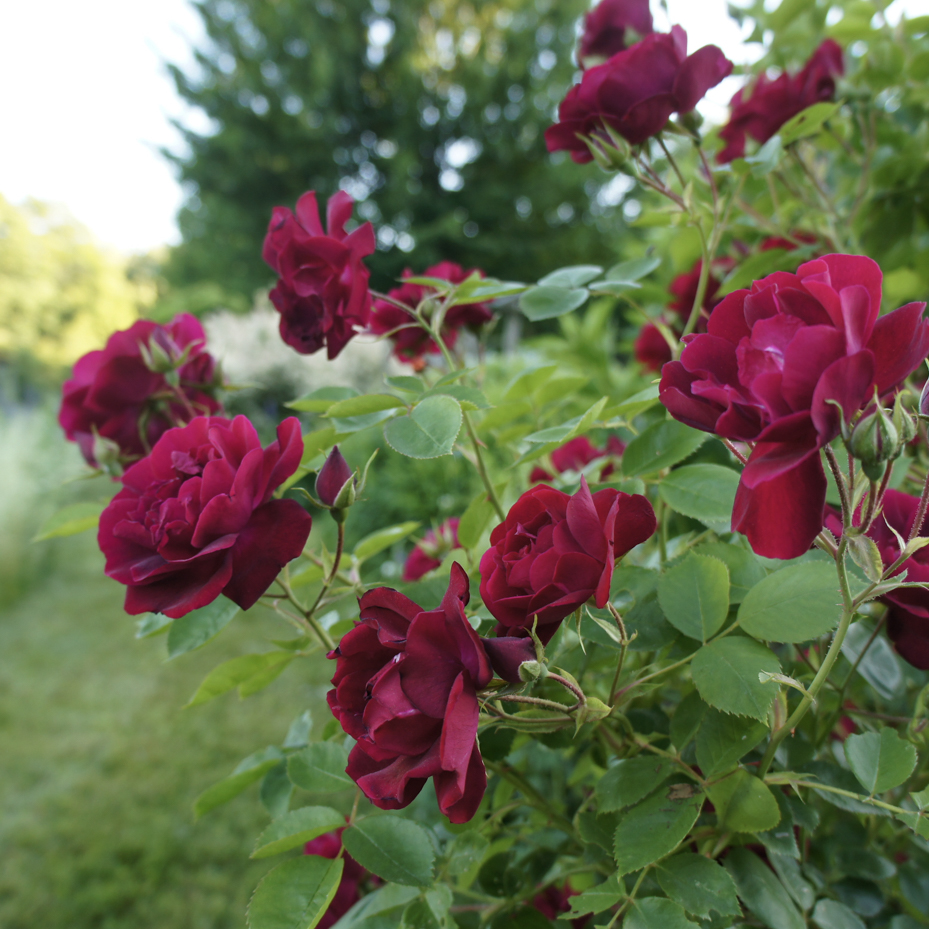
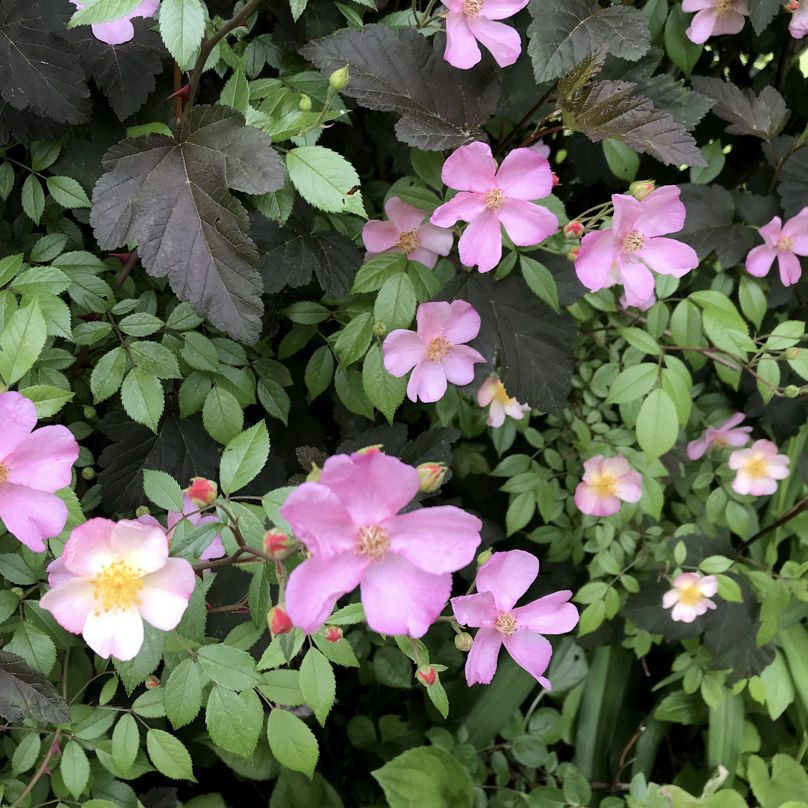
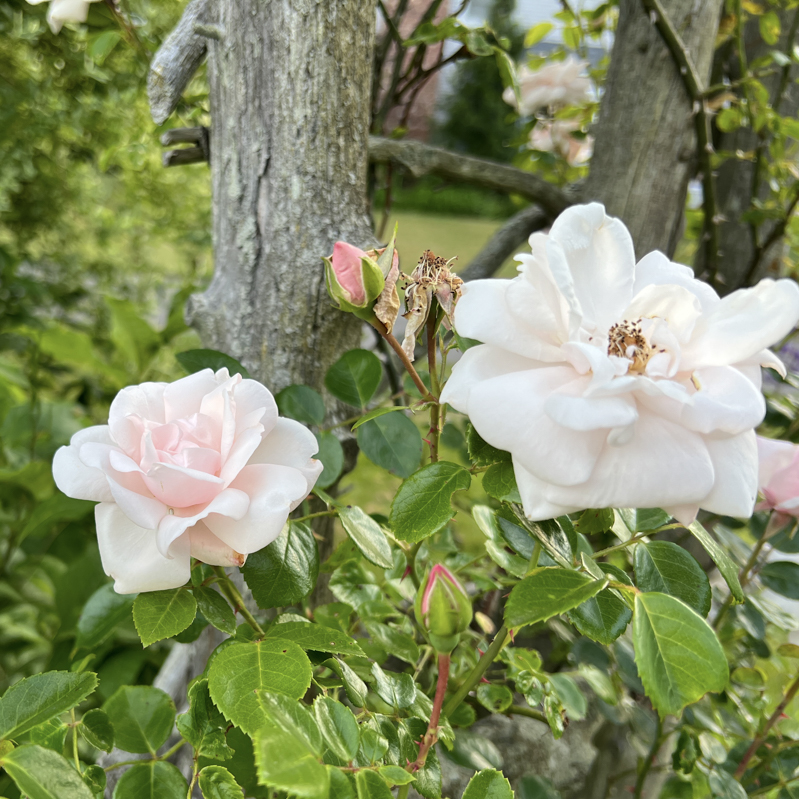
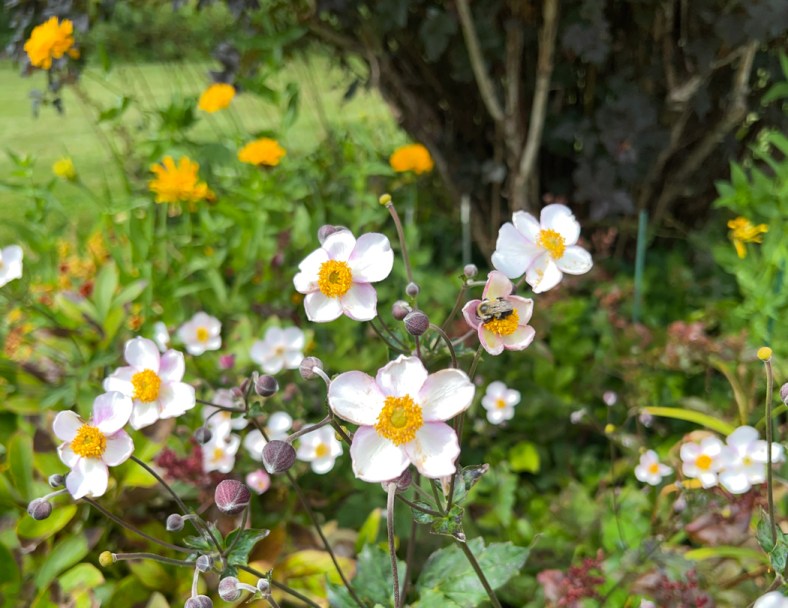
As you can see above—it’s a long game. Growing a novel is like starting perennial flowers from seed. You must be patient. There will be no blooms the first year. You tend them and hope the plants survive the winter. Sometimes they don’t. Sometimes they need multiple years to have a display of blooms that create the vision you hoped for. This year my anenome saponica flowers begun in 2023 were finally as gorgeous as the ones I admired in Scotland and had wished for my own garden.

Wish me luck with Imprint and Inheritance; I’ve already gotten my first rejection. I hope this novel can get to the people for whom it will more than resonate. Once I find an agent (which can take a year…!), it will take at least a year, usually more, before it’s published. So, hang in there. It’s a long game and thank you for asking. Thank you for caring.

Whoops, Where Did That Year Go?

Dear friends,

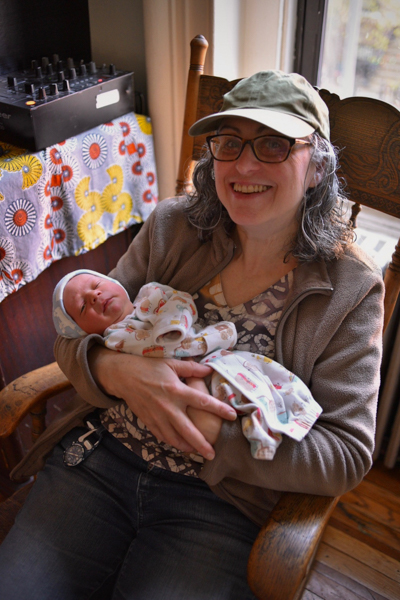
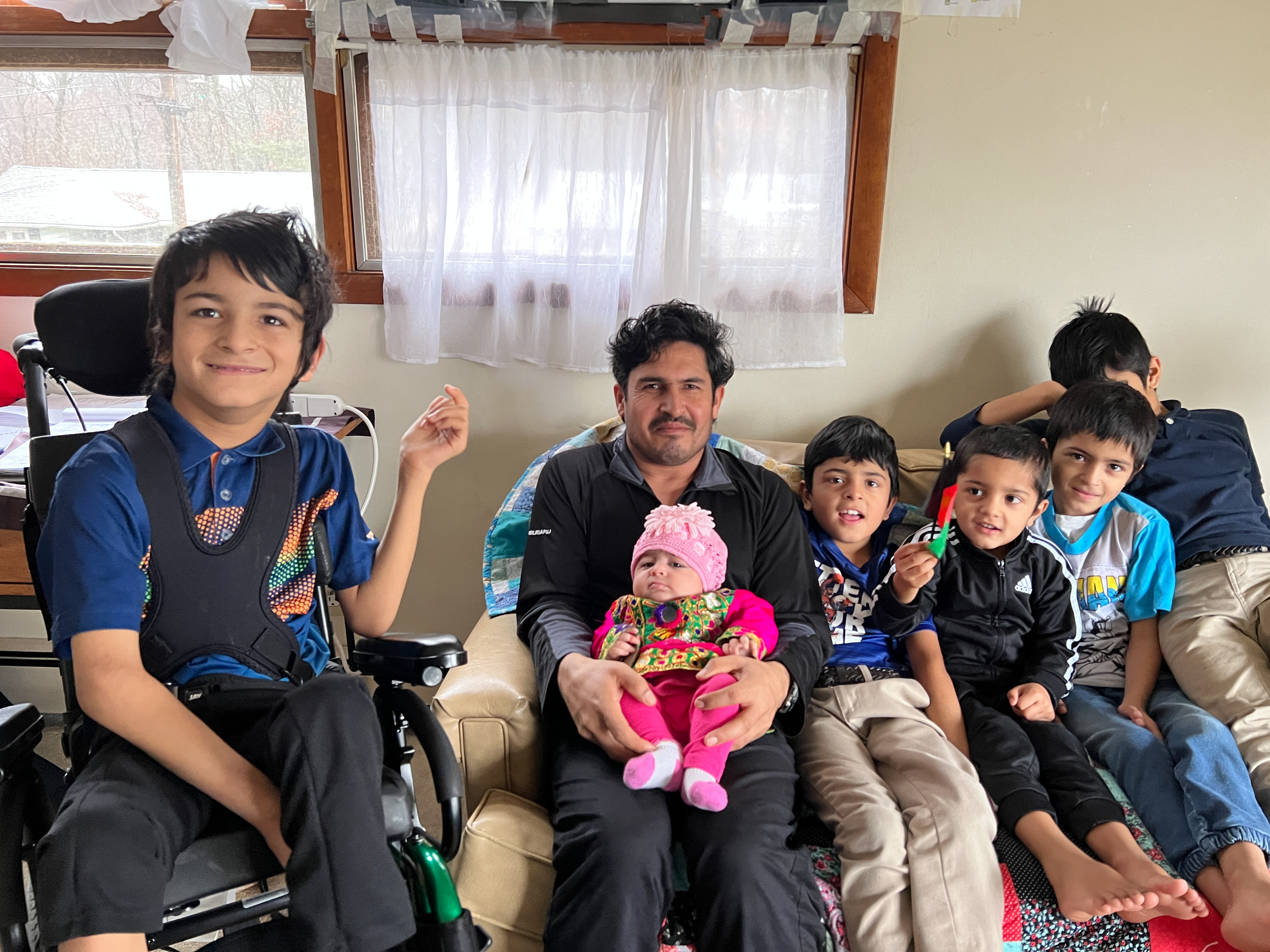
It has been an event-filled year in my life and so you haven’t heard from me in a while.  There were a few challenges that stalled my writing life: early-detected cancer (thank you, Baystate doctors for catching that so early), Carpal Tunnel Syndrome that made it hard to write and type (thank you Dr. Wintman for fixing my hand so well), and a head on car accident! (thank you Bailing Li for your skill in acupuncture).   When it rains it pours, but there were also some wonderful things that happened to fill the year.  Most wonderful was the addition of a new grandchild, and I got to be present within an hour of his birth.  I was also thrilled to be part of a Circle of Care helping an Afghan refugee family settle into American life, and got to be there within hours of their new baby’s birth as well.  We have become very close. 

After some fits and starts, I finally have the time, energy and focus to begin my writing in earnest again.  You may ask, what’s been going on with my first novel, Breathing Water?  Over most of a year, I sent queries out to 47 agents in batches of 8 or 9, waiting 6 – 8 weeks for responses each time.  I got a little bit of interest, including a few requests for complete manuscripts and a few who even said my writing was good.  Unfortunately, it never fit with what they were looking for in their lists.  Agents are the gatekeepers to traditional publishing, as mainstream publishing houses will not respond to individual authors.  If you want to publish in the traditional manner, bringing in their expertise of editing, cover design, distribution and a little bit of traditional marketing, you must find an agent and then they will try to sell the book for you.

Each year somewhere between 500,000 – 1 million new titles are published with traditional publishers.

Consider that each agent, and there are thousands of them, gets hundreds of queries every week.  Even though each author will send multiple queries, that still means for every traditionally published book, there were at least hundreds that did not get published this way.  That’s a lot of completed manuscripts just waiting to get out there.

So as I was contemplating whether to keep sending queries out to agents, I was also paying attention to the newest books that were being marketed in women’s fiction/ historical fiction.  I noticed that books about family relationships were shifting away from the audience that Breathing Water was written for, and toward a younger audience.

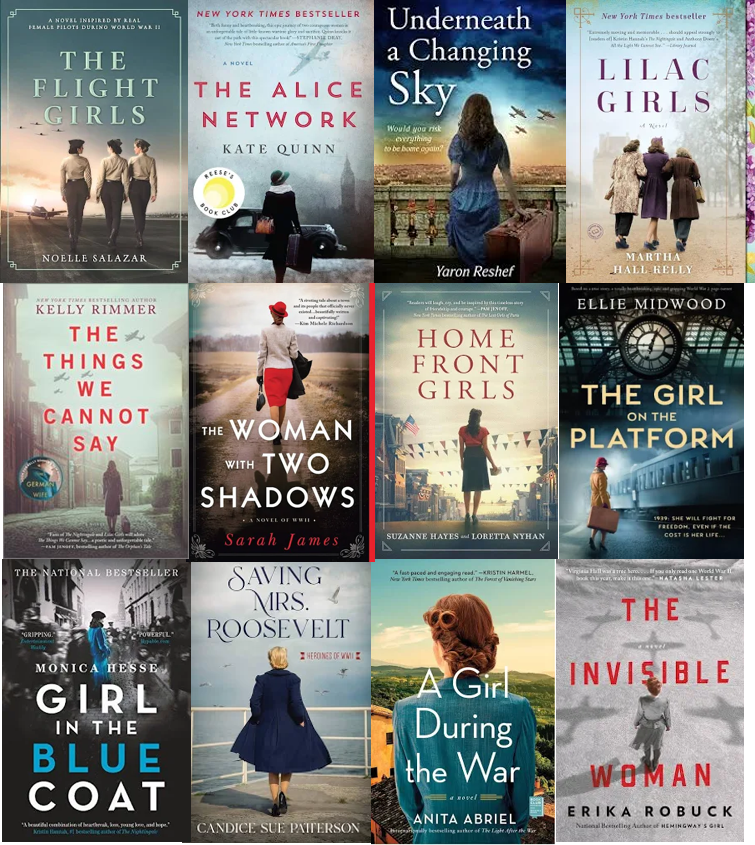
Have you noticed the topical trends in fiction as well?  Now there are enormous numbers of titles centered around the lives of women living during WWII, while there were very few prior to 2015.  Most have a cover with an image of a woman, or women, walking away from the viewer.  So, like clothing, there are also trends in books.  Breathing Water isn’t in fashion right now.

I realized that my second novel, Imprint and Inheritance, partially complete, would fit better than Breathing Water into the currently marketed milieau of traditionally published books.  So there my energies will go, and if that book doesn’t get picked up by an agent, there is always self-publishing, where books are printed on demand.  Last year, 2.3 million new titles were self-published, adding further to the number of books out there dying for readers. 

I’ve done a little research into the publishing world, and it turns out the number of published books (traditional and self) has been growing dramatically.  In 2005 there were 282,500 new books of both types, identified with ISBN numbers, while in 2022 there were about 3 million.  Unfortunately, sales have remained pretty steady, with a slight uptick during the worst of the pandemic.  With inflation factored in, there is a 38% decrease in sales between 2000 and 2022.  So with more books and the same or lower sales (because there are also audiobooks and other sales not included in these numbers), that generally means fewer copies of each book sold.

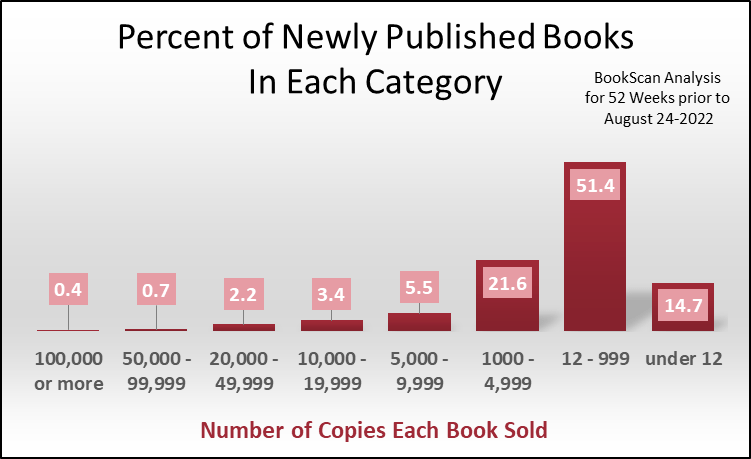
Here’s a snapshot of how many copies have recently sold for traditionally published books.

It’s kind of scary to see these numbers from the top 10 publishing houses, and I’m guessing it’s scary for them too.  Most of their money is made from the 50- 100,000+ copies sold, which was 1.1% of the books they published.  They admit that they cannot often predict which books will do well, but when 2/3 of the books they do choose to publish sell less than 1000 copies, they must focus on trying to find those big winners.  Remember, there were at least 10 times that number of books trying to get through the first step of acquiring an agent.  See the comments from Kristen McLean at NPD BookScan in this article, which is also illuminating.  Chart constructed from data she provided.

In addition, sales of previously published books, which now rarely go out of print with print-on-demand capabilities, has been increasing.  In 2005, new titles comprised 48% of books sold, while in 2021 it shrunk to 32%.  Also, most books make most of their sales within the first 2 years after publication.  These numbers demonstrate that customers are buying more from a small number of well-known authors and they are buying fewer titles from new authors. 

Things are even scarier in the self-publishing world.  90% of self-published authors sell less than 100 copies, and the average self-published author makes $1000 per year from their efforts.  20% make no income at all.  Only a lucky few make a lot of money from publishing books in any format. 

You may wonder, why bother? 

For the love of creation. 

Writing is an art, even though the end result becomes business.  I have some stories to tell and I feel more alive when those words have a chance to get out onto a computer screen, and hopefully into the minds of more than 1000 other individuals in this world.  If not, I’m having fun while I try.  Wish me luck!

Imprint and Inheritance is a story of mothers and their daughters spanning 3 generations.  This is a story of mothers who harm, and the struggle for forgiveness.

Fiana Mahoney is preparing to graduate from Teacher’s College in 1929 Brooklyn and marry a doctor. When she begins to hear voices, her world crashes around her.  Eventually, Fiana recovers enough to marry an alcoholic dreamer and start a family.

Her daughter, Colleen, finds herself motherless and homeless at 16 after her father has disappeared and Fiana is institutionalized.  Colleen dreams of the perfect family and creating the childhood that she never had for her own children.  Anna Marie grows up, oblivious to the imprint of her mother’s tumultuous childhood on her mother’s life, but also on her own.

Imprint and Inheritance is about the unavoidable connection between generations, courageous mothers who do their best with what life gave them, and daughters who try to love them as they are.

Being a Scientist and a Novelist … Isn’t That an Oxymoron?

Cultural Division of the Sciences and Humanities

We live in a culture where facility with science, facts and numbers are considered left brain activities and creative endeavors like fiction, painting and music are considered right brain activities. Individuals are supposedly trapped into primarily using one half their brain or the other.   Further emphasizing this division, college tracks are separated into the humanities or science & technology, with only a smattering of courses allowed on the other side of the aisle.  In 1959, C.P Snow—a chemist and novelist—called on the British to stop separating the two cultures and to allow greater crossover.  He called the humanists in his country “pessimistic Luddites” and saw the bright future of prosperity and cold war superiority in science—but a humanized science.  His short book on the topic became hot in the US as we ramped up our own science and technology for the space age.  1

Left Brain- Right Brain Theories and Handedness 

In the 1980s, left brain- right brain theory was popularized and remains so to this day.  You can take quizzes online to find out your brain dominance and personality.  These theories started with the over-interpretation of a case study involving an epilepsy patient whose corpus callosum was surgically severed to control his seizures.  The corpus callosum, Latin for tough body, is a fiber network joining the right and left hemispheres.  This surgery helped the patient’s seizures, but messed up his ability to process information and move in a side-specific manner. 2

This myth of right- and left brained people is perpetuated by many factors, including our observations of right- and left-handed people.  Lefties comprise only ~10% of the population (and have been since prehistoric days) and are expected to be more creative.  Based on that, you would guess that a room full of scientists would all be right-handed and if they were all sitting at tables taking notes, no one would have to worry about bumping elbows.  It was after an elbow bump during a meeting tightly packed around a table that I first realized at least half my molecular biology, pharmacology and chemistry colleagues were left-handed.  I felt a little left out as a rightie, as if maybe I had a creativity disadvantage.  But scientific study does not support this common stereotype 3, and instead some hypothesize left-handedness remains in the gene pool due to an association with competitiveness. 4

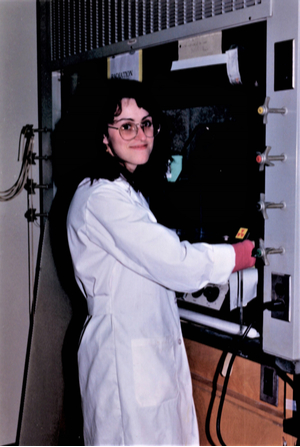
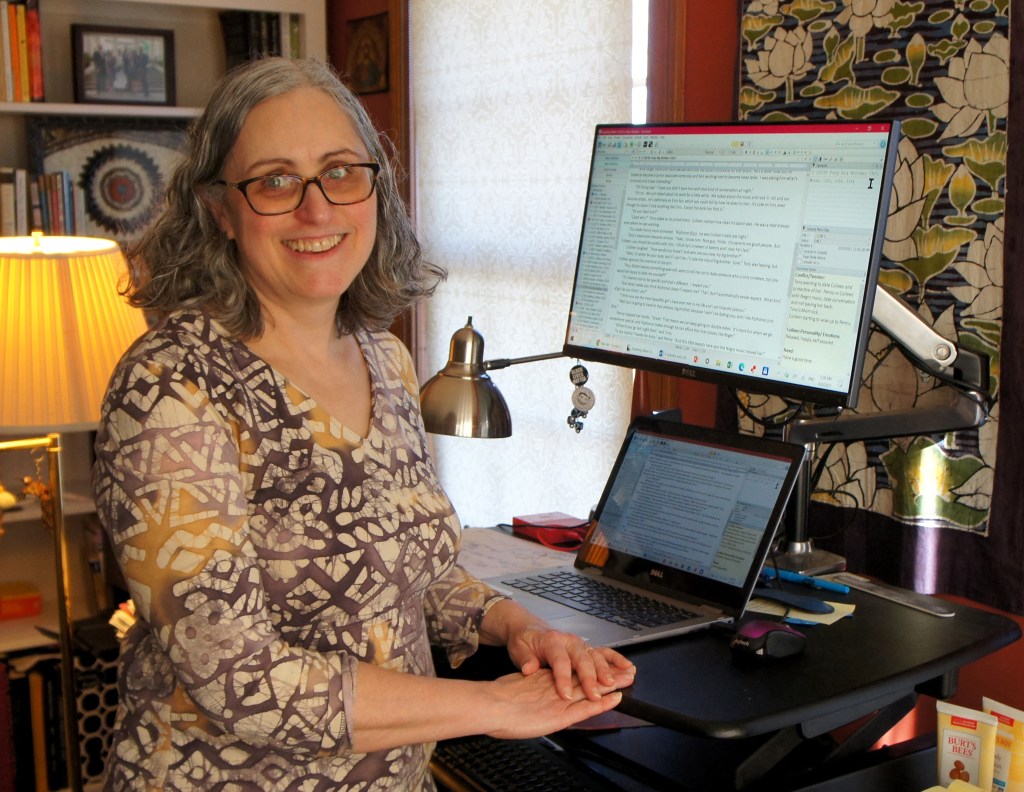
The author as a Post-Doctoral Fellow at Yale University (left) and more recently at her writing desk (below)

Myths and Truths on Left-Right Brain Use

Scientific inquiry over the last 20 years has enabled us to measure the size and activity of different brain regions in living humans and even dogs.  Imaging can be done in people who are doing nothing in particular (the default brain network) and while they are engaged in specific tasks.  These types of studies have verified that righties have most of their motor functions controlled by the left motor cortex, while lefties have more controlled by the right motor cortex, but with not as much of a preference as righties.  That makes it easier for lefties to become ambidextrous and cope with a broken left arm. 5

There are many functions that tend to be more predominant on one side of the brain verses the other (lateralization) and it’s an expanding area of research.   More of the functions associated with language are found on the left, while attention and non-verbal communication is more focused in the right brain.  But imaging has allowed us to see that for individuals, we are not predominantly using only one side of our brains verses the other outside of our motor functions. 6

The Gorgeous Corpus Callosum

I want to put in a plug here for the beautiful brain and the amazing corpus callosum.  It is the largest white matter tract in the brain and allows for exquisite coordination of left and right hemispheres.  It’s only found in placental mammals and the complex lateralization and interplay between hemispheres in humans is not found in mouse brains, the species I most studied.  The corpus callosum and its complexity are part of what makes us human.


Corpus Callosum in Red
Images are generated by Life Science Databases(LSDB)., CC BY-SA 2.1 JP

Science-Trained Authors

So now that we’ve got the handedness and left-right brain story a little bit explained, what about a scientist becoming a successful novelist?  Most people would think the link with science fiction was pretty reasonable.  Andy Weir, author of The Martian, is a computer programmer who we can put into the analytical scientist bucket. But many would be surprised at the inclusion of Vladimir Nabokov and Lewis Carroll on the list.  Contemporary biologist/authors of other types of fiction include: 

  • Diana Gabaldon- the Outlander series
  • Barbara Kingsolver- The Poisonwood Bible, The Bean Trees, The Lacuna
  • Delia Owens- Where the Crawdads Sing
  • Lisa Genova- Still Alice, Inside the O’Briens, Love Anthony 
  • Brandon Taylor- Real Life

Many physicians and psychologists are also successful authors and there’s even a website at NYU that helps you find not only medically oriented authors but also good literature including science. https://medhum.med.nyu.edu/  Think about Anton Checkov, William Carlos Williams, W. Somerset Maugham, Abe Kobo and Percy Walker in an earlier era.  More modern physician/authors include:

  • Kaled Hosseini- The Kite Runner, A Thousand Splendid Suns
  • Abraham Verghese- Cutting for Stone
  • Chris Cleve– Little Bee, Everyone Brave is Forgiven, Incendiary
  • Irvin Yalom- Lying on the Couch, When Nietzsche Wept, The Spinoza Problem
  • Carol Cassella- Oxygen, Healer, Gemini
  • Perri Klass- The Mercy Rule, The Mystery of Breathing
  • Melissa Yuan-Innes/ Melissa Yi- Code Blues, Life Support, Terminally Ill
  • Tess Gerritsen- Girl Missing, The Apprentice, The Bone Garden

The works of these authors span genres and although many include significant components of their scientific/medical expertise, many do not.  You’ll find little bits in my novels, and I hope to join the ranks of these distinguished published authors soon.

As a Willow Grows So Does a Story

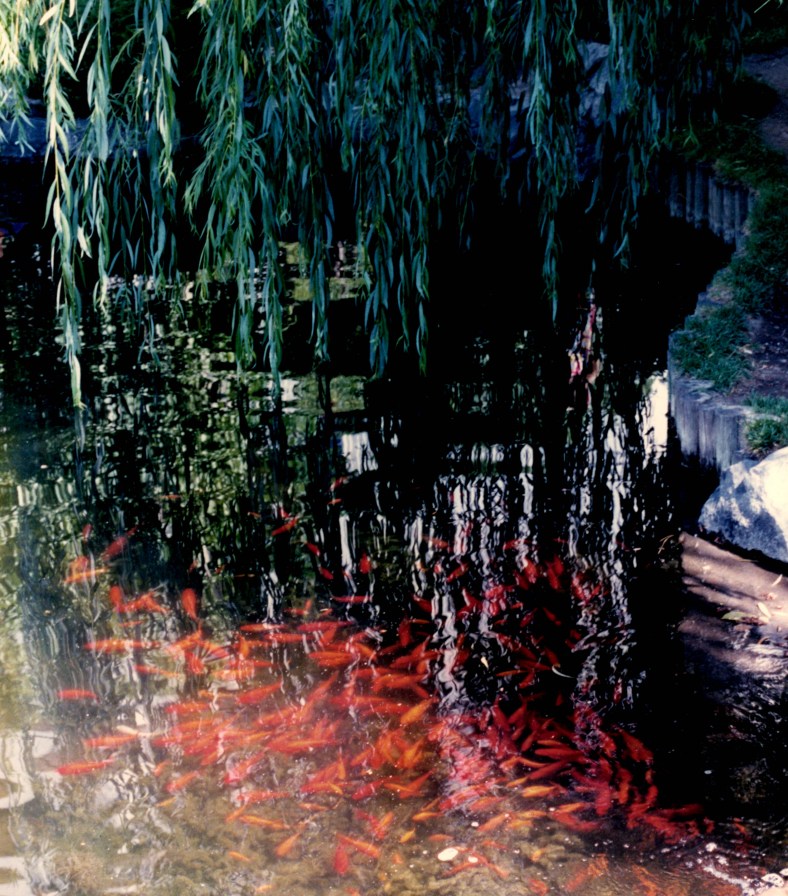
willow over goldfish pond

One of the most common questions people ask an author is:  How long did it take to write the book?  Some writers churn out a book a year and others take 5 or 10 years.  The answer for me with Breathing Water is more complicated and I’ll tell the story with this willow tree.  

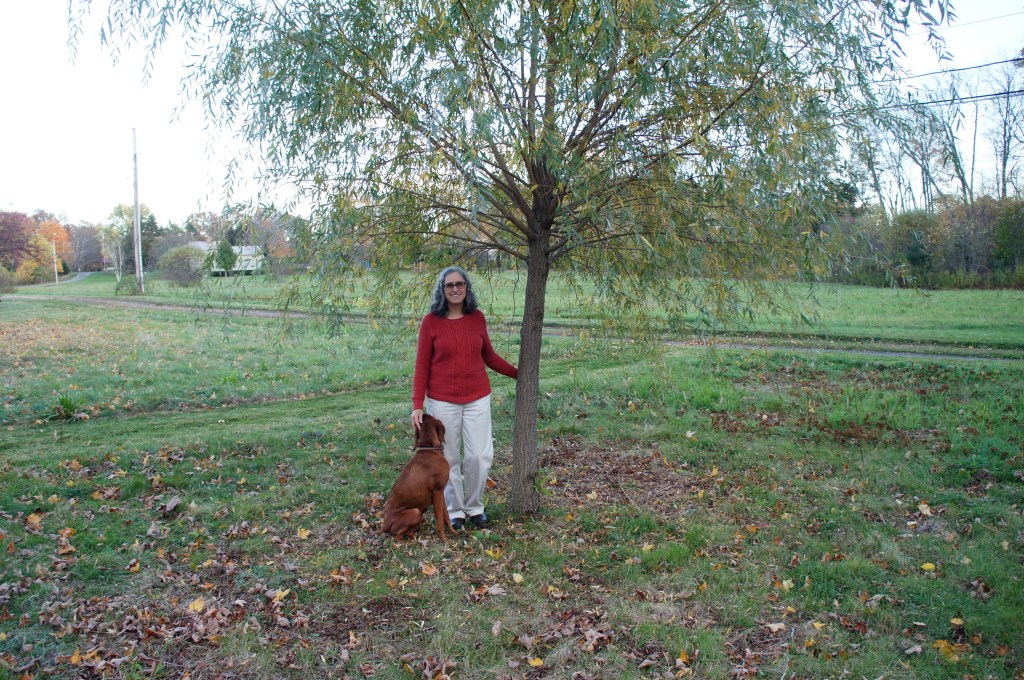
Author at the start of Breathing Water

Why did I choose a willow tree?

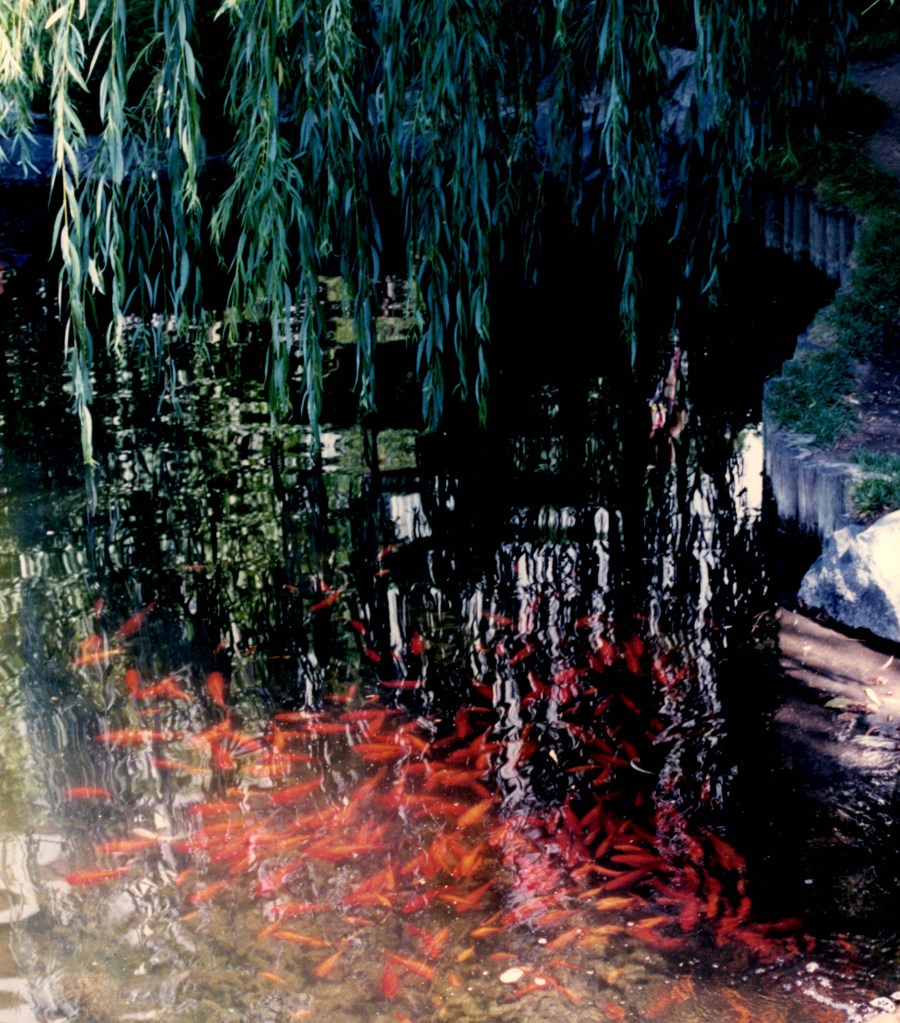
My fascination with willows began at a botanical garden where I took a photo of a willow tree reflected in a goldfish pond.  It hung in my office for years and I loved the form of the tree and the abstract quality of the image and reflections with the fish underwater.  Many years later, I made up a story featuring a willow tree during a writing group I helped facilitate at the jail.  It was about a girl whose loving memories of visiting her grandmother were intertwined with the big willow tree she would play and hide in.  I was thrilled when my husband decided to plant one in our yard. Little did I know that I would have a granddaughter before my first book was published, and she has already enjoyed pulling on the fronds. Maybe this tree will have a magical place in her life as well.

Learning How to Write

Part of writing my first novel was learning how to be a writer.  It’s different than writing scientific articles! Partly, you can only learn by doing, but it is a craft and it’s something you need to work at.  I didn’t want to go to school again for an MFA, and I tend to be a do-it-yourself type, so I used multiple sources to help me learn. 

Books about writing, some of my favorites were: 

Writing groups and workshops:

Writer’s Digest magazine & conference

Lots of reading and of course always writing and getting feedback early on about what was working for people.

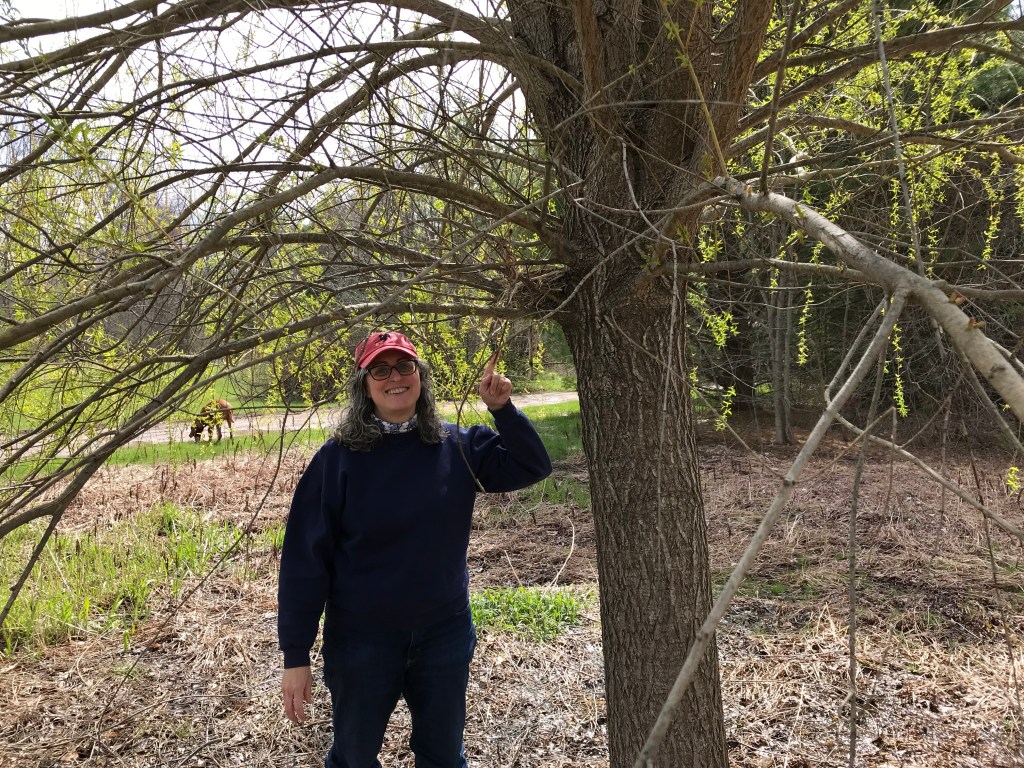
I started more seriously when I retired from my position as a research scientist in January of 2016. By October I felt like I was in writing mode enough that I asked my husband to take a photo of me by this young willow tree to mark the real start, even though I continue to learn by doing.

So How Long Did It Take to Write Breathing Water?

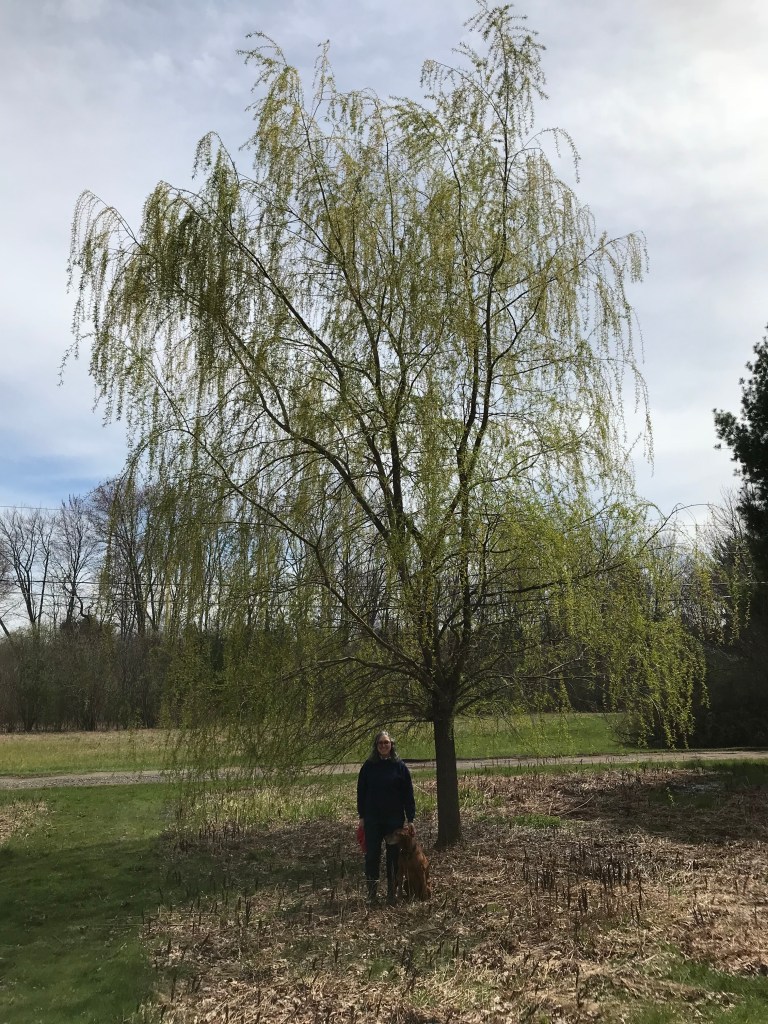
I had a lot of story to tell, over 3 generations of women from 1917 to 2017, so I finished a monster story 3 1/2 years later in May of 2020.  The willow, since it’s planted on an ideal wet site in the open, grew rather quickly by then and we marked the occasion with more photos.

after writing a monster-sized story

That’s Henry, my buddy, who loves to keep me company in the woods during my daily walk.  The willow grew so much that a robin built a nest in it that year.

robin’s nest

My story was too long for one book, but once I moved the story in my mind to my computer, I could decide how to divide it into two books, leaving some parts behind and writing fresh sections.  The first book from this series is Breathing Water, which I completed on February 21, 2021 and sent out to beta readers over the next week.  But it isn’t really done until it’s published and I’ll have more edits to do at different stages in the process.  So how long did it take me to write the book?  Something shy of 5 years, I guess you can say, or the time it took for a willow tree to mature.  The second book will probably take ~ 1 year to trim into shape, so that would be 2 books at an average of 3 years-ish.  Not too bad for a start, I guess, and I’ve got ideas for the next 2 books after.  I wonder how long they will take?

Donna Barten: Writer, Scientist and One Who Wonders…

I first became interested in writing fiction while co-leading writing groups in a women’s prison.  I volunteered with Voices From Inside as a balance to my work as a research neuroscientist, where I ran a lab studying treatments for Alzheimer’s disease for over 20 years.  In these small groups of women I not only heard many unexpected stories, but found that I enjoyed writing my own.  I began to embellish, change and create new characters and eventually the characters in Breathing Water and Imprint and Inheritance demanded my full attention.  Over the next five years I invested in learning the craft of writing fiction as I created these two novels and now I can’t imagine a life without this kind of writing.

You may wonder how science and writing fiction could fit together.  As a scientist I am always asking questions.  “What makes a normal nerve cell become abnormal?  How does that cell cause its neighbors and then the whole brain to move out of equilibrium and cause functional changes?”  As a writer I ask similar questions.  “If a character has a significant mental health challenge or an addiction, how does it affect not only their own life and dreams, but also those around them, and then those in the next circle around them?  What becomes embedded in the family dynamic?”  I also like to plant each character squarely in their times and culture and thoroughly enjoy the research involved in adding those historical details. 

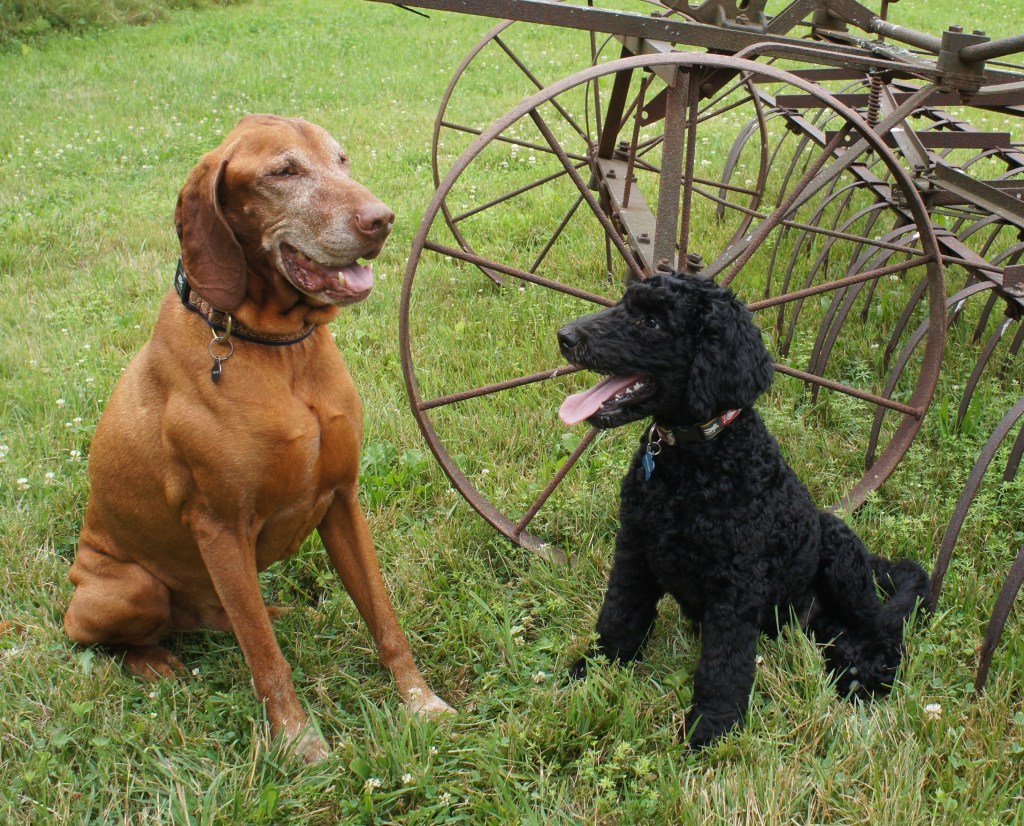
I often work out plot points during long daily walks with our two dogs, Henry and Jocco and they keep me company, i.e. sleep, as I write.

In my spare time I garden, cook and do volunteer work.  I am a practicing Christian and live in rural Connecticut with my husband. We have two children and two grandchildren.  I often work out plot points during long daily walks with our two dogs, Henry and Jocco and they keep me company, i.e. sleep, as I write.