One of the fun parts of writing and making up lives is that you get to name everyone.
So how do we authors think up names? There’s the old tip to walk around cemeteries and get inspired by the names of persons long gone, but I’ve never done that. Sometimes it comes to you in a flash and you know THAT is the right name. Other times you will meet someone and their name will suddenly seem right for your next character. That happened to me when I was getting a colonoscopy! One of the nurses was very friendly and I liked her name. As I woke from the anesthesia, I knew her name was perfect for the protagonist in my next novel. Thank you Hilary.
I’ll tell you a secret. I get many of the names I need from social security! Nope, I’m not stealing anyone’s identity, but it’s a great way to see the most common names from a particular decade when people were born, 200 male and 200 female. Here’s the link if you want to check out your own decade, or if you’ve got a baby on the way and like vintage names. It’s fun to see how much influence pop culture and famous people have on new parents. I find this site much more helpful than baby naming sites and there are no flashing ads.
Sometimes a name comes to me as I’m mulling it over for a few days. That happened with Julia, one of the main characters from Imprint and Inheritance. I actually had a different name, but it didn’t seem right. During a walk with my trusty dog in the woods, Julia popped into my mind. I remember right where I was when that happened, next to the stream just after crossing a wetland swelling with skunk cabbage and then a little plank footbridge. Julia was born.
In the novel, I needed Julia’s mother to explain to her why she picked that name and have this choice be a sign of love for her. I’d become very attached to the name Julia, but I was stuck on that essential plot point. I thought I might have to change the name again (thank goodness for the “replace” command), but it made me quite sad. My character felt like “Julia.”
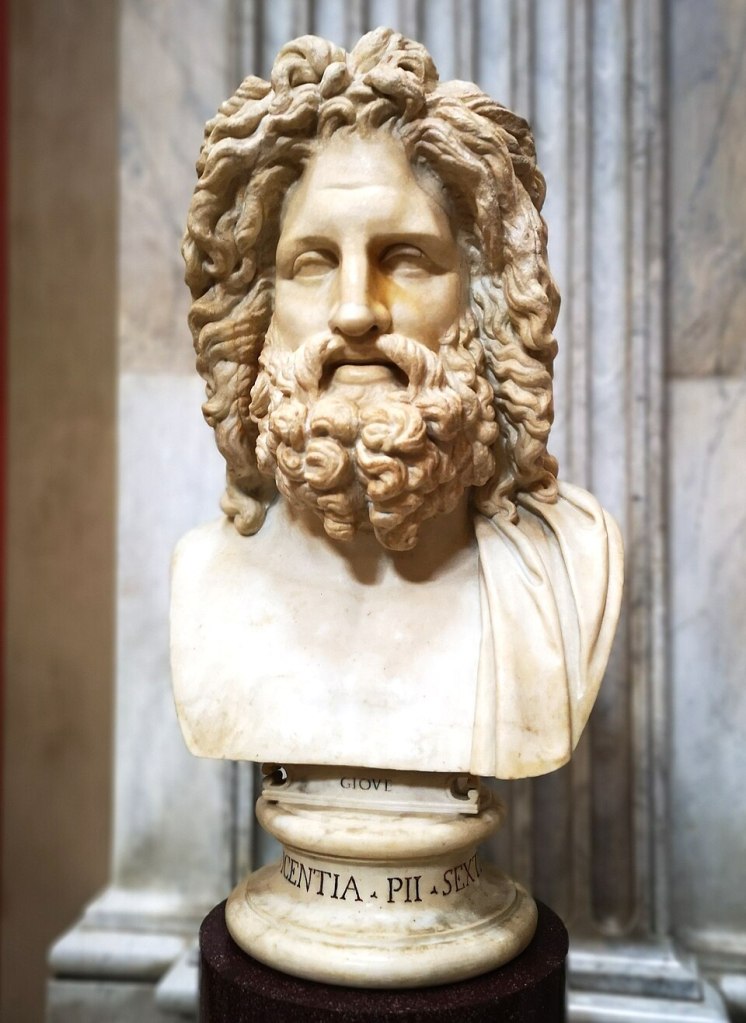
I was coming up blank with searches on famous people named Julia, famous characters named Julia, famous historical figures named Julia. The name derives as a feminine form of Julian, which is derived from the supreme god Jupiter in Roman mythology. It didn’t fit my needs at all.
Jupiter in the Vatican
photographed by Biser Todorov, CC BY 4.0
Then I stumbled upon a secondary character named Julia in a classic book pretty much everyone has read. The Julia in George Orwell’s 1984 fit my purposes perfectly, and the Julia in Imprint and Inheritance was thrilled with why her mother chose that name.
Check out this article by Bookriot that shows lots of 1984 covers over the years. It’s fun to see which you recognize and which you prefer.
Julia is number 118 in popularity on the social security register for the 1960s, her birth decade, so it was accidentally a good choice there as well. Julia got to stay Julia for all the right reasons.
In case you’re wondering about my dog’s name, another fun activity, it’s Jocco. That also came to me in the woods, actually pretty close to the place I came up with Julia. I’ll have to remember that if I’m stuck on a name in the future!
I just finished reading Liane Moriarty’s The Apple Doesn’t Fall (Yes, I can recommend it… what a good study of marriage and sibling rivalry in such an engaging story). As I skimmed the acknowledgements, she described naming one of her characters. Simon Barrington is a real person who won a fundraising contest where the winner would have a character named after them in Liane’s next book. I wondered if the character’s appearance and characteristics were based at all on reality, but was never able to find anything about the real Simon, just the actor who played him on the video adaptation. If you know Simon, let me know!
Do you have any fun tips for finding names for babies or characters?
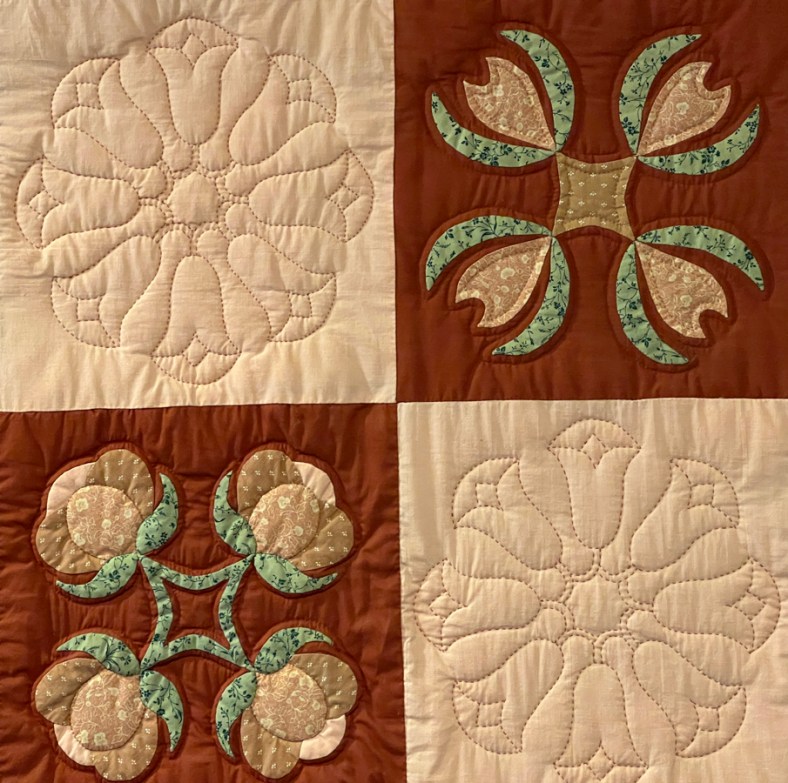
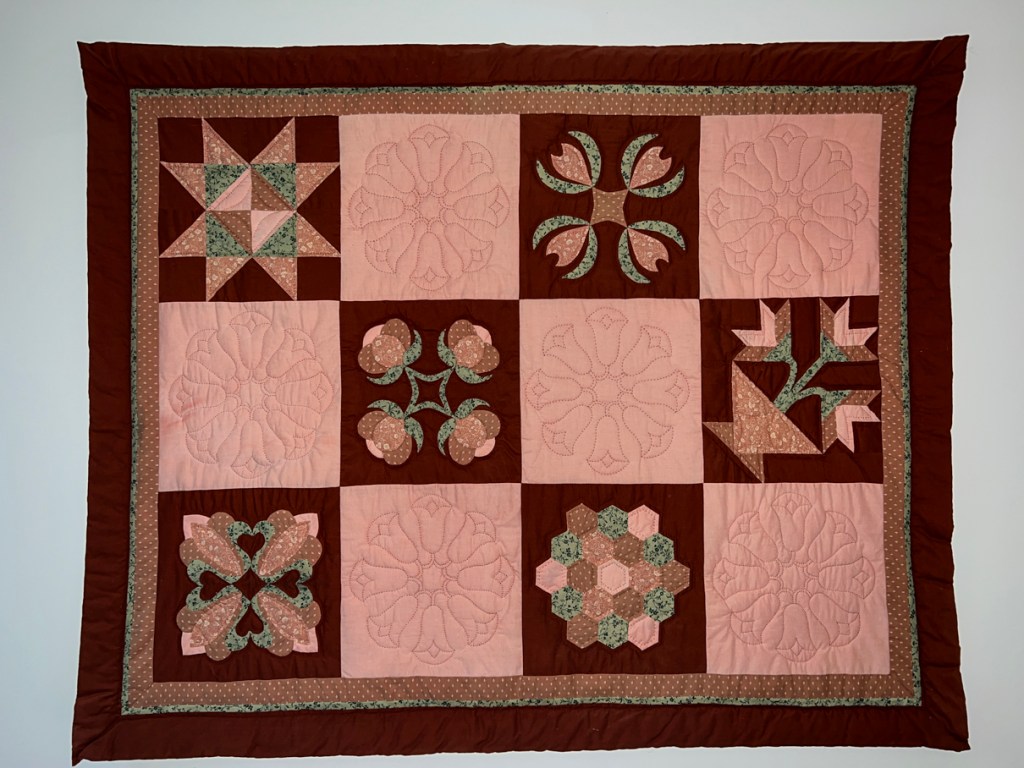
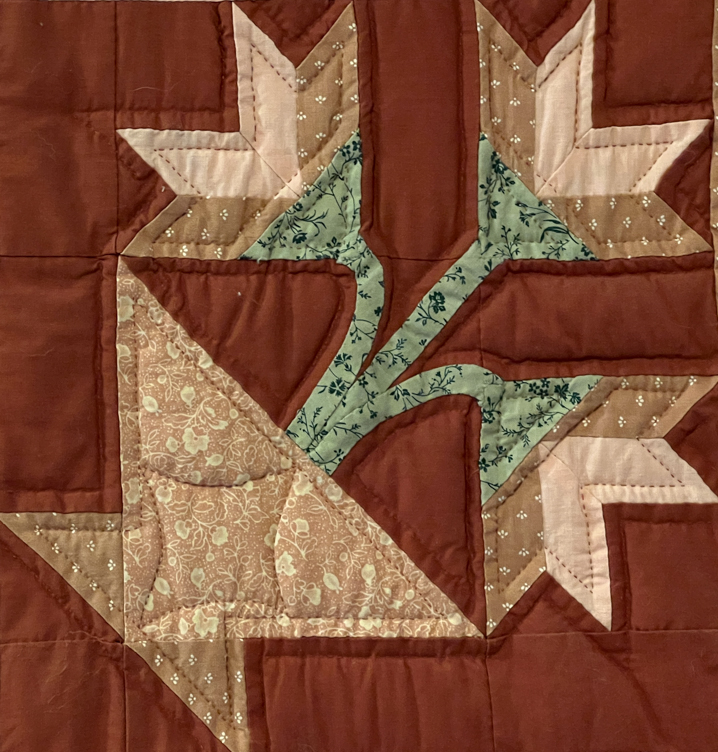
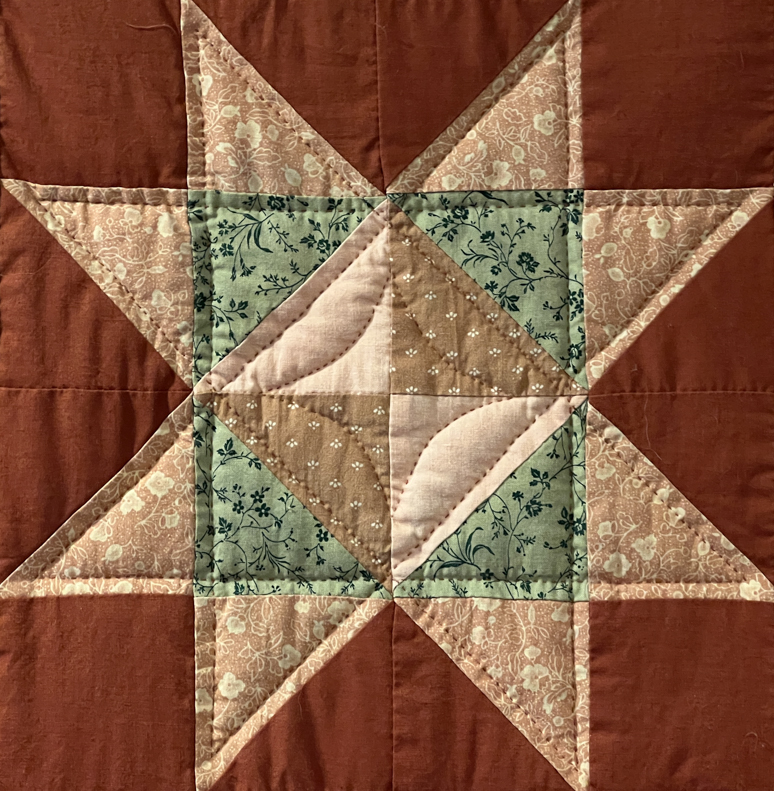
While I was a new mother attending graduate school, I yearned for some small, creative activity to soften my busy life. Because the winters are so cold in Minnesota (U of MN graduate), quilting is a big hobby. So, I signed up for a hand quilting class, and it was just what I needed—a mental and physical break without being passive. I made a baby sized quilt that was too good to ever put near a spitting-up baby, but it has hung in my home ever since, a constant reminder of my daughter and the joy of becoming a mother.
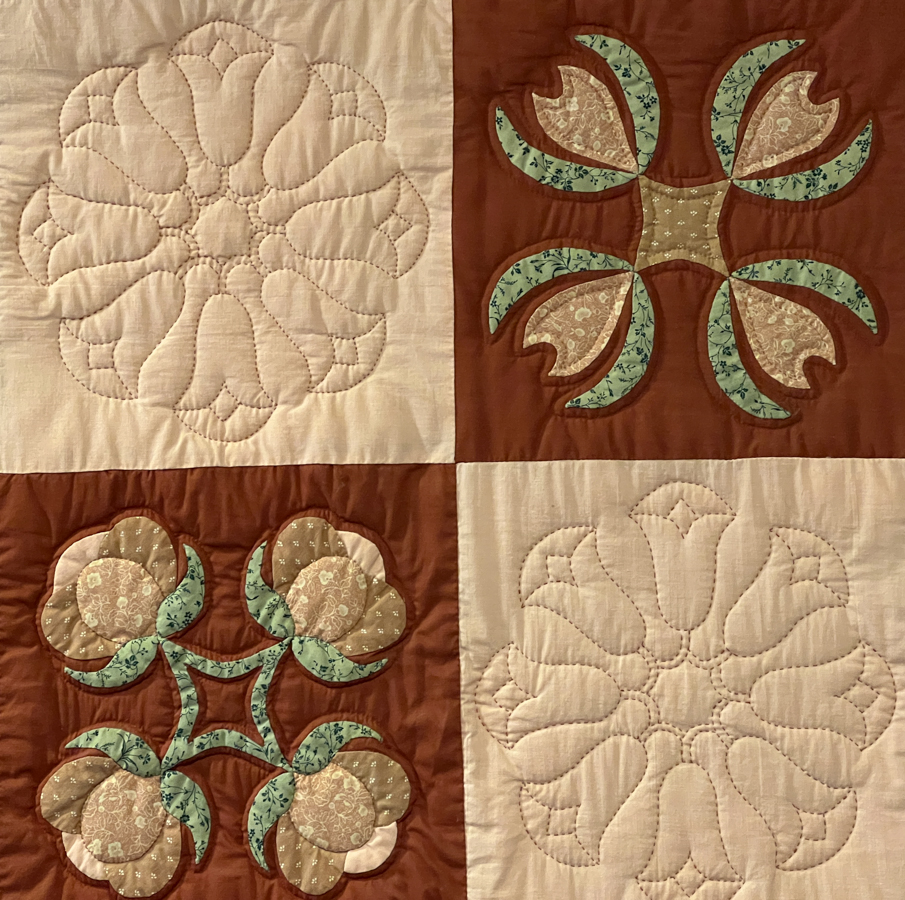
Patchwork quilts usually have repeating fabrics, colors and designs, and in this quilt, the light orange squares all have the same pattern of a circle of bell flowers. In the darker squares, we learned different techniques, so those designs are all different. But look closely and you will see a stylized (pinched) square shape in the center of the symmetrical flower designs (left). Our instructor asked us to look for places to repeat a pattern in each of the other squares, and I was able to fit that stylized square into all but one of the darker squares through quilting. On the right you can see two squares where I’ve repeated that element.
While I was looking at that quilt one day, I realized that these repeating elements were similar to writing. You work on your basic story and there are innumerable revisions and improvements once you’ve got that story down. You add details to enhance the readers experience, and—you got it—you repeat some of the details to create more of a cohesive whole to the story. One way I’ve done that in my latest novel is with roses. I didn’t start doing it on purpose, but I had this teapot and it happened organically.
The teapot was inherited from my mother. It had belonged to her mother. It was a natural to add to the story and link the three generations of women who inhabit Imprint and Inheritance. I happen to like roses, so they worked their way into the story in other ways. Once I noticed the pattern, I made it intentional, like the stylized square shapes in my first quilt, to enhance the texture of the story. It’s those little details that enrich our lives and those of our characters. Below are some roses that have bloomed in my garden.
I haven’t done much patchwork and quilting since then, but always enjoy looking at the artwork of others. Here’s a few made or owned by people I know.
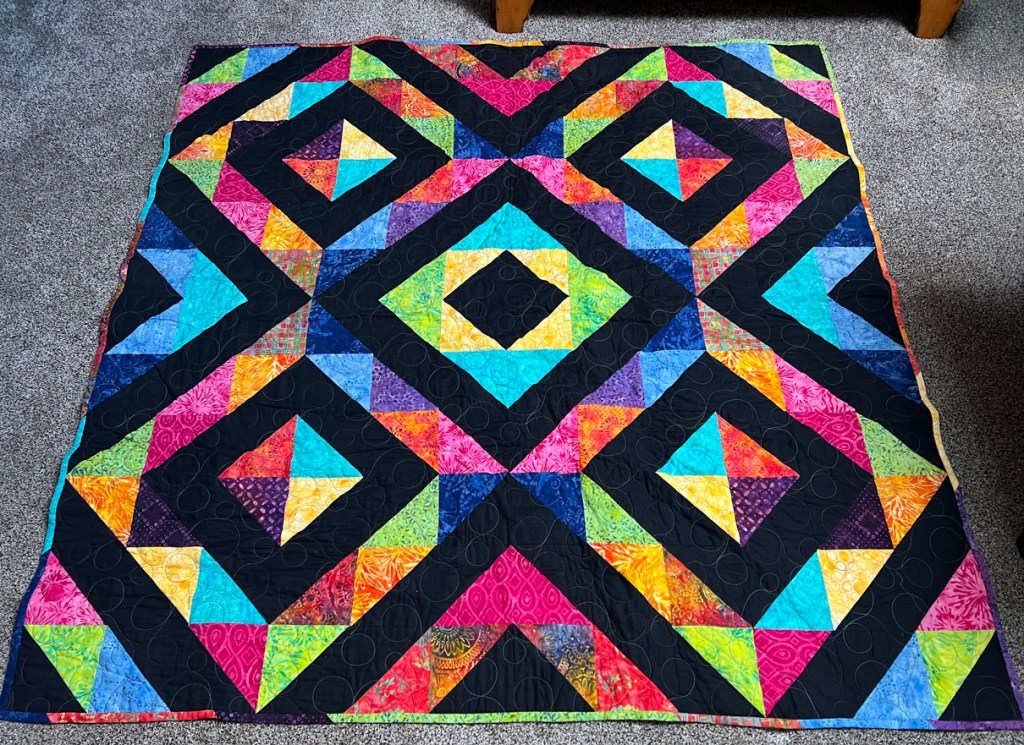
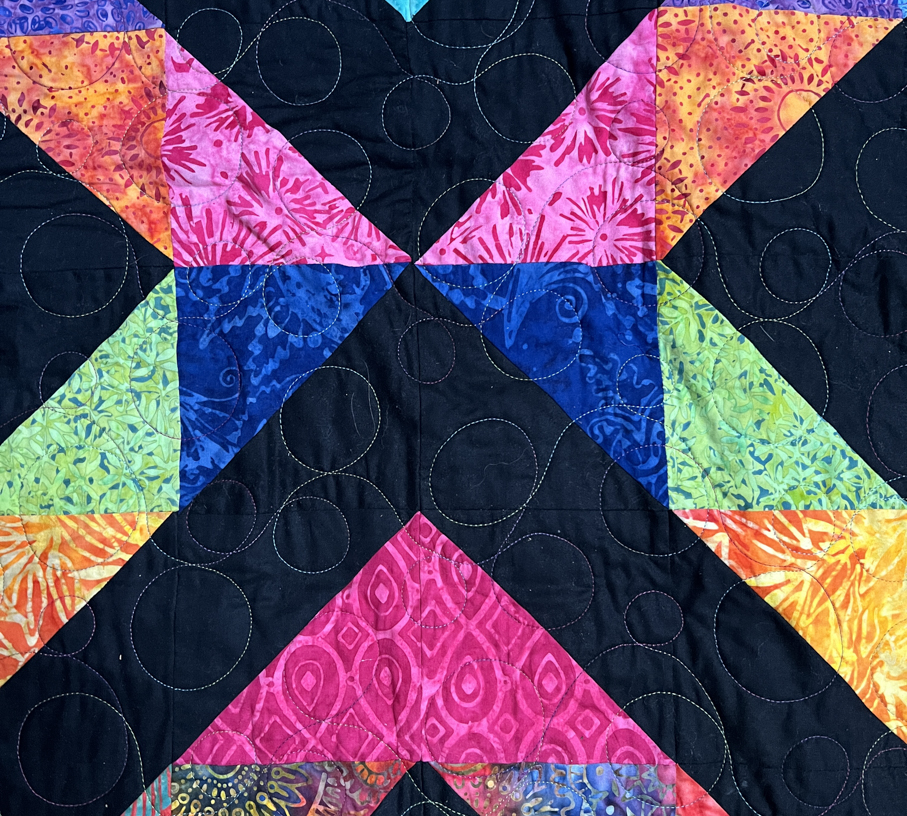
My friend BJ Jackson made this quilt for me as an amazing surprise gift. I was blown away by the contrast of the bright colors with the black geometric shapes. Note how she used different fabric patterns, but often with the same colors (ie pinks) to enrich the piece with repeating elements of color. This quilt lives in my writing space for inspiration.
This beautiful quilt is owned by Lise and Bob Howe, and was created by Bob’s mother, Nancy Tongue Howe in 1995. Notice how the strong repeated pattern and solid grid allows the quilt to use a plethora of different fabrics to great effect.
This quilt was crafted by Joann Blackmore to highlight fabric designed by my now grown daughter, Ellen Tips. The small parallelograms are Ellen’s fabrics, and Joann pulled it all together by using larger blocks of different colors, but with similar circular/floral designs. The shape and pattern repeating elements pull the whole thing together.
Next time you read a book, see if you can identify some repeating elements that may be adding depth and meaning to the storyline. Let me know what you see.
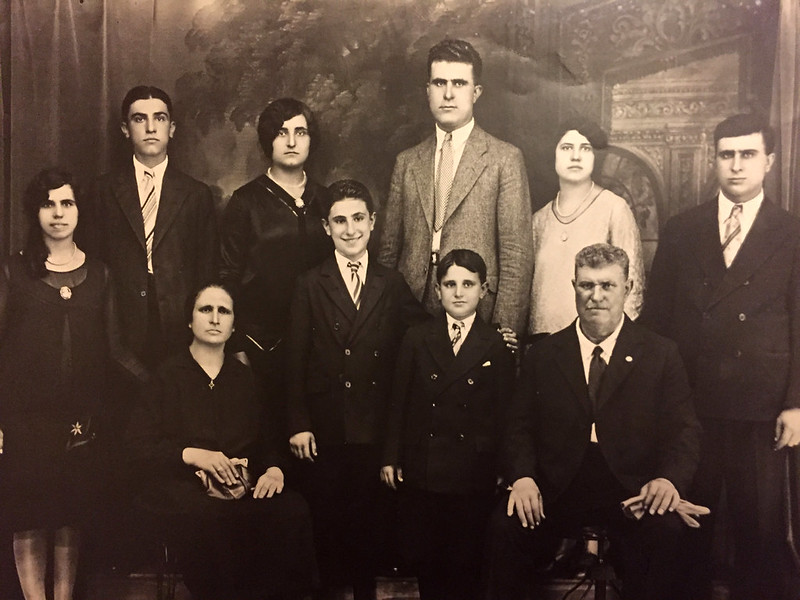
Old photographs figure large in my second novel, Imprint and Inheritance. Colleen shows Julia old photos from 1920 – 1960 to reminisce, and one particular photo is the inciting incident for the novel. Most were black and white, but the earliest photos were sepia-toned. As I wrote, I wondered if black-and-white photos turned sepia with age, or if they were created that way.
The word sepia comes from the Greek word for an ink extracted from European common cuttlefish (Sepia officinalis), of the reddish-brown hue. Turns out these are fascinating animals. Since cuttlefish squirt ink and camouflage themselves by moving pigment to different parts of their body, it made sense for early cultures to extract ink for their own use.
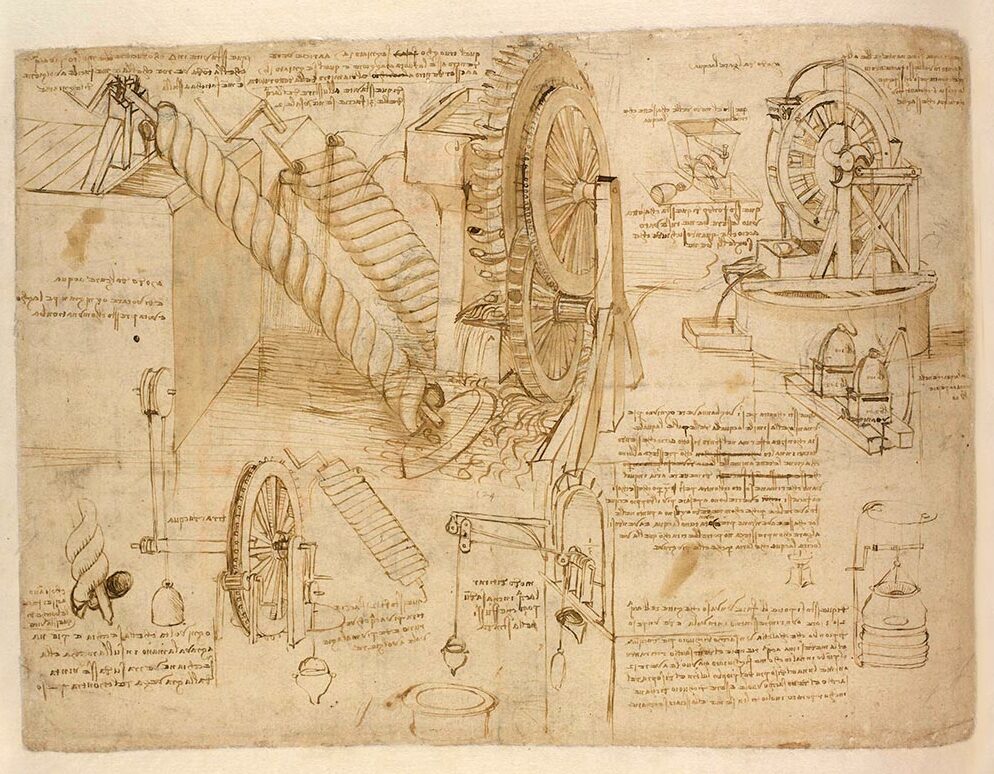
Sepia ink was used by writers and artists for centuries, including by Leonardo DaVinci.
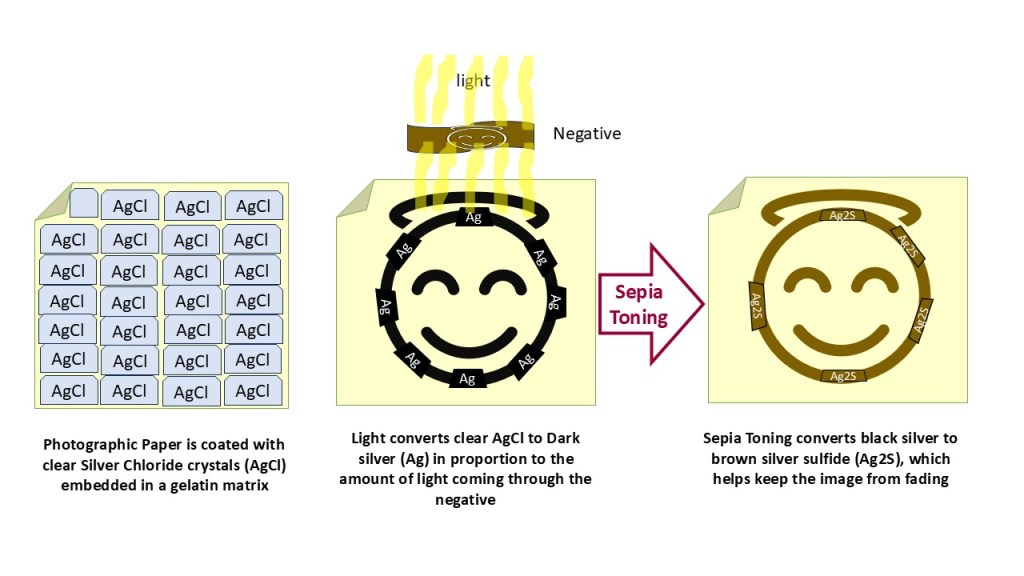
It turns out sepia toning was a separate step while printing photographs from the 1880s to the early 1900s. The photos started out black and white, but were toned to sepia by the photographer before the customer ever saw it. Not only did Sepia toning make the images warmer and more inviting (increasing in warmth with aging), but it fixed the photographic image on the paper for 50% longer. Because photographs were a luxury items and families usually had just a few to record their whole lives, reduced fading was worth the extra step.
Interestingly, the toning process can be done in the daylight once the prints are made in the darkroom. Initially, that was helpful when sodium sulfide was used, as it’s what gives rotten eggs their odor. Here’s a basic diagram of how silver particles (embedded within gelatin on the paper surface) are transformed during printing and sepia toning.
Nowadays film hobbyists and artists use thiourea for sepia toning, which doesn’t smell as much, but it’s still better used outside of the darkroom. Here’s a demo video if you’re curious how it’s done.
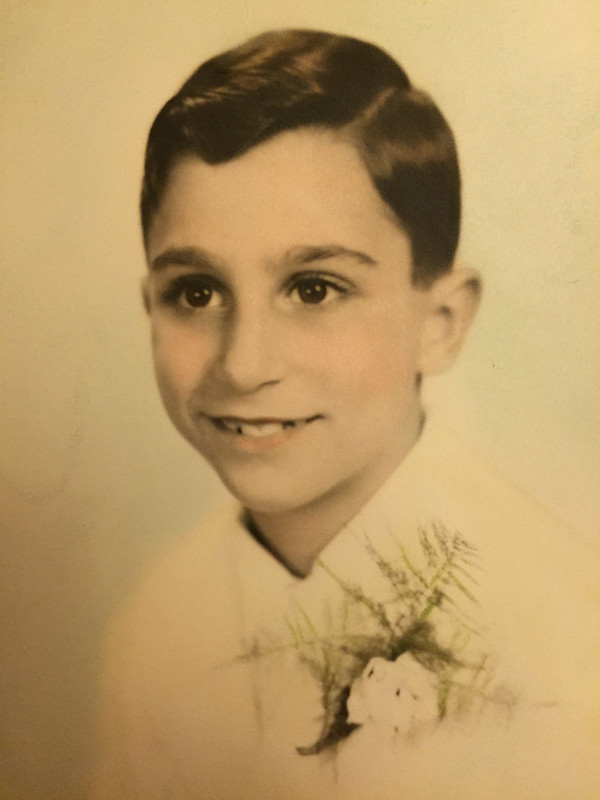
As photographic processes improved over time, sepia toning was no longer necessary to stabilize the image. As a result, black-and-white photos dominated from the 1930s through the 1960s. Color photography was available as early as the 1930s, but was not as common as hand coloration of black-and-white photos. In the 1970s, color dominated the printing market when it became more affordable.
Hand colored black-and-white photo of my father as a boy, approx 1944
Photographers still do sepia toning for artistic reasons, adding just a hint of sepia to a black-and-white photo, or completely converting to sepia of different intensities and tonalities. But because of its history, sepia tones evoke a sense of nostalgia. Nowadays you can create sepia toned images on your digital camera, with a bit of finessing on your smartphone, or after the fact using Lightroom/Photoshop with the click of a few buttons.
Coney Island- 2023- Click to switch to black-and-white or sepia-tone. Which gives the greatest atmosphere of an earlier time?
Note: Photos are from the author’s family collection and may not be used without permission. The DaVinci image is from the public domain at Wikipedia.
I just finished my second novel, Imprint and Inheritance. It’s hard to say “finished” when I’ve been intensely writing and editing it for about four years, and at some point in the future it will surely be edited again before any of you see it. But it’s finished to my satisfaction. For now. I’ve shared it with four beta readers and a sensitivity reader, edited it again, and now sent a query package to the first round of eight agents. I’ll keep sending it out until I find an agent, and then they will do a similar thing until they sell it to a traditional publishing house . . . at least that is the dream.
An agent’s job isn’t easy. They spend most of their time promoting the clients they have, then on their “free time”, they go through the queries they get from new authors. Also included in their free time is reading requested manuscripts, and reading in general, which is the pleasure that usually gets them into the business. Agents typically get 100 queries per week. They’ll request to see a full manuscript 1% of the time, often less. An established agent will sign on, maybe, one new client per year. That’s why we writers have to spend so much time querying. There are a lot of stories out there with an author’s heart attached to it. Hoping.
Sounds daunting, doesn’t it? I’ve been seriously writing fiction for ten years now. It’s been fun, tedious, energizing, enervating, and something to occupy my mind as I’ve continued to learn the craft of writing. I don’t regret all those hours. I’ve created a beautiful piece of work and have already started thinking about the next.
Which brings me to the second part of the title of this article. Thank you for asking. I have many friends who periodically ask how things are going with the book. I often don’t have much to update, these big milestones are few and far between. Sometimes it gets embarrassing, as if nothing is happening, but really, I’ve made steady progress and continued to work right along on it.
This summer, someone I barely knew asked me what the book was about. They were a neatly-dressed and composed person with a family and job and a house. I think you’ll know who you are, because that person signed up for my email newsletter right away. It happened to be at a time when I was starting to wonder if anyone would even want to read my book. It’s about a family with mental illness and alcoholism and how the trauma of growing up with all that passes through several generations. It’s about the interplay of genetics and environment and how they can create susceptibility to mental health problems, substance use disorders, and poor lifetime health. It’s how children who grow up with those things still carry a slight ache inside. Hidden. Not a light and happy topic, even though it’s also about resilience.
As I described the book, the person I spoke with just about jumped out of their chair. It was almost as if I had written the book just for them and they wanted to read it as soon as they could. You see, that person had those problems while growing up as well. I think they felt seen and understood and the pain they’d secretly lived with didn’t have to be so secret all the time.
In 2023, one in four children in the United States had a parent struggling with substance use disorder, including alcoholism. Another survey estimates that about 4% of parents had a serious mental health event in the past year. Often there are overlaps. One in five high school students surveyed experienced at least four adverse childhood events. The original ACE study in 1998 had ten categories, but I’ve just read a more recent study that looked at 55 categories of adverse events.
The higher the ACE score, the higher the risk of mental and physical disorders later in life, as you can see within the generations in Imprint and Inheritance. Those are risk factors, NOT templates for a future, and more recent studies are working on identifying and encouraging PCEs, protective childhood events, in those who need them.
Resilience is strong within the human family, but these numbers show how many seemingly ordinary adults carry little nuggets of pain from childhood. Perhaps reading Imprint and Inheritance will help them gain some perspective, including that they’re not alone in their experiences.
That conversation this summer buoyed me on. Thank you for asking.
As you can see above—it’s a long game. Growing a novel is like starting perennial flowers from seed. You must be patient. There will be no blooms the first year. You tend them and hope the plants survive the winter. Sometimes they don’t. Sometimes they need multiple years to have a display of blooms that create the vision you hoped for. This year my anenome saponica flowers begun in 2023 were finally as gorgeous as the ones I admired in Scotland and had wished for my own garden.
Wish me luck with Imprint and Inheritance; I’ve already gotten my first rejection. I hope this novel can get to the people for whom it will more than resonate. Once I find an agent (which can take a year…!), it will take at least a year, usually more, before it’s published. So, hang in there. It’s a long game and thank you for asking. Thank you for caring.
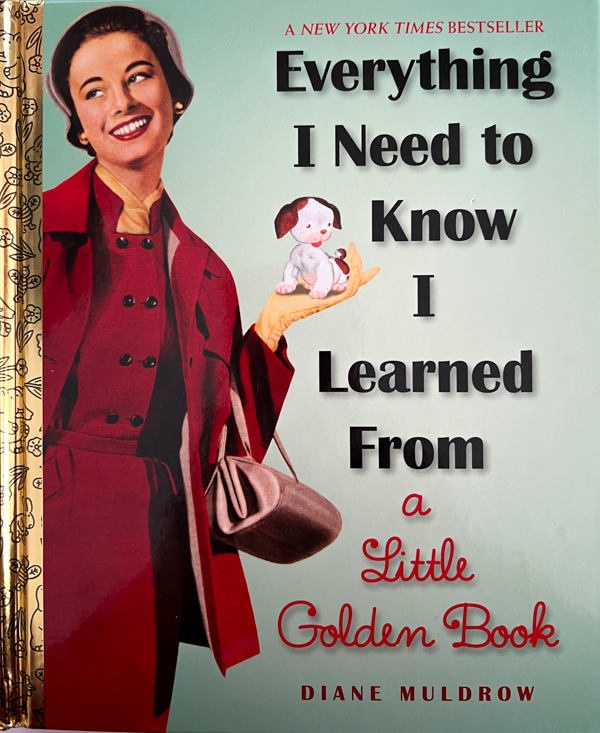
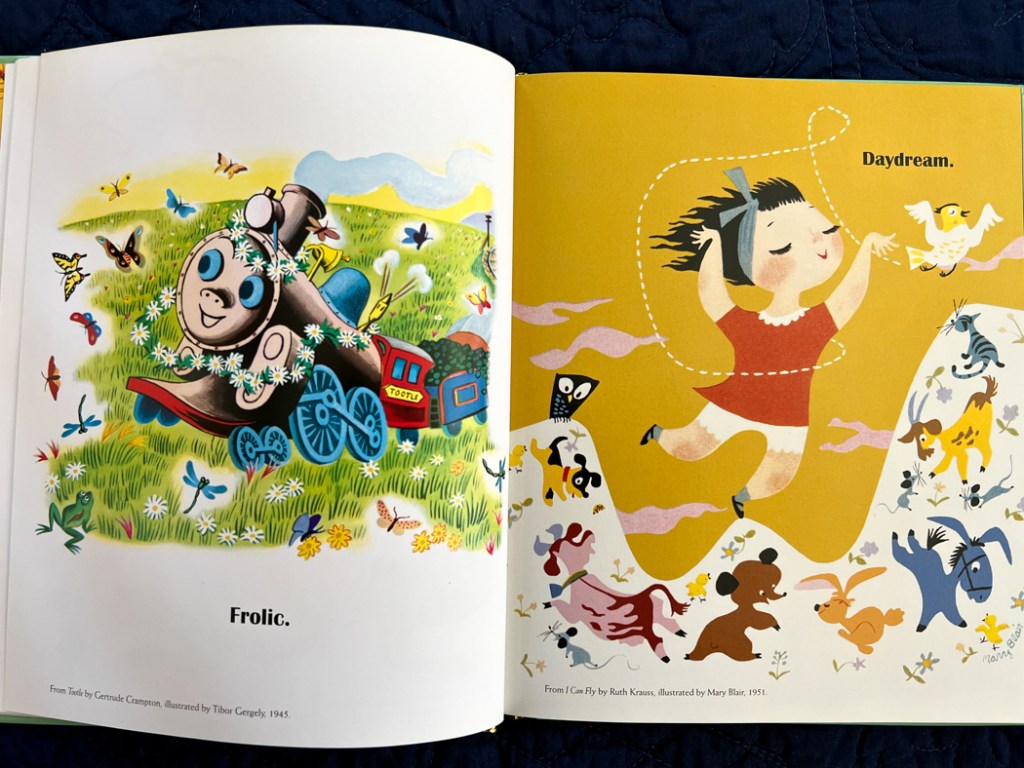
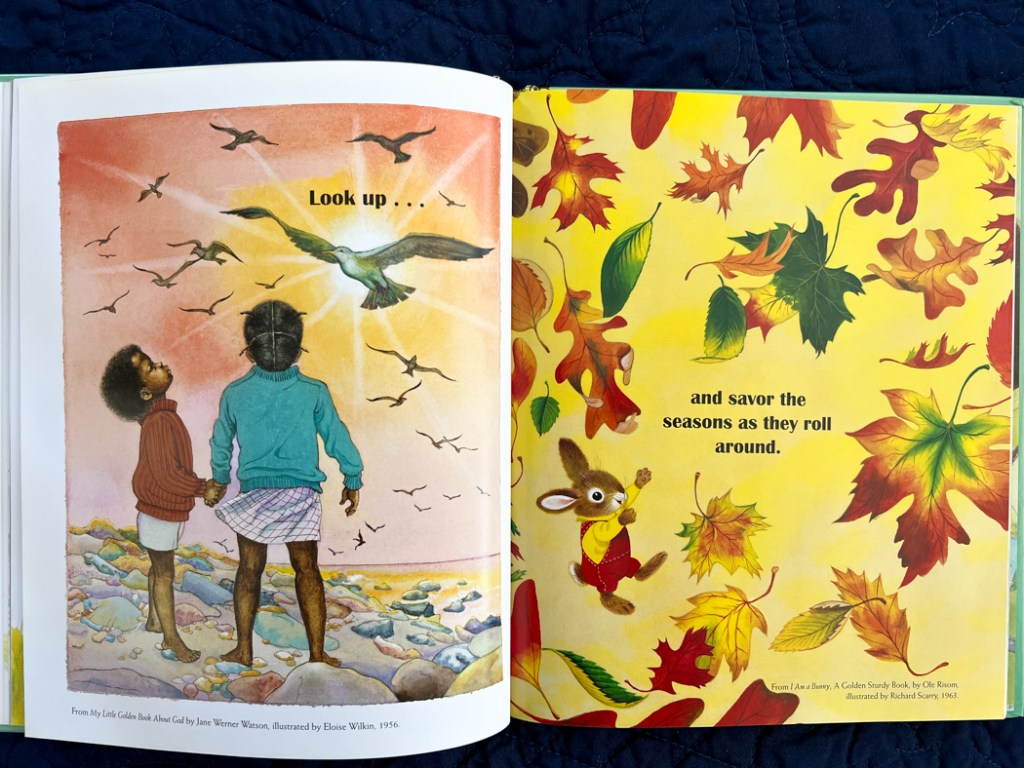
Do you remember reading Little Golden Books when you were a child, or reading them to children and even grandchildren? This institution of American children’s books began in 1942 during World War II and, after 82 years, it’s been read by generations of children. In 2013, the Smithsonian even put together a special exhibit about Golden Books.
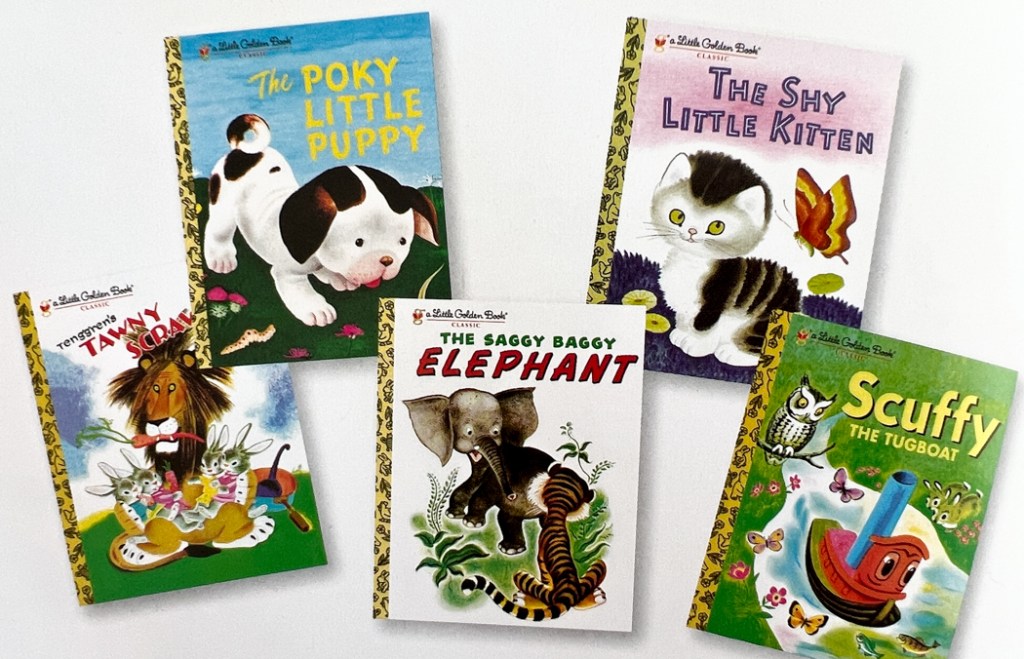
In 1942, most children’s books were $2 – 3, out of the price range of the average family when food price inflation was rampant due to the start of hostilities. In 1942, a pound of coffee cost 28 cents and a pound of ground beef was 30 cents. First published in a collaboration of Simon and Schuster with Western Publishing, Golden Books were priced at 25 cents each, sold in places where children would be with their mothers, such as supermarkets and drugstores. With inflation, that would be $4.73 now, which is pretty close to the current selling price of $4.99. The publishers felt they could make enough money at the 25 cent price point if they sold 50,000 copies. They started with 12 titles released together. All had 42 pages with 28 in 2 color and 14 in three color. They tapped into an unrecognized demand, because in the first 5 months they sold 1.5 million books! Among the first 12 books were The Pokey Little Puppy, The Little Red Hen and The Three Little Kittens. See the rest of the list here.
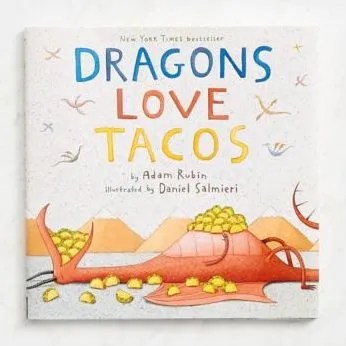
The Pokey Little Puppy, still in print, was so popular that it was the highest selling children’s book of the 20th century, with almost 15 million copies sold. By the way, did you know there is a NY Times Best Seller List for Children’s picture books? Check it out here. The current best seller is Dragons Love Tacos.
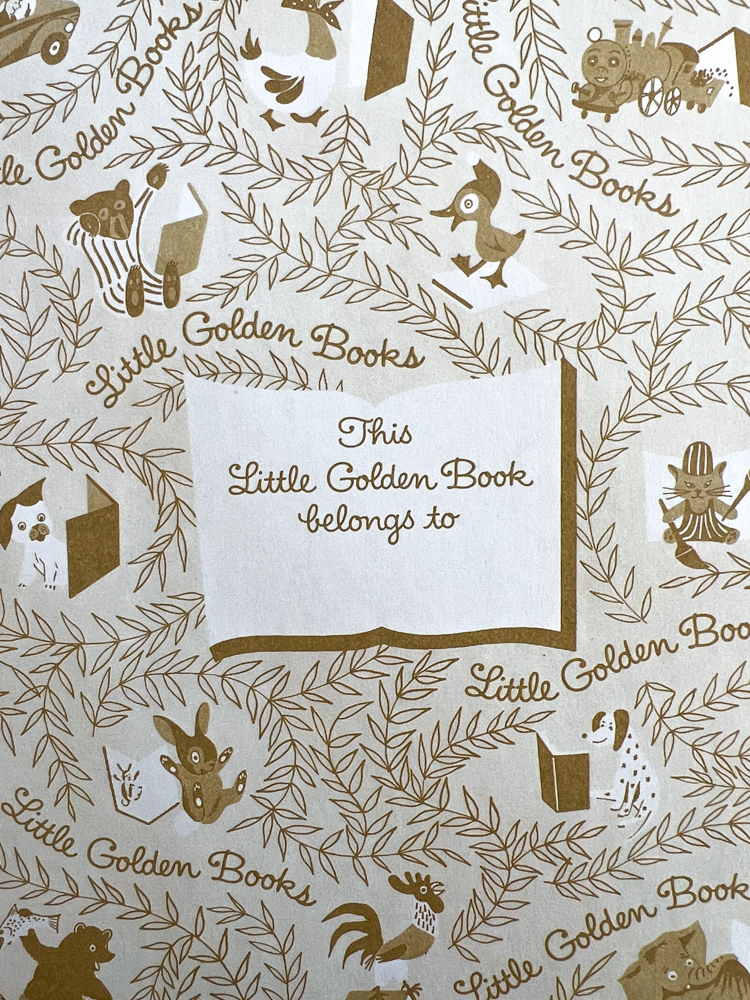
The first books were small in size and intended to be a child’s possession. Later editions included a variety of sizes. Inside the front cover of every book was an invitation to mark it as each child’s own.
And of course, there is the distinctive gold or silver foil binding with line drawings on it. I still remember being fascinated with how fancy that was as a child. Famous children’s book authors and illustrators who contributed to Golden Books were: Richard Scarry, Margaret Wise Brown, and Garth Williams (illustrated Charlotte’s Web and the Little House Series).
Golden Books quickly incorporated cartoon characters, Sesame Street, Marvel comic heroes and Disney characters in their line up, as well as animal and vehicle characters—whatever was popular with kids at the time in their daily lives, reading, TV and movie exposure. In 2001, the Golden Book franchise was sold to Random House and they continue to find new avenues to reach children. The current most popular series are the biographies, with Taylor Swift’s biography of 2023 the fastest growing Golden Book ever—selling 1 million copies in 7 months!
In my novel Imprint and Inheritance, Fiana focuses extra attention on early education for her girls after nearly completing a teaching certificate. Even though Fiana struggled with schizophrenia, she tried hard to be a good mother to her children. Golden Books in Fiana’s home were a natural for current readers to relate to and I enjoyed learning more about them as research for the book. Hope you enjoyed learning more about them too!
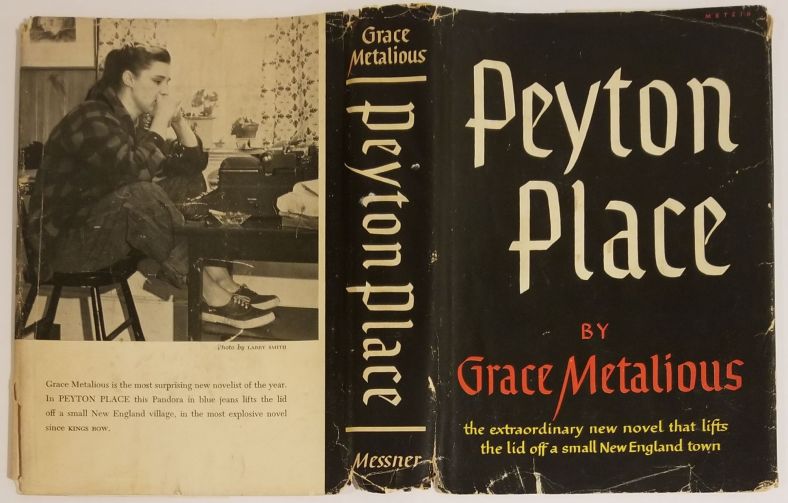
Most people have heard of the phrase “Peyton Place” and associate it with titillating scandal and soap opera. But Peyton Place began as a novel, released in 1956 by a rebellious mother and housewife who wanted to expose the hypocrisies of her hometown and her times. Sex and questioning authority in many forms shows up in her 372 page book. Unexpectedly, including to the author Grace Metalious, the characters and storyline hit a nerve in America and it was on the best-seller list for 59 weeks. At the same time a series of books put out under the Betty Crocker franchise were in the top non-fiction lists. 1 in 29 Americans bought Peyton Place. This was the Eisenhower Era when America was in the midst of its post-war economic boom and the middle class was growing and thriving. Female roles were well proscribed and Grace never fit into any of it… other than the desire to move out of the poverty she grew up in.
Controversy and Sales
If you ask people who were coming of age during that generation about Peyton Place, you will usually see a wry and somewhat pleased smile, reflecting the youthful rebellion of reading this forbidden book long ago. Colleen O’Byrne in my novel, Breathing Water, was one such person affected by the novel. Although Peyton Place was banned in many libraries, schools, and bookstores, and was illegal to ship through the mail to several countries, it sold over 12 million copies. It even outsold other popular books of its time, like Gone With The Wind. But its readership was much greater as copies were shared between school friends and mothers’ copies were ferreted out from hiding places by their youngsters. One woman I know speaks of reading it in a high school class while hiding it behind a textbook (this woman did succeed in life and became a beloved teacher, so it didn’t ruin her!).
What made this book so popular? At the time, the publisher realized its potential and decided to give it more publicity than most debut novels. Controversy sells, so they hyped up a comment by Grace Metalious that her husband, a school principal in the small town of Gilmanton, New Hampshire, would probably lose his job when it was published. Of course everyone wanted to see what was so juicy that it would cause him to be fired, and the school board helped publicity when they decided not to renew his contract shortly afterward. Word of mouth and so many organizations banning it propelled book sales followed by the involvement of the film industry. In watered down form, a movie was released in 1957 and a soap opera series from 1964 – 1969. That’s what most from the next generation vaguely recall about “Peyton Place.”
What’s so Controversial in Peyton Place?
When I read the book to see if it would be suitable for use in Breathing Water, I was surprised at how little actual sex was in the book. Sex was definitely a part of the character’s lives, as it is for most people, but there was not a lot of explicit description and the content is mild by today’s standards. Yet there were things about sex that not only caused Grace Metalious to become a millionaire, but to have a great impact on America’s sexual awareness.
Most shocking about the book was the idea of women having satisfying sexual lives. That was for loose women and whores, and yet here were nice girls not only having sex but enjoying it. Masturbation, abortion, douches not working for birth control, “safes” (condoms) that should work, and oral sex were all mentioned. One of the major characters was repeatedly raped by her step-father, showing that not all people in small town America were nice. The original story had Selina’s father raping her, but the editors thought that incest would be a bit too much for tender American eyes. In the story, Selina eventually fought back and murdered her step-father, inciting a lot of discussion about whether her act was justified.
Authors often draw from real life and this part of the book was partially based on the true story about 10 years earlier of Barbara Roberts from Grace’s town of Gilmanton, NH. She was the victim of domestic violence and incest before she killed her father and buried him under a sheep pen. Residents of the town were not pleased with Peyton Place or the Metalious family partly from a desire to protect Barbara and her family from further unwanted publicity, but also for and what it inferred about them. The book did bring the topic of incest to America’s consciousness for a short time. Sadly, more attention is needed because some statistics suggest that 1 in 3-4 girls and 1 in 5-7 boys are sexually abused before they turn 18, much of which happens from fathers or fatherly figures. Children are easily manipulated into not reporting such abuses.
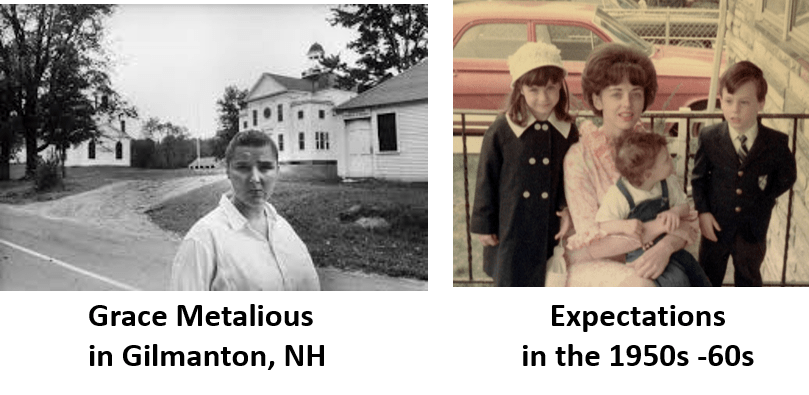
Grace Metalious also included class disparities, racism, differences between Catholics and Protestants and questioning the Christian faith. There was a lot you could get upset about if you wanted to defend the status quo. All of it reflected real life—the parts no one would talk about. Grace utterly rejected the expected female behaviors of the 1950s: her home was filthy, meals were haphazard, and she was a careless mother. When she wanted to write, she kicked her three kids out of the house and told them to fend for themselves until she was done. She wore pants and flannel shirts, with her hair in a simple ponytail, instead of the bouffant hairstyles that were popular then.
A Sad Ending and Lasting Impact
After becoming a millionaire, Grace began to party hard. She spent every cent she made and then some in luxuries and heavy drinking. Interestingly, alcoholics figure large in Peyton Place and there are accurate descriptions of delirium tremens in one scene. She divorced and new friends showed up to help her spend her money. After dreaming of riches since she was a girl, Grace didn’t know how to handle it and, sadly, died at age 39 from cirrhosis of the liver. Grace Metalious was ahead of her times and helped loosen up the American psyche for others to follow. A few years later, the infamous Lolita, about a pedophile, and Lady Chatterley’s Lover, about an extramarital affair, became best sellers in the US. For many, Peyton Place was all the sex education they would get. Genuine sex education was taught in some schools in the 60s and 70s, but it wasn’t until the 1990s, during the AIDS epidemic, that it became universal. Peyton Place is actually a fast-paced and fairly well written novel (even by the standards of the literary world) and it’s still in print.
Key references and further reading:
The Peyton Place Murder- The True Crime Story Behind The Novel That Shocked The Nation by Renee Mallett (2021)
There are dog owners who are positive they know exactly what their dogs are thinking, and they are the ones who tend to anthropomorphize and project their own thoughts upon the dog. Say this dog owner is named Betty. My guess is that much of the time Betty is right, but probably not to the extent that she supposes. Scientists have recently been able to do advanced experiments to get a better sense of what the dog’s mind is capable of thinking. It was two books by Dr. Gregory Berns that got me started learning about what neuroscience and behavioral analyses could tell us about our favorite companions.
A dog’s brain is about the size of a lemon with about 5 billion neurons vs. the 80 billion we have. The olfactory bulb, ~ 10% of the dog’s total brain, helps them process smells. It is absent in humans and, not surprisingly, dogs’ sense of smell is 100,000 times more acute than that of a human. On the other hand, the frontal lobes in the dog, the thinking part of the brain, are also about 10% of the volume, so dogs have evolved with the same brain capacity for processing scent and for thinking. The frontal lobes in humans are 30% of their total brain. Just knowing that means dogs must perceive the world differently than we do.
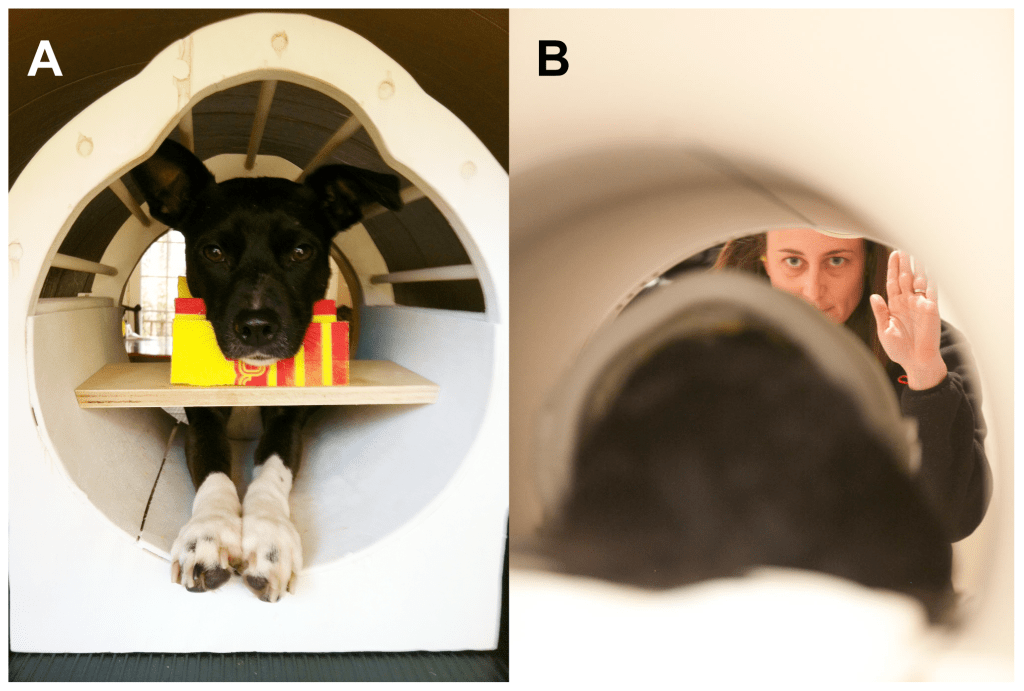
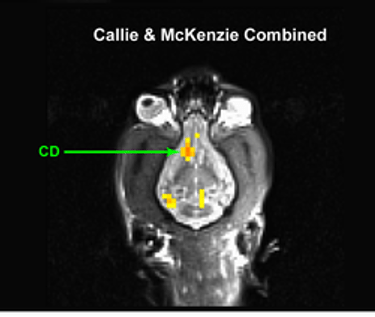
Dr. Berns uses fMRI brain imaging to ask his questions. The “f” stands for functional, MRI is “magnetic resonance imaging” and, using huge, clanking magnets, he can measure the areas that are most active in the brains of awake subjects. When nerve cells are working, they have high energy needs and cause a localized increase in blood flow to get the nutrients and oxygen to where it is needed. fMRI measures those blood flow changes. This technique has revolutionized neuroscience research for humans, as it allows scientists to see what parts of human brains turn on when we think about different things. It is much trickier to do these experiments in dogs, and that is where some of the beauty of Dr. Berns’ work comes in. He and other volunteers trained their dogs to keep their heads completely still (movement destroys the images), and to do so in the confined and noisy environment of the fMRI.
Dr. Berns and his colleagues devised clever ways to test what dogs were thinking with the use of previous training, hand signals and sensory stimuli, while the dogs kept immobile for the moments needed to capture the signal. Their first simple experiments took months to complete because they had to figure everything out from scratch. If you are interested in the details, I highly recommend reading his first book. They trained the dogs that one hand signal meant a delicious treat was coming (anticipation of a reward) and the other meant nothing interesting would happen. The dog brains showed activation in the fMRI in a region called the caudate nucleus with the anticipation hand signal, already known to be the reward center in humans. Activation of our caudate nucleus is linked to desire and craving, becoming dysfunctional in addiction. So when my dog Henry danced around anticipating the dinner I was preparing for him, he was actually anticipating that meal with pleasure like I thought he was.
In another set of experiments, Dr. Berns and his colleagues exposed the dogs to cotton swabs with sweat from their owner, an unknown human, or from the anal glands of themselves, known or unknown dogs. This allowed measurements from a sensory system they preferred, and it was no surprise to see the olfactory bulbs light up in the fMRI with all tested odors. What was most interesting was the dog brain’s response to the scent of their owner’s sweat. It also lit up the caudate nucleus (Yes, you remember, it’s anticipation and reward), as well as the inferior temporal lobe associated with memory functions. The owner was not present, so the fMRI signals told us that the dogs remembered the owner as special and distinct. “These patterns of brain activation look strikingly similar to those observed when humans are shown pictures of people they love.” So when our friend Betty believes her dog loves her as much as she does, this may be true. Or it may be a variation on the theme, but something special is definitely happening.
Also, dog owners often refer to their pets as their dog-babies, and many young couples will get a puppy before committing to parenthood to try out the idea of caring for another being. Behavioral scientists determined that the dog-human attachment style was similar to the infant-caregiver style and that the dog-dog attachment style was more like a sibling interaction, once again validating what many dog lovers instinctively feel. In addition, jealousy of human attention to another dog has been recorded in the scientific literature, just like siblings.
My mother always said that living with a dog was like living with a perpetual toddler, and I have found that to be true as well! One of the studies Dr. Berns conducted was on impulse control. In What It’s Like To Be A Dog, he showed that dogs do have some impulse control but that it varies a lot between individuals, just like in humans. The level of fMRI activity in the prefrontal cortex of the dogs correlated with each dog’s result from an independent test of impulse control. In humans the prefrontal cortex is involved in executive decisions and self-control and is an area not well developed in small children. Based on their overall performance… yes, dogs are permanent toddlers in the home.
Dogs and Human Language
One of the most fascinating parts of that book was Dr. Berns’ investigation of language comprehension. There are a few famous border collies who have been documented to understand the names of hundreds of different words when asked to retrieve specific objects. Chaser probably holds the record with 1022 words and even some noun-verb pairings. His owner, John Pilley, trained and played with him for 4-5 hours a day, which was surely related to this dog’s phenomenal success, but it couldn’t have happened without Chaser’s innate intelligence.
We’ve tried to teach our Standard Poodle toy names and been surprised at how difficult it has been to get beyond the name of a few favorites. According to one measure of dog breed intelligence, poodles are number 2—right behind border collies—so what is going on? It turns out that Berns and his volunteers were also frustrated. They had troubles teaching recognition of just 2 objects to their dogs, to the point where the dogs still made lots of mistakes after 6 months of training. When they were finally imaged for language recognition, Berns used those two words along with some nonsense words. The nonsense words activated the brain the most, indicating that the dogs knew they were different and they should pay attention. But the known words, after all that training, were not lighting up the auditory or visual cortex in the same way that humans do after they hear a word they recognize. Our fMRI signals show that we can imagine it in our mind’s eye. This means that dogs do not understand language the same way we do and the old Gary Larson “What Dogs Hear” cartoon is probably pretty accurate. Sorry, Betty.
But dogs do have their own intelligence which is exquisitely tuned in to human behavior, and so Dr. Berns thinks about the question of language in a new way. Humans like to name everything. Sight is our primary sense and from the youngest age we are taught what different objects are. There are ten times more nouns than verbs in the English language. But what if dogs have an action-based, rather than an object-based world view?
“In an action-based worldview, everything would be transactional. Even emotions might be represented as actions. Fear would become that feeling in which I need to get away from something. Loneliness would be that feeling which is lessened by waiting by the door until it opens and then goes away.
“I am not just anthropomorphizing. The words I used were a necessary construct of communicating an idea in written form. A dog could not think the literal words I wrote, because the dog doesn’t have the brain architecture for thinking in words. An action-based semantic system does not mean, however, that fear is just the set of motor programs that an animal implements to escape something unpleasant. The motoric aspects are important, but so is the subjective awareness of what’s happening, for that is where we have common ground.”
If we really want to understand what our dogs are thinking, maybe it means we need to twist our thinking a little to get into their point of view. Perhaps what my Henry was really hearing was Blah Blah Blah Go Out Henry, Blah Blah Henry, Blah blah Eat blah blah.
Henry demonstrates impulse control with his dinner.
Key references:
How Dogs Love Us: A Neuroscientist And His Adopted Dog Decode The Canine Brain by Gregory Berns
Donna Barten is a novelist and scientist working on her second book Imprint and Inheritance. Henry, her beloved companion passed on before this blog was published.
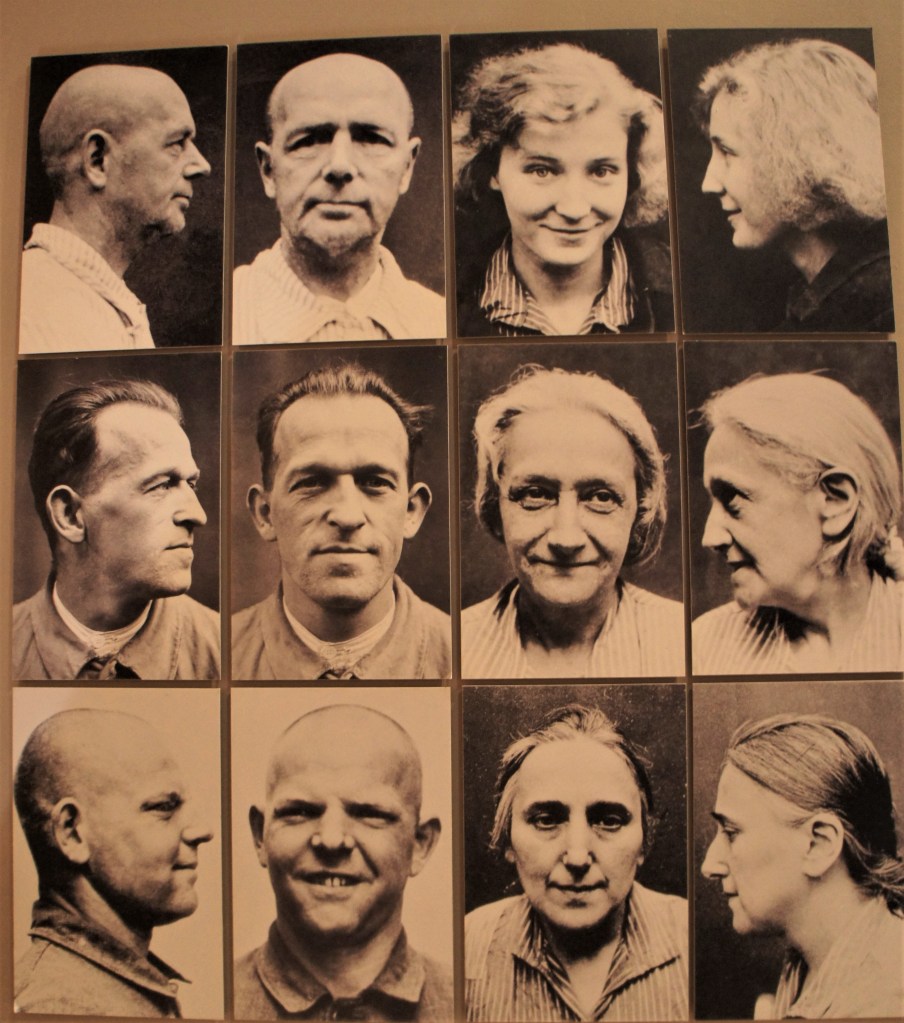
The Nazi Party embraced an ideology of purifying their population from anyone deemed genetically inferior—to create a master race that would take their “rightful place” as the masters of Europe. It was at the top of Hitler’s agenda and he and his henchmen worked hard to make it happen. Although much has been published on the concentration camps that sterilized and exterminated European Jews, along with gypsies, homosexuals and other “undesirables,” most people don’t know about the preceding systematic sterilization and, finally, execution of the mentally ill.
By the time Hitler came to power in 1933, the field of Eugenics was firmly established in Europe, the United States and other nations. It was based on the faulty extension of Darwin’s work to humanity, initially promoted by Sir Francis Galton, Darwin’s cousin, in 1883. Mental disorders, and particularly schizophrenia, were believed to be genetically transmitted as a Mendelian recessive gene in the population. Nazis reasoned that if those with these disorders or other imperfect characteristics were prevented from reproducing, then these genes would disappear from the general population.
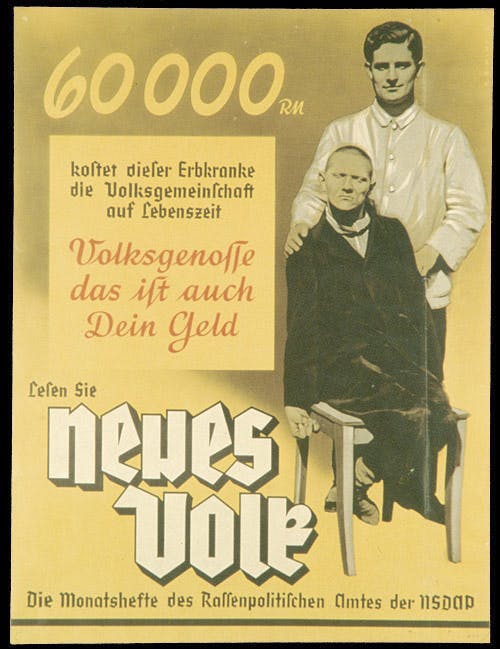
Part of the justification for later “euthanasia,” endorsed by many prominent psychiatrists in both Europe and the US, was economic. Educational campaigns in Germany emphasized how much each mentally ill patient cost the government and the taxpayers, especially between the World Wars when cash-strapped Germany was suffering from economic retribution by the victors of WWI.
This poster promoted the Nazi magazine Neues Volk, the caption reads: “This hereditarily ill person will cost our national community 60,000 Reichsmarks over the course of his lifetime. Citizen, this is your money.” 1938
US Holocaust Museum, Public Domain
The eugenics field recommended sterilization of the mentally ill and it became common practice in many Western countries. In the US, Indiana required it by law in 1907, and by the 1930s the majority of states followed suit. Heinous forced and improperly disclosed sterilizations were also performed by the US government on Black, Puerto Rican and Native American women through the 1970s with the express purpose of reducing their populations.
The Nazi regime in Germany became fanatical about eugenics and racial purity, taking it further than any other country. They required psychiatrists to fill out forms about all their patients to provide a database of those who should be prevented from reproducing. Many psychiatrists enthusiastically supported the government policy and the Law for the Prevention of Hereditary Diseased Offspring was passed in 1933. Approximately 400,000 Germans, many living in the community, were subjected to involuntary sterilization. An estimated 26% had schizophrenia.
Hitler and his cronies wanted to take it further, but they knew they had to be careful of public opinion, even in Germany. The quiet authorization of the T4 program to murder mental health patients was signed by Hitler himself. It was backdated to September 1, 1939, the start of WWII and the invasion of Poland, in order to link the order with the war. They were judged as “useless eaters” having “life unworthy of life.” “As the fanatical Dr. Pfannuller in the Nazi program put it: ‘The idea is unbearable to me that the best, the flower of our youth must lose its life at the front in order that feebleminded and irresponsible asocial elements can have a secure existence in the asylum.’” (The Nazi Doctors by Robert Jay Lifton) Using the records collected earlier, 70,273 patients in mental hospitals were exterminated in the program.
In order to expedite the execution of so many people in such a short period of time, the German authorities invented fake shower rooms for the administration of carbon monoxide to kill a groups of compliant and unsuspecting patients. When the program was dismantled, many of the psychiatrists and other workers were transferred to the concentration camps where they continued to refine this “efficient” method of mass execution.
There were German psychiatrists and doctors whose job it was to make up medical reasons to put on the death certificates of these murdered patients, because the Nazis knew it would not be popular and they loved orderly paperwork. After families began noticing the link between having their loved one transferred to a new facility, then getting a death notice shortly afterward, protests began, including by Catholic and Protestant churches.
As a result, the formal T4 executions were ended in August 1941, but the killing didn’t stop for psychiatric patients, it just changed form. Institutionalized patients were divided into two groups and given two different diets. Those who could work for the state were given a diet with minimal calories and those who could not were given starvation diets. And starve they did. In the end, 200,000 to 275,000 patients with schizophrenia were eliminated. That was estimated as 70 – 100% of the schizophrenic population in Germany and was expected to reduce or eliminate transmission of the disease to the next generation.
But the evil intentions of the Nazis failed in this as well. Yes, after the war there was a very low incidence of schizophrenia because the individuals from that generation had been killed, but in the succeeding generation, there was an INCREASED incidence of schizophrenia in the population relative to other countries and the previous historical rate.
How can that be? Well it turns out that schizophrenia arises from a complex interplay of genetic and environmental factors. Rather than a single recessive gene causing the disease, there are hundreds, or even thousands, of genes that slightly increase susceptibility to the disease, and these genes are widely distributed within the population. So although there is an increased risk of someone being diagnosed with schizophrenia if they have a relative with the disease, the risk is still pretty low. Even for identical twins, with identical genes, the chances of the second twin getting the disease if the first one has it, is only ~50%. So it would have been impossible for the Nazis, or anyone else for that matter, to eliminate the gene pool that lends susceptibility to schizophrenia.
Also, if you consider environmental factors, things were pretty grim for the German populace after WWII. There was famine, disease and widespread poverty, as well as the humilation of a second defeat in war. That is the most likely reason more individuals with potentially susceptible gene combinations were affected in utero and during their life experiences to develop schizophrenia. Thankfully, after the war and the atrocities of the Nazis came to light, eugenics was abandoned by the Western World. The hubris of these scientists and psychiatrists led to immense evil because they forgot their humanity and did not have the humility to understand they could be wrong, and they were.
Donna Barten is a novelist and scientist working on her second book Imprint and Inheritance.
Many people know that Vincent Van Gogh was institutionalized during much of his creative lifetime and that he painted the famous Starry Night at the asylum of Saint-Paul-de-Mausole. He cut off his ear after an argument with Gaugin and eventually committed suicide. Other famous artists have also struggled with mental health issues, which is no surprise because some of the best art derives from the pain in our lives.
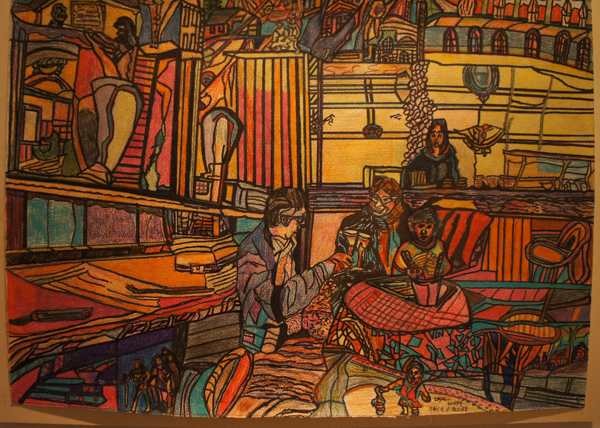
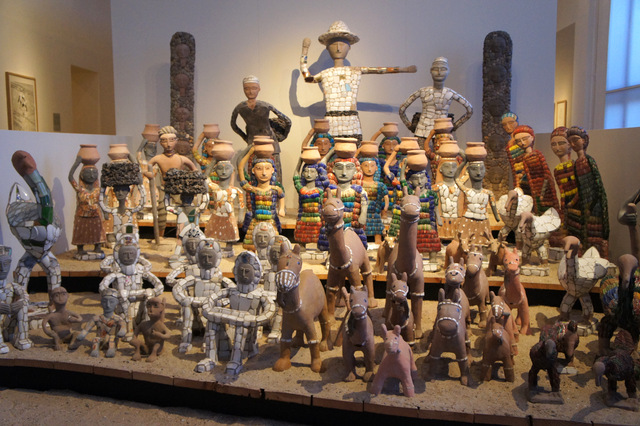
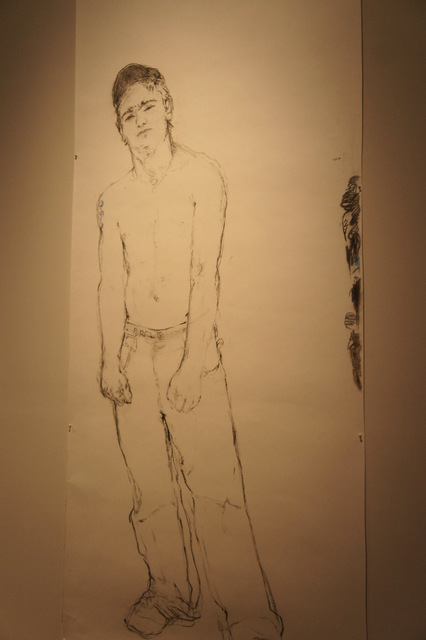
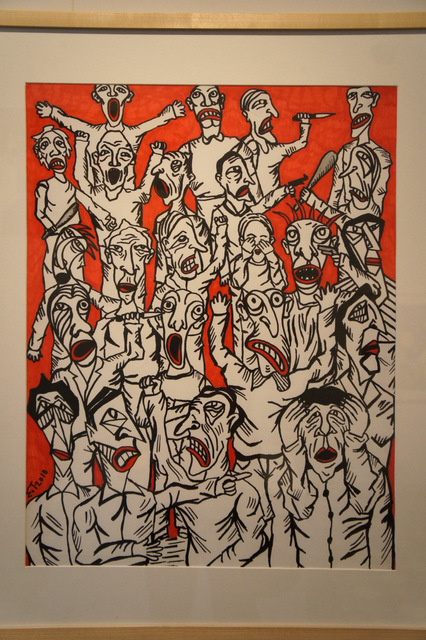
Here are some paintings I saw on exhibit at the Museum Dr. Guislan in Ghent, Belgium. Traveling with me can be a little unusual, as not everyone wants to see a museum dedicated to the history of mental health care. Thankfully, my husband was game and he seemed to enjoy it. Anyway, they also exhibit art from those who struggle with mental health issues and I loved so much of it. Push the arrows to see the slide show. There is art from Leo Neervoort, Minke de Fonkert, Livia Dencher, Jikke Van Loon, Ronny Engelen, and Edward Teeuw. I apologize to 3 artists whose names I failed to capture.
Leo Neervoort
SONY DSC
Minke de Fonkert- Monsterhouse
Unknown artist
Unknown artist
Livia Dencher
Jikke Van Loon- Jimmy
Ronny Engelen
Edward Teeuw
Schizophrenia is the form of illness we most associate with the older terms “mad” and “crazy,” and with the symptoms of psychosis, defined here by Dr. Ken Duckworth at NAMI.
Psychosis is characterized as disruptions to a person’s thoughts and perceptions that make it difficult for them to recognize what is real and what isn’t. These disruptions are often experienced as seeing, hearing and believing things that aren’t real or having strange, persistent thoughts, behaviors and emotions. While everyone’s experience is different, most people say psychosis is frightening and confusing.
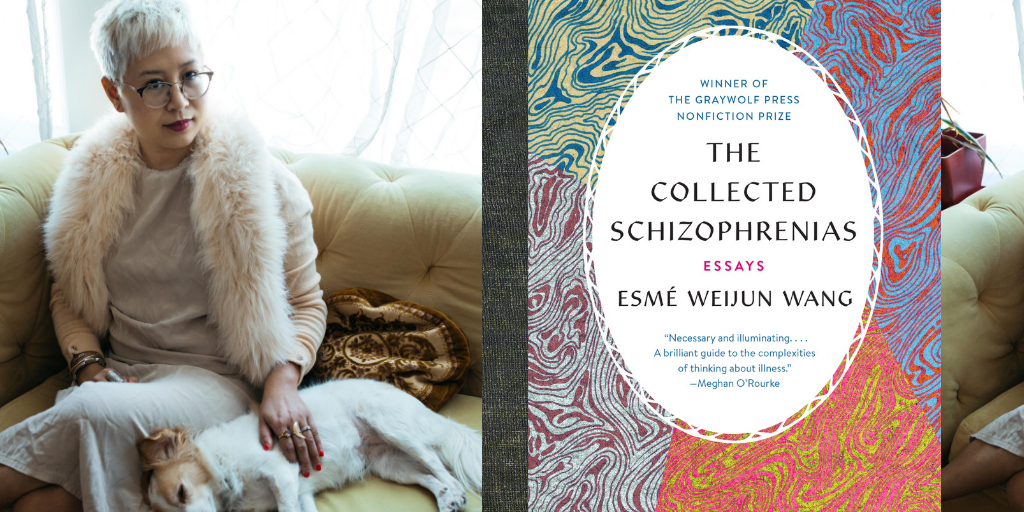
One would think schizophrenia was a cut and dry diagnosis by now. But, there are several related diseases (including schizophrenia, schizoaffective disorder, bipolar disorder, schizotypal personality disorder and many others) that share the symptom of psychosis. Many patients are given different diagnoses by different doctors, even though there is a manual, DSM-5, that tries to clearly lay out criteria for each mental health disorder. That’s why author Esmé Weijun Wang calls them “The Schizophrenias.” The DSM criteria can be helpful, but the National Institutes of Mental Health found they were not as useful for research purposes while investigating causes and treatments. So they are developing their own set of disease criteria based on symptoms and biomarkers. There remains a great deal of controversy over how to define mental health disorders.
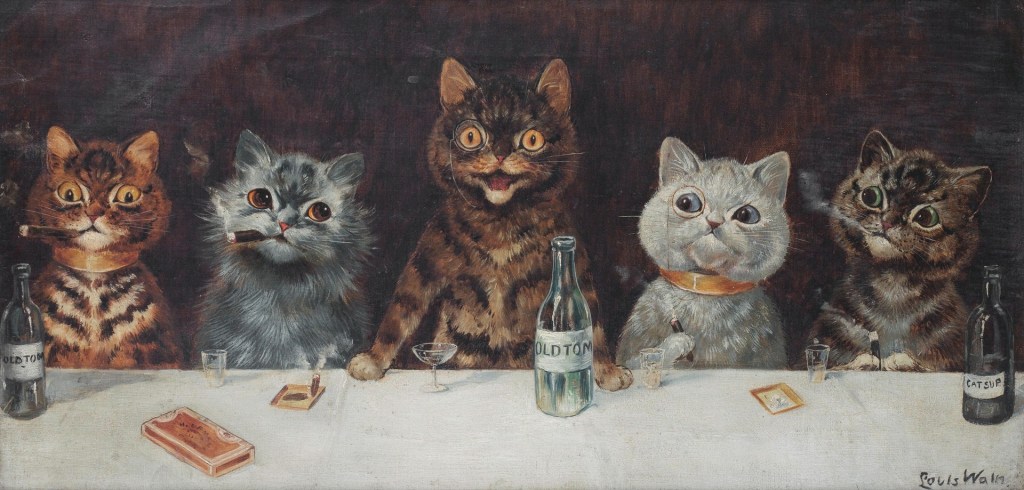
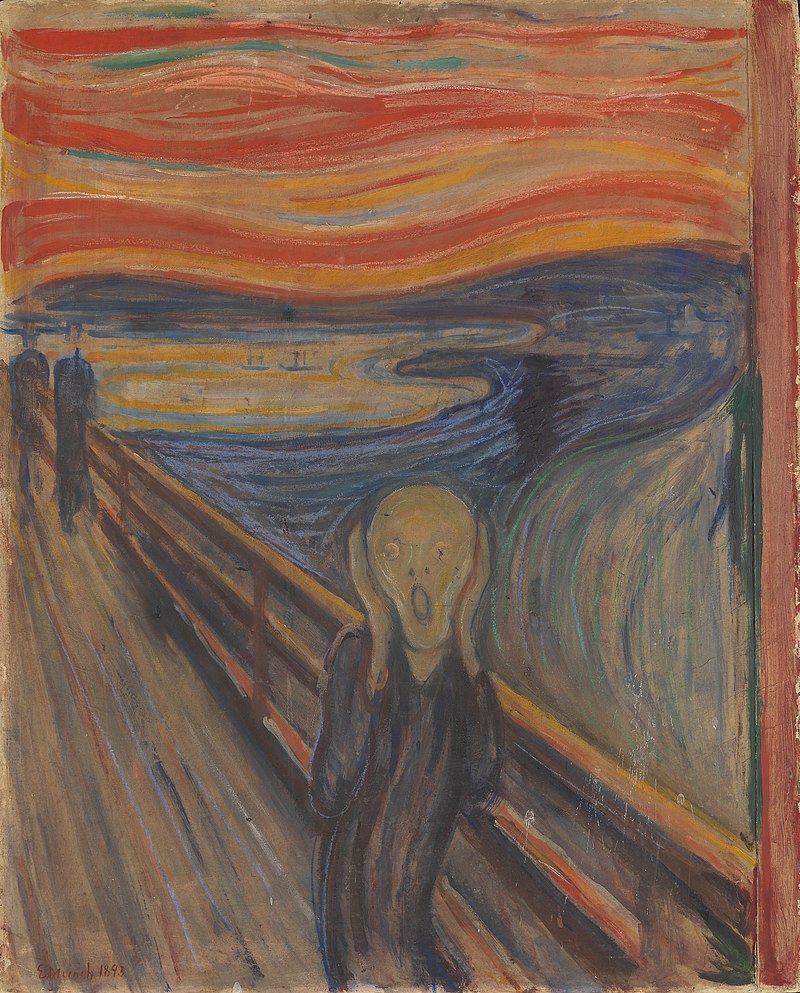
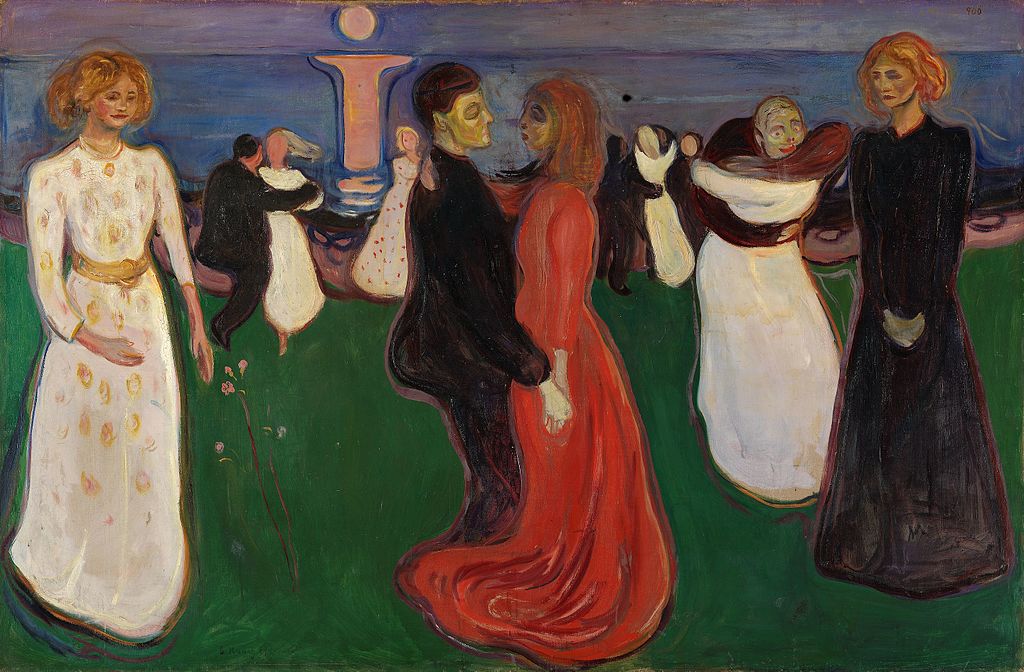
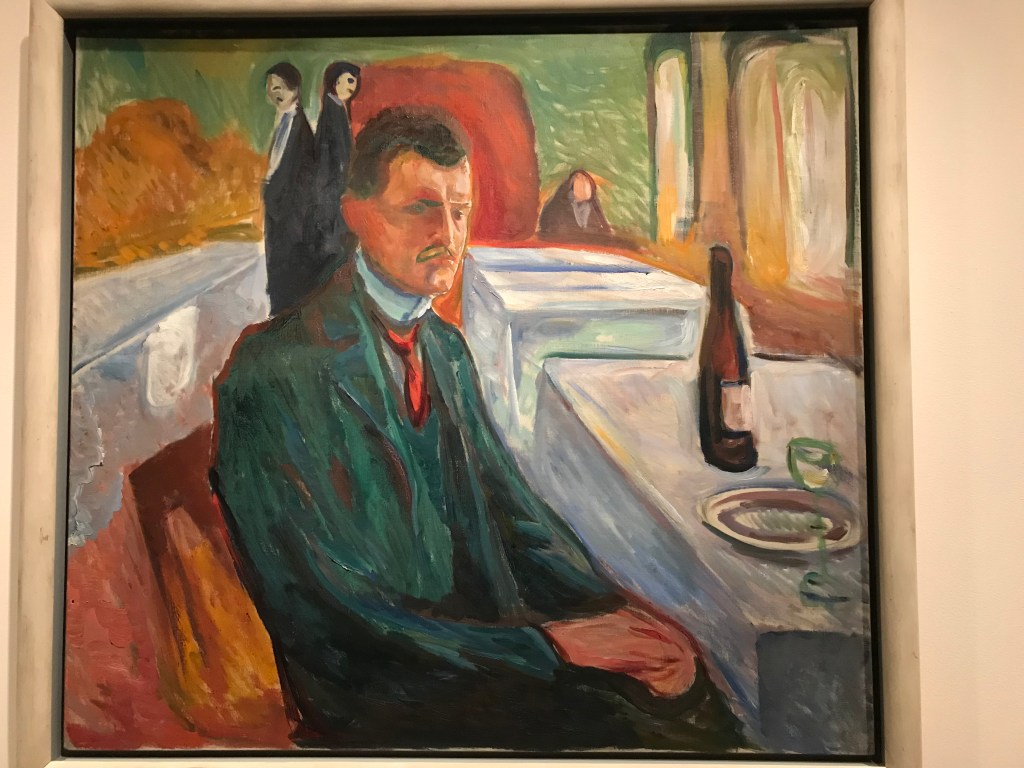
Beyond Van Gogh, some of the other famous artists whose names come up most frequently with diagnoses (often post-hoc, and therefore tenuous) of schizophrenia and bipolar disorder are Louis Wain (human-like cat paintings) and Edvard Munch (The Scream, The Dance of Life, Self Portrait with a Bottle of Wine). Zelda Fitzgerald, the wife of famous F.Scott Fitzgerald and the basis of the character Nicole in Tender Is The Night, produced skillful watercolors while she was institutionalized (Times Square & Washington Square).
Yayoi Kusama, famous for her polka dots, has lived in a mental institution for over 40 years, yet goes to her studio every day to create her avante-guarde work.
How can someone with schizophrenia or a number of other mental health problems create great art? I try to understand what having the disease feels like because Fiana, Colleen’s mother in my novels Imprint and Inheritance and Breathing Water, is schizophrenic. Neuroscientists know that the brains of individuals with mental health disorders function differently and show some wiring differences from other people. Sadly, many are so debilitated that they have a hard time functioning in society and cannot create anything.
But others identify as having high-functioning schizophrenia and can be very creative. Esmé Wijun Wang, a brilliant author writes about managing a productive and fulfilling life in her book, The Collected Schizophrenias. She is married and has many friends. She reflects: “Over the next decade [as she was learning to cope with her disorder], I would occasionally consider the utility of seeing psychosis as an ability: I could improve my mental health by thinking of schizoaffective disorder as a tool to access something useful, as opposed to a terrifying pathology. As Viktor Frankl says in Man’s Search for Meaning, we want our suffering, if it must be endured, to mean something.” Here’s a website celebrating other high-functioning persons with schizophrenia as an inspiration for others.
There are two observations that might help someone with the schizophrenias in the visual arts to be creative in a new way. The first is that early in the disease, it is very common for patients to have enhanced sensory perceptions, especially of vision. Here’s a quote from a patient cited in Surviving Schizophrenia by E. Fuller Torrey, MD.
“Colours seem to be brighter now, almost as if they are luminous painting. I’m not sure if things are solid until I touch them. I seem to be noticing colours more than before … Not only the colour of things fascinate me but all sorts of little things, like markings in the surface, pick up my attention too.”
Also the brains of persons with the schizophrenias have a hard time gating out irrelevant information. We normally do that without thinking. For instance, now that I pay attention, I can notice the sound of an airplane flying in the distance, the wind shifting the leaves and birds and insects making noises through my window. Until I put my attention there, I was oblivious to those things because my brain is able to focus on the task or the conversation at hand. Here is a description from another patient quoted by Torrey.
“Everything seems to grip my attention although I am not particularly interested in anything. I am speaking to you just now, but I can hear noises going on next door and in the corridor. I find it difficult to shut these out, and it makes it more difficult for me to concentrate on what I am saying to you.”
In his 1974 textbook, Interpretation of Schizophrenia, Dr. Silvano Arieti described the connection between the disease and art: “The schizophrenic experiences the world in fleeting, fugitive ways that are not only different from the ones he perceived prior to the psychosis, but also from those perceived at different stages of the illness. His world tends to be in constant and turbulent metamorphosis. … Great artists and the mentally ill are shaken by what is terribly absent in our daily reality, and they send us messages of their own search and samples of their own findings. … In some of his works, we hit unsuspected treasures of concentrated meanings.” By the way, Dr. Arieti is the inspiration for Dr. Perkins in Breathing Water.
Dr. Arieti goes on to describe how art therapy can be helpful for patients to express what they cannot say in words, but also to help the psychiatrist in guiding therapy. I appreciate his sentiment that there is value in their perceptions and creations. I also love that the scientific journal Schizophrenia Bulletinuses art from patients on its covers.
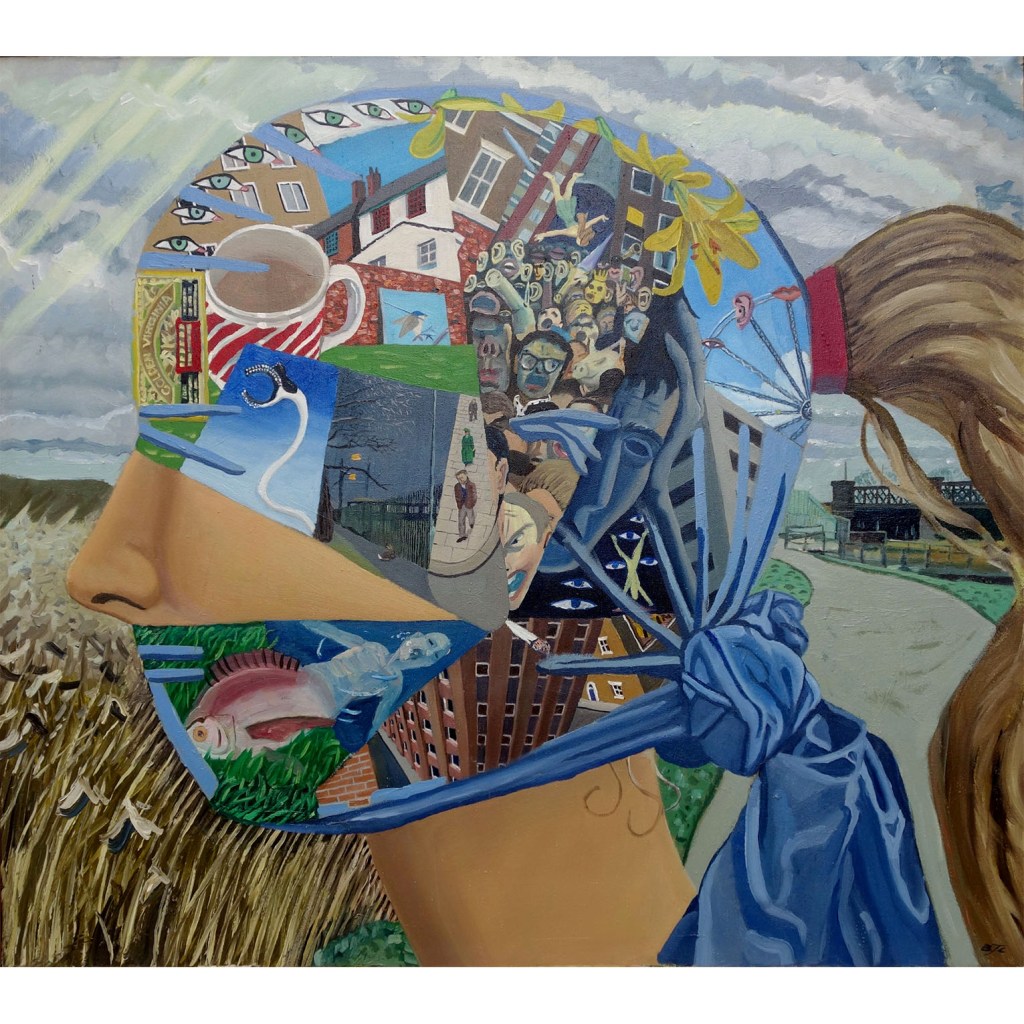
Bryan Charnley was an artist struggling with schizophrenia who wanted to relate to others how he experienced his disease. He produced a series of Self Portraits and Bondage Head paintings that conveyed his interpretations. Unfortunately, his pain and delusions became so great that he committed suicide. His art, his accompanying explanations and his life emphasize how difficult it is to live with the disease. A book, Bryan Charnley: Art and Adversity, gives even more paintings and descriptions of his life and work.
Self Portrait #2Fish Schizophrene
Paintings in the Wellcome Collection, used by permission of the family
About 1% of any population has schizophrenia and the numbers are even higher for bipolar disorder at ~ 2.6%. In the next blog article, we’ll see what happened when Hitler and his henchmen tried to engineer mental illness out of the German population.
Donna Barten is a novelist and scientist working on her second book Imprint and Inheritance.
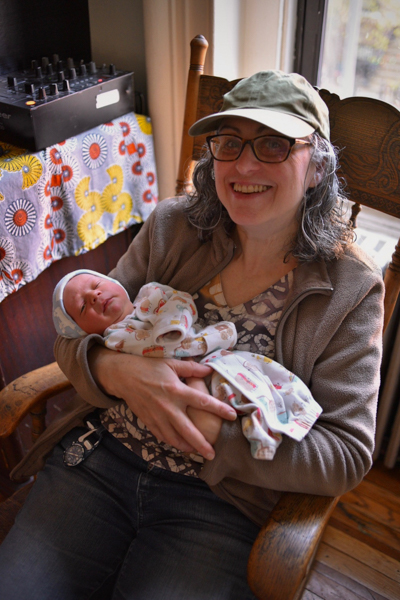
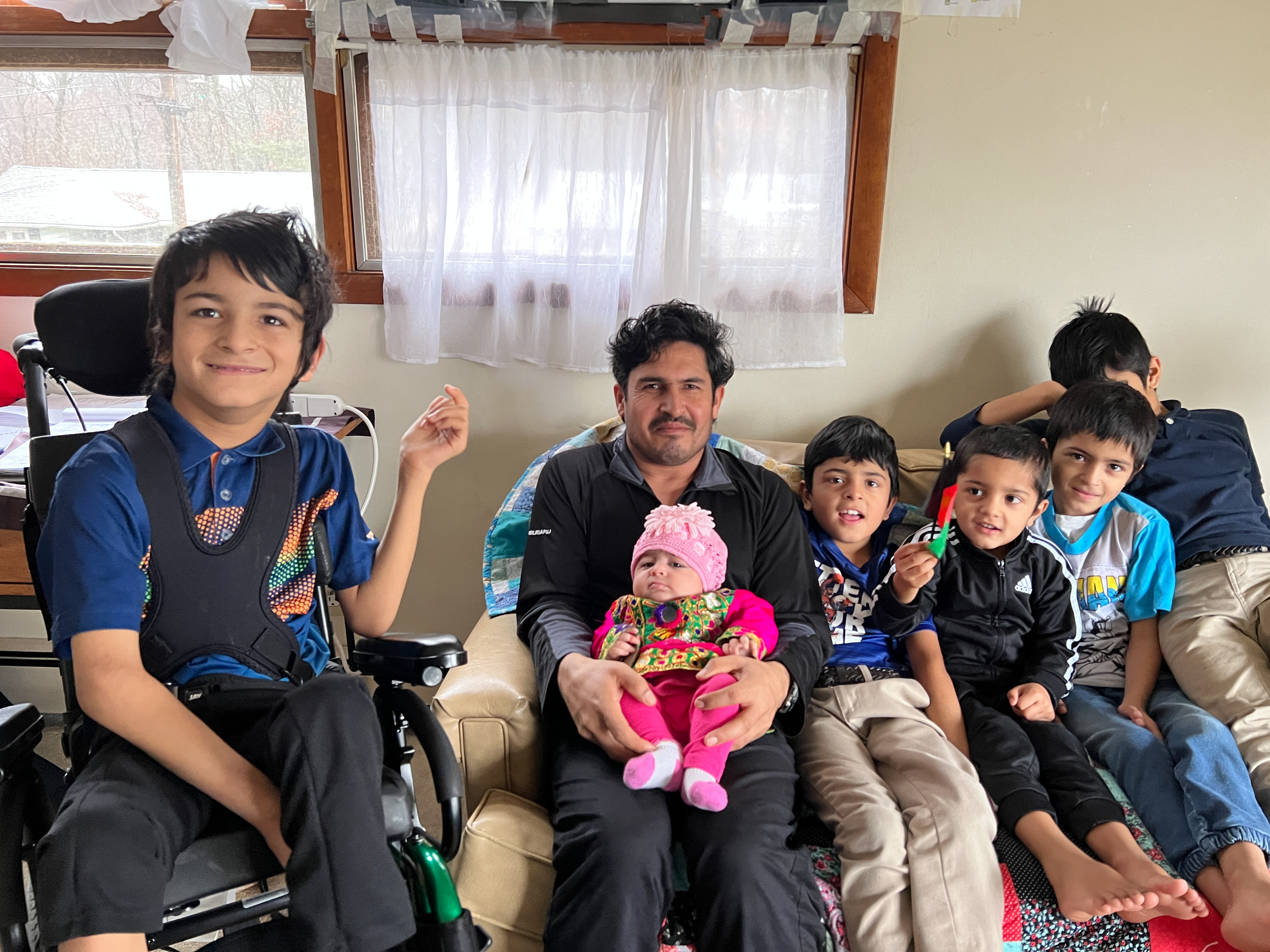
It has been an event-filled year in my life and so you haven’t heard from me in a while. There were a few challenges that stalled my writing life: early-detected cancer (thank you, Baystate doctors for catching that so early), Carpal Tunnel Syndrome that made it hard to write and type (thank you Dr. Wintman for fixing my hand so well), and a head on car accident! (thank you Bailing Li for your skill in acupuncture). When it rains it pours, but there were also some wonderful things that happened to fill the year. Most wonderful was the addition of a new grandchild, and I got to be present within an hour of his birth. I was also thrilled to be part of a Circle of Care helping an Afghan refugee family settle into American life, and got to be there within hours of their new baby’s birth as well. We have become very close.
After some fits and starts, I finally have the time, energy and focus to begin my writing in earnest again. You may ask, what’s been going on with my first novel, Breathing Water? Over most of a year, I sent queries out to 47 agents in batches of 8 or 9, waiting 6 – 8 weeks for responses each time. I got a little bit of interest, including a few requests for complete manuscripts and a few who even said my writing was good. Unfortunately, it never fit with what they were looking for in their lists. Agents are the gatekeepers to traditional publishing, as mainstream publishing houses will not respond to individual authors. If you want to publish in the traditional manner, bringing in their expertise of editing, cover design, distribution and a little bit of traditional marketing, you must find an agent and then they will try to sell the book for you.
Each year somewhere between 500,000 – 1 million new titles are published with traditional publishers.
Consider that each agent, and there are thousands of them, gets hundreds of queries every week. Even though each author will send multiple queries, that still means for every traditionally published book, there were at least hundreds that did not get published this way. That’s a lot of completed manuscripts just waiting to get out there.
So as I was contemplating whether to keep sending queries out to agents, I was also paying attention to the newest books that were being marketed in women’s fiction/ historical fiction. I noticed that books about family relationships were shifting away from the audience that Breathing Water was written for, and toward a younger audience.
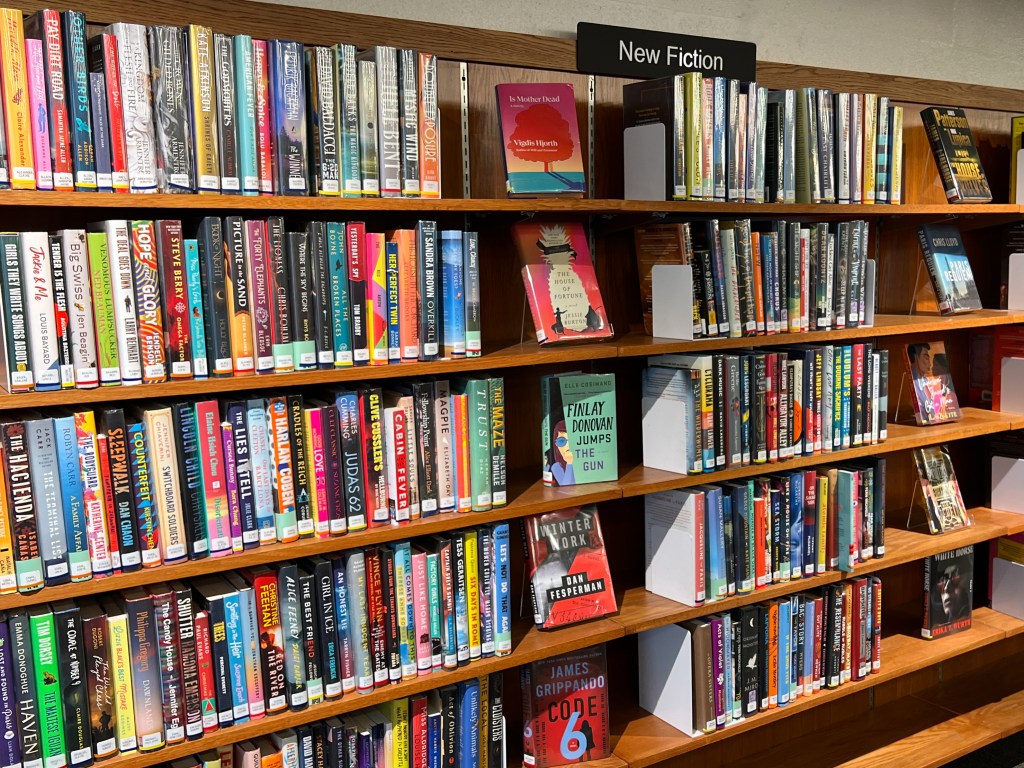
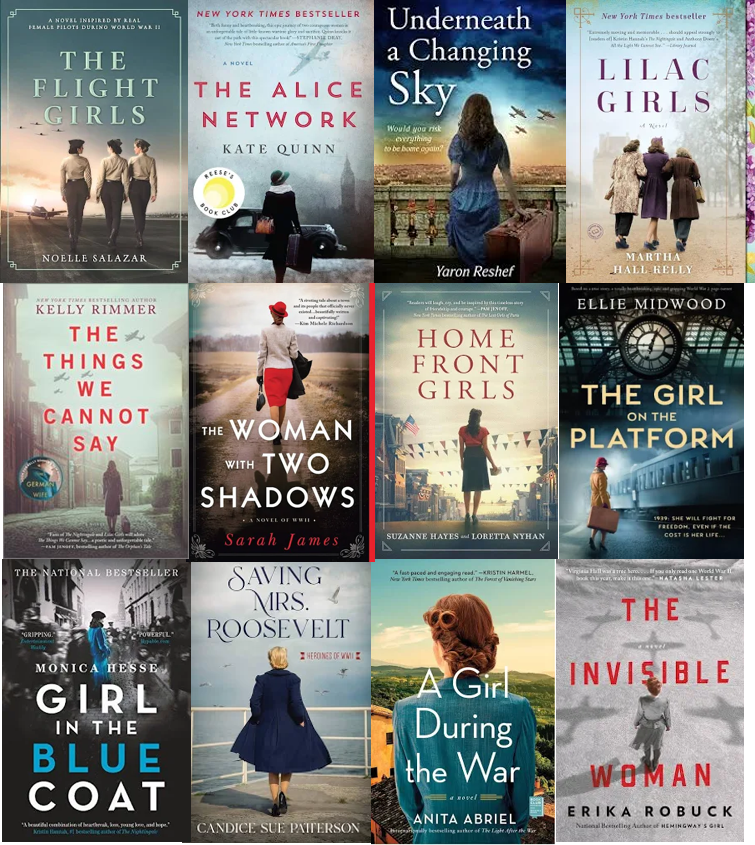
Have you noticed the topical trends in fiction as well? Now there are enormous numbers of titles centered around the lives of women living during WWII, while there were very few prior to 2015. Most have a cover with an image of a woman, or women, walking away from the viewer. So, like clothing, there are also trends in books. Breathing Water isn’t in fashion right now.
I realized that my second novel, Imprint and Inheritance, partially complete, would fit better than Breathing Water into the currently marketed milieau of traditionally published books. So there my energies will go, and if that book doesn’t get picked up by an agent, there is always self-publishing, where books are printed on demand. Last year, 2.3 million new titles were self-published, adding further to the number of books out there dying for readers.
I’ve done a little research into the publishing world, and it turns out the number of published books (traditional and self) has been growing dramatically. In 2005 there were 282,500 new books of both types, identified with ISBN numbers, while in 2022 there were about 3 million. Unfortunately, sales have remained pretty steady, with a slight uptick during the worst of the pandemic. With inflation factored in, there is a 38% decrease in sales between 2000 and 2022. So with more books and the same or lower sales (because there are also audiobooks and other sales not included in these numbers), that generally means fewer copies of each book sold.
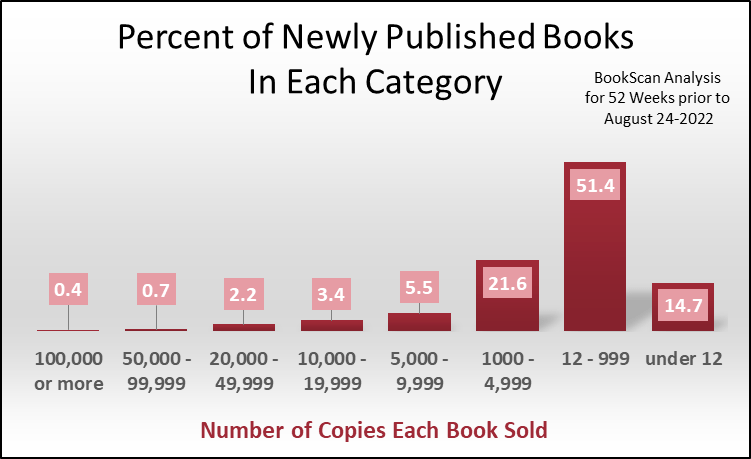
Here’s a snapshot of how many copies have recently sold for traditionally published books.
It’s kind of scary to see these numbers from the top 10 publishing houses, and I’m guessing it’s scary for them too. Most of their money is made from the 50- 100,000+ copies sold, which was 1.1% of the books they published. They admit that they cannot often predict which books will do well, but when 2/3 of the books they do choose to publish sell less than 1000 copies, they must focus on trying to find those big winners. Remember, there were at least 10 times that number of books trying to get through the first step of acquiring an agent. See the comments from Kristen McLean at NPD BookScan in this article, which is also illuminating. Chart constructed from data she provided.
In addition, sales of previously published books, which now rarely go out of print with print-on-demand capabilities, has been increasing. In 2005, new titles comprised 48% of books sold, while in 2021 it shrunk to 32%. Also, most books make most of their sales within the first 2 years after publication. These numbers demonstrate that customers are buying more from a small number of well-known authors and they are buying fewer titles from new authors.
Things are even scarier in the self-publishing world. 90% of self-published authors sell less than 100 copies, and the average self-published author makes $1000 per year from their efforts. 20% make no income at all. Only a lucky few make a lot of money from publishing books in any format.
You may wonder, why bother?
For the love of creation.
Writing is an art, even though the end result becomes business. I have some stories to tell and I feel more alive when those words have a chance to get out onto a computer screen, and hopefully into the minds of more than 1000 other individuals in this world. If not, I’m having fun while I try. Wish me luck!
Imprint and Inheritance is a story of mothers and their daughters spanning 3 generations. This is a story of mothers who harm, and the struggle for forgiveness.
Fiana Mahoney is preparing to graduate from Teacher’s College in 1929 Brooklyn and marry a doctor. When she begins to hear voices, her world crashes around her. Eventually, Fiana recovers enough to marry an alcoholic dreamer and start a family.
Her daughter, Colleen, finds herself motherless and homeless at 16 after her father has disappeared and Fiana is institutionalized. Colleen dreams of the perfect family and creating the childhood that she never had for her own children. Anna Marie grows up, oblivious to the imprint of her mother’s tumultuous childhood on her mother’s life, but also on her own.
Imprint and Inheritance is about the unavoidable connection between generations, courageous mothers who do their best with what life gave them, and daughters who try to love them as they are.








































 Donna Barten
