
Many people know that Vincent Van Gogh was institutionalized during much of his creative lifetime and that he painted the famous Starry Night at the asylum of Saint-Paul-de-Mausole. He cut off his ear after an argument with Gaugin and eventually committed suicide. Other famous artists have also struggled with mental health issues, which is no surprise because some of the best art derives from the pain in our lives.
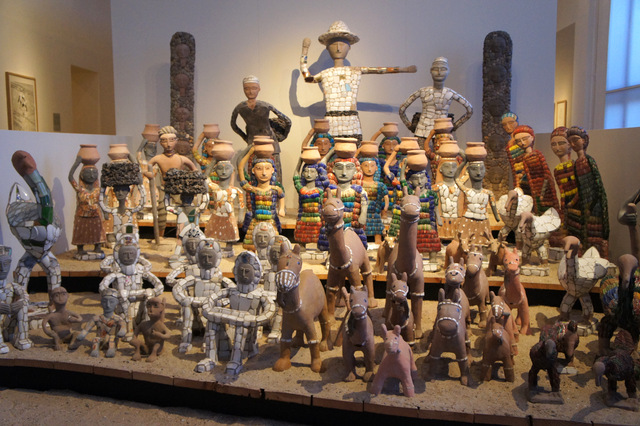
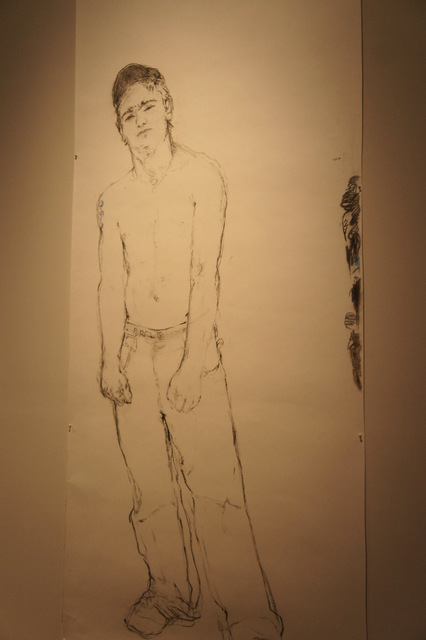
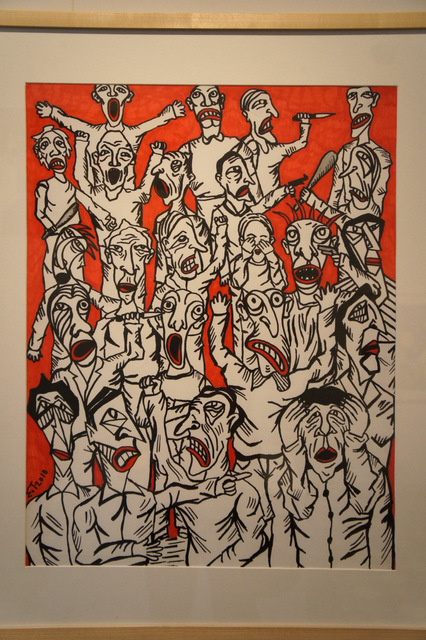
Here are some paintings I saw on exhibit at the Museum Dr. Guislan in Ghent, Belgium. Traveling with me can be a little unusual, as not everyone wants to see a museum dedicated to the history of mental health care. Thankfully, my husband was game and he seemed to enjoy it. Anyway, they also exhibit art from those who struggle with mental health issues and I loved so much of it. Push the arrows to see the slide show. There is art from Leo Neervoort, Minke de Fonkert, Livia Dencher, Jikke Van Loon, Ronny Engelen, and Edward Teeuw. I apologize to 3 artists whose names I failed to capture.






Schizophrenia is the form of illness we most associate with the older terms “mad” and “crazy,” and with the symptoms of psychosis, defined here by Dr. Ken Duckworth at NAMI.

Psychosis is characterized as disruptions to a person’s thoughts and perceptions that make it difficult for them to recognize what is real and what isn’t. These disruptions are often experienced as seeing, hearing and believing things that aren’t real or having strange, persistent thoughts, behaviors and emotions. While everyone’s experience is different, most people say psychosis is frightening and confusing.
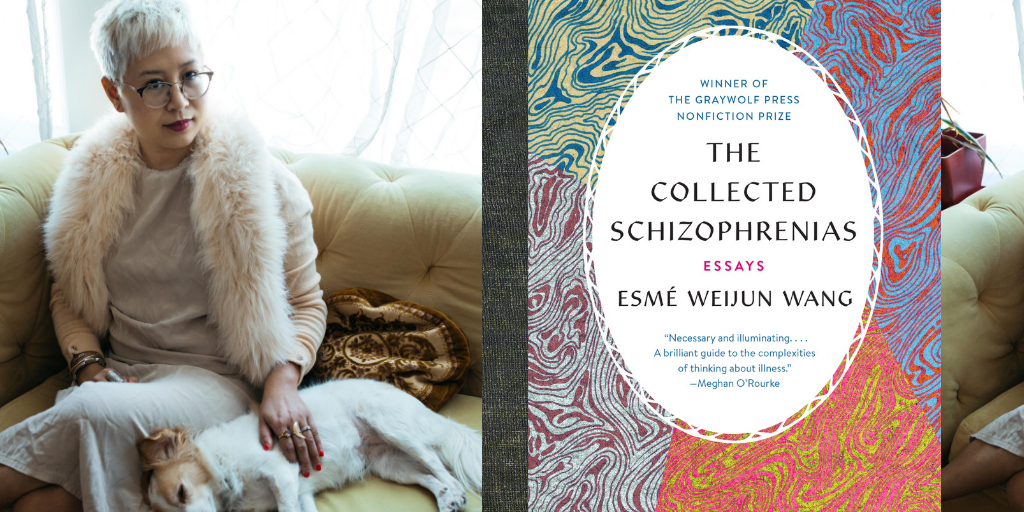
One would think schizophrenia was a cut and dry diagnosis by now. But, there are several related diseases (including schizophrenia, schizoaffective disorder, bipolar disorder, schizotypal personality disorder and many others) that share the symptom of psychosis. Many patients are given different diagnoses by different doctors, even though there is a manual, DSM-5, that tries to clearly lay out criteria for each mental health disorder. That’s why author Esmé Weijun Wang calls them “The Schizophrenias.” The DSM criteria can be helpful, but the National Institutes of Mental Health found they were not as useful for research purposes while investigating causes and treatments. So they are developing their own set of disease criteria based on symptoms and biomarkers. There remains a great deal of controversy over how to define mental health disorders.
Beyond Van Gogh, some of the other famous artists whose names come up most frequently with diagnoses (often post-hoc, and therefore tenuous) of schizophrenia and bipolar disorder are Louis Wain (human-like cat paintings) and Edvard Munch (The Scream, The Dance of Life, Self Portrait with a Bottle of Wine). Zelda Fitzgerald, the wife of famous F.Scott Fitzgerald and the basis of the character Nicole in Tender Is The Night, produced skillful watercolors while she was institutionalized (Times Square & Washington Square).

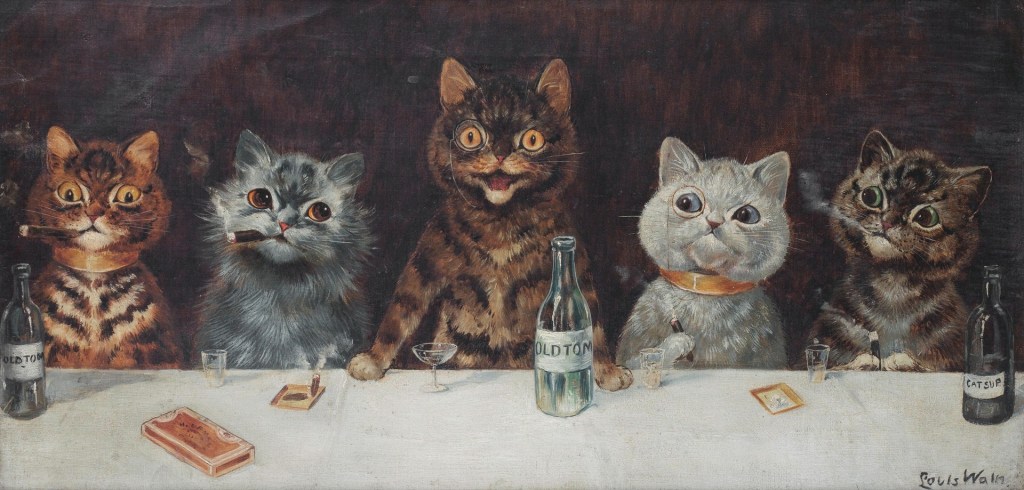
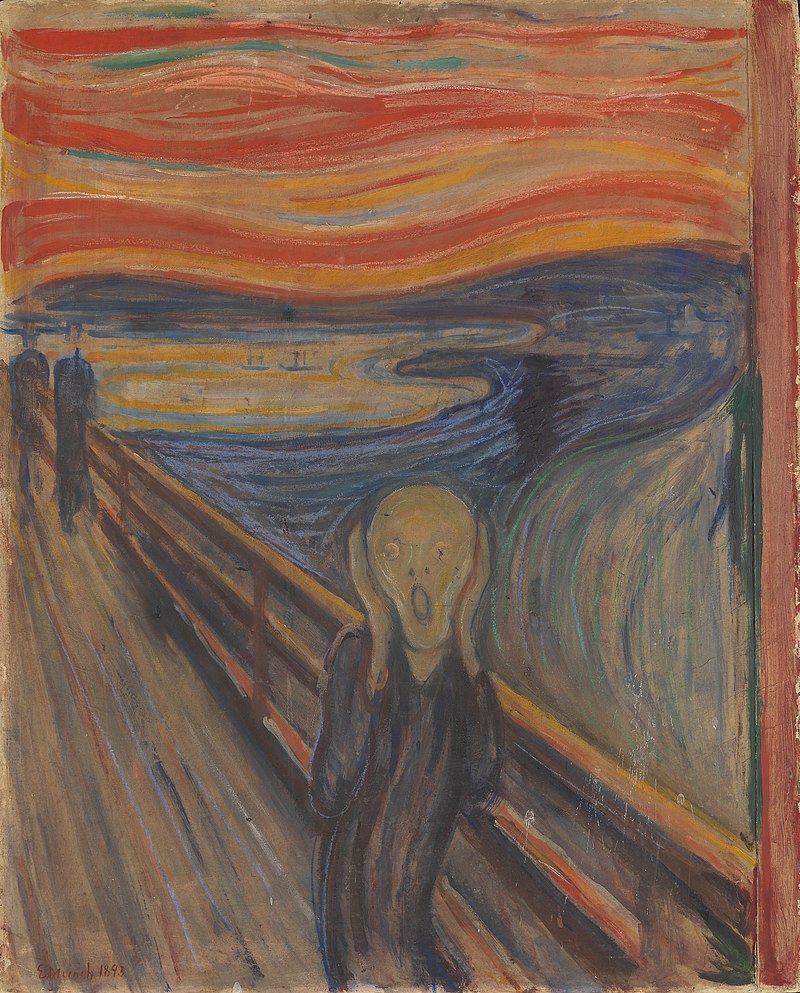
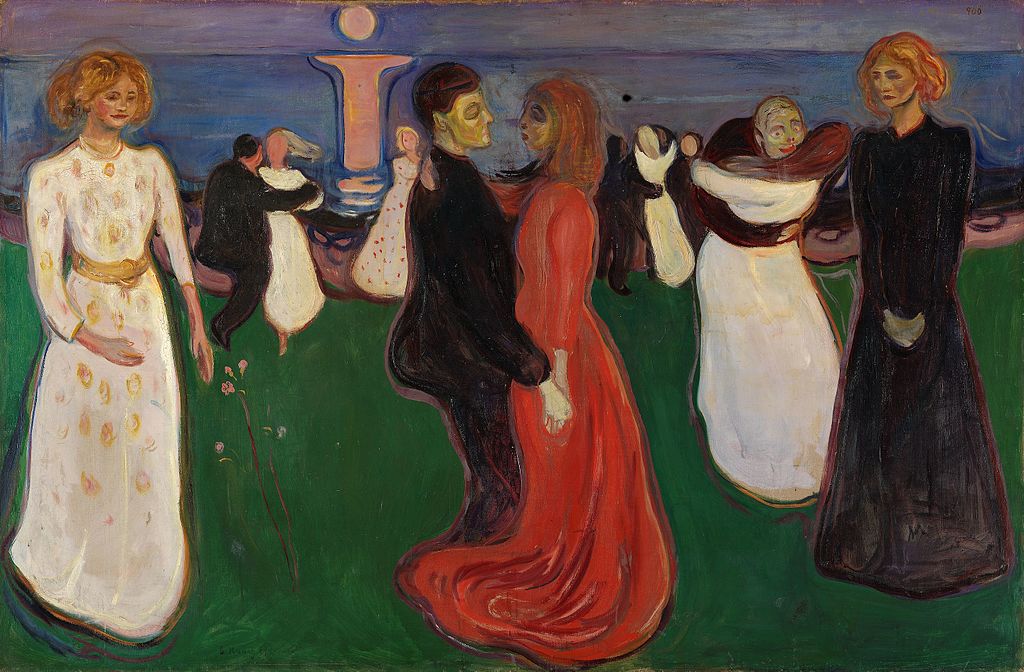
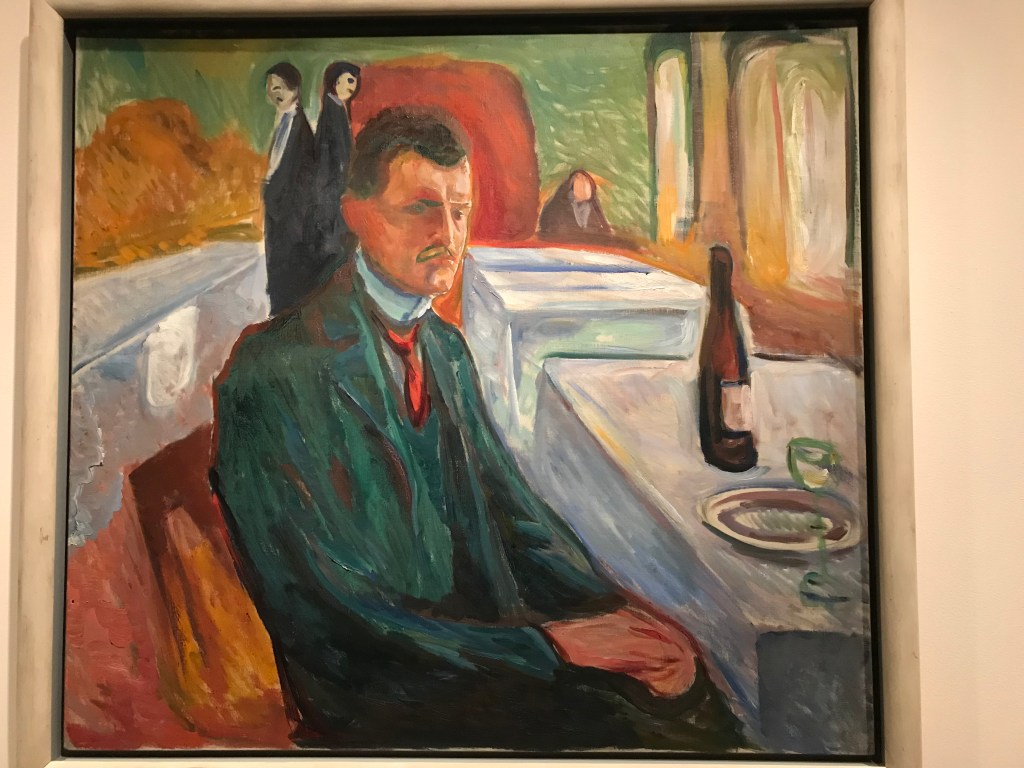


Yayoi Kusama, famous for her polka dots, has lived in a mental institution for over 40 years, yet goes to her studio every day to create her avante-guarde work.
How can someone with schizophrenia or a number of other mental health problems create great art? I try to understand what having the disease feels like because Fiana, Colleen’s mother in my novels Imprint and Inheritance and Breathing Water, is schizophrenic. Neuroscientists know that the brains of individuals with mental health disorders function differently and show some wiring differences from other people. Sadly, many are so debilitated that they have a hard time functioning in society and cannot create anything.
But others identify as having high-functioning schizophrenia and can be very creative. Esmé Wijun Wang, a brilliant author writes about managing a productive and fulfilling life in her book, The Collected Schizophrenias. She is married and has many friends. She reflects: “Over the next decade [as she was learning to cope with her disorder], I would occasionally consider the utility of seeing psychosis as an ability: I could improve my mental health by thinking of schizoaffective disorder as a tool to access something useful, as opposed to a terrifying pathology. As Viktor Frankl says in Man’s Search for Meaning, we want our suffering, if it must be endured, to mean something.” Here’s a website celebrating other high-functioning persons with schizophrenia as an inspiration for others.
There are two observations that might help someone with the schizophrenias in the visual arts to be creative in a new way. The first is that early in the disease, it is very common for patients to have enhanced sensory perceptions, especially of vision. Here’s a quote from a patient cited in Surviving Schizophrenia by E. Fuller Torrey, MD.
“Colours seem to be brighter now, almost as if they are luminous painting. I’m not sure if things are solid until I touch them. I seem to be noticing colours more than before … Not only the colour of things fascinate me but all sorts of little things, like markings in the surface, pick up my attention too.”
Also the brains of persons with the schizophrenias have a hard time gating out irrelevant information. We normally do that without thinking. For instance, now that I pay attention, I can notice the sound of an airplane flying in the distance, the wind shifting the leaves and birds and insects making noises through my window. Until I put my attention there, I was oblivious to those things because my brain is able to focus on the task or the conversation at hand. Here is a description from another patient quoted by Torrey.
“Everything seems to grip my attention although I am not particularly interested in anything. I am speaking to you just now, but I can hear noises going on next door and in the corridor. I find it difficult to shut these out, and it makes it more difficult for me to concentrate on what I am saying to you.”
In his 1974 textbook, Interpretation of Schizophrenia, Dr. Silvano Arieti described the connection between the disease and art: “The schizophrenic experiences the world in fleeting, fugitive ways that are not only different from the ones he perceived prior to the psychosis, but also from those perceived at different stages of the illness. His world tends to be in constant and turbulent metamorphosis. … Great artists and the mentally ill are shaken by what is terribly absent in our daily reality, and they send us messages of their own search and samples of their own findings. … In some of his works, we hit unsuspected treasures of concentrated meanings.” By the way, Dr. Arieti is the inspiration for Dr. Perkins in Breathing Water.
Dr. Arieti goes on to describe how art therapy can be helpful for patients to express what they cannot say in words, but also to help the psychiatrist in guiding therapy. I appreciate his sentiment that there is value in their perceptions and creations. I also love that the scientific journal Schizophrenia Bulletin uses art from patients on its covers.
Bryan Charnley was an artist struggling with schizophrenia who wanted to relate to others how he experienced his disease. He produced a series of Self Portraits and Bondage Head paintings that conveyed his interpretations. Unfortunately, his pain and delusions became so great that he committed suicide. His art, his accompanying explanations and his life emphasize how difficult it is to live with the disease. A book, Bryan Charnley: Art and Adversity, gives even more paintings and descriptions of his life and work.
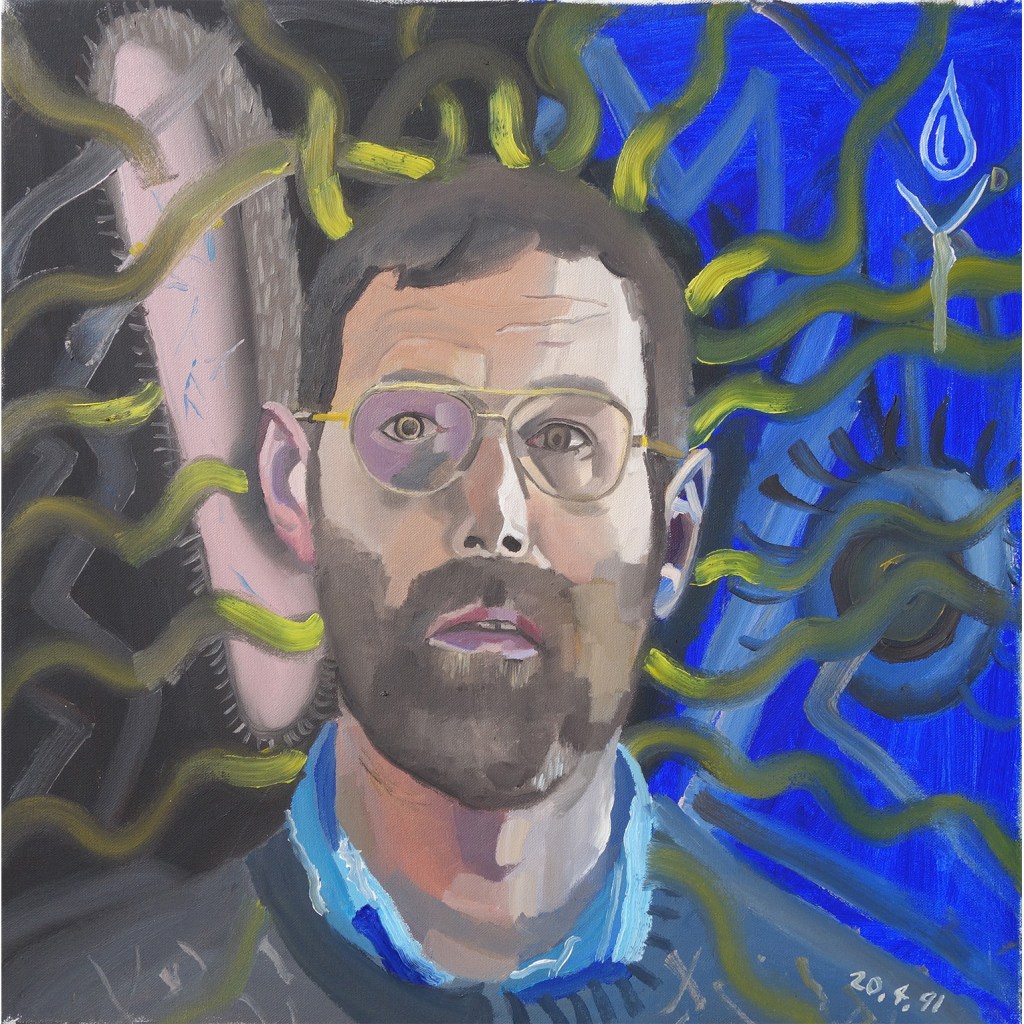
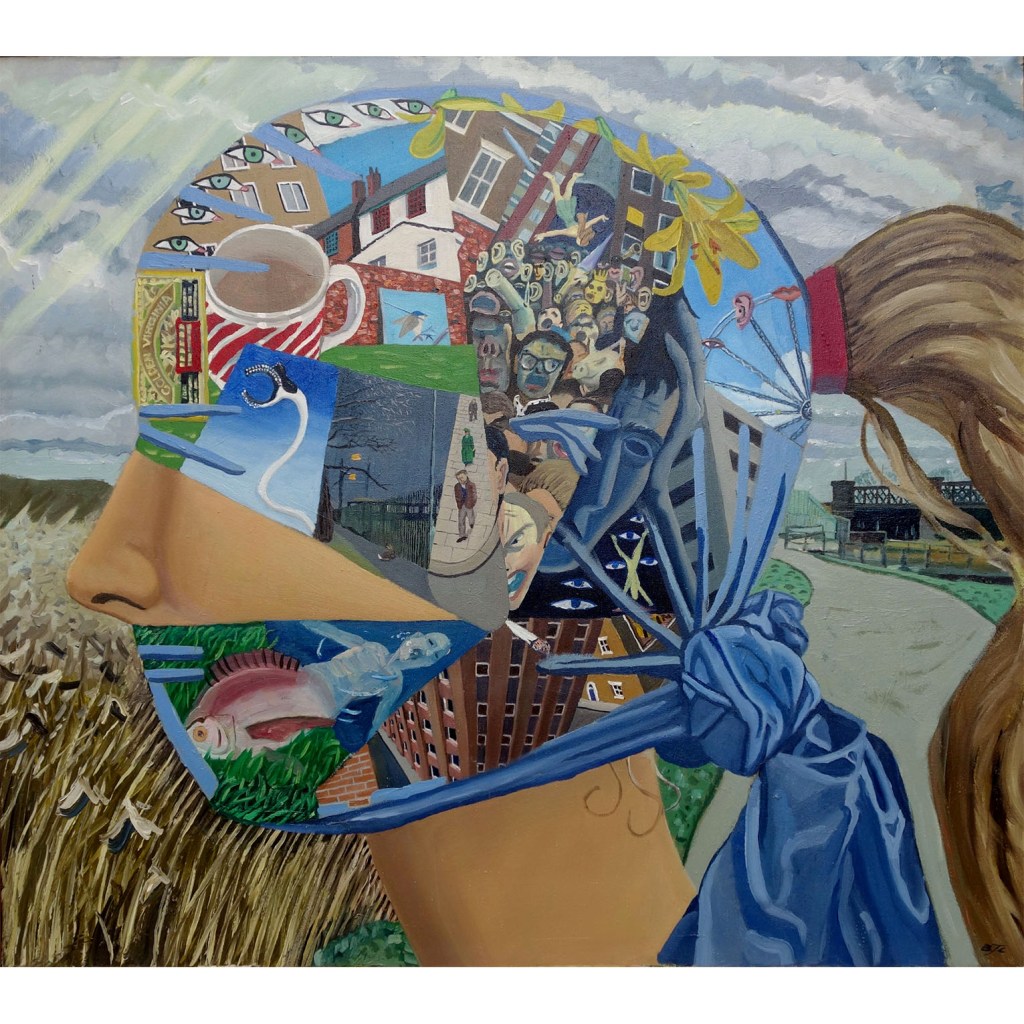
Paintings in the Wellcome Collection, used by permission of the family
About 1% of any population has schizophrenia and the numbers are even higher for bipolar disorder at ~ 2.6%. In the next blog article, we’ll see what happened when Hitler and his henchmen tried to engineer mental illness out of the German population.
Donna Barten is a novelist and scientist working on her second book Imprint and Inheritance.
 Donna Barten